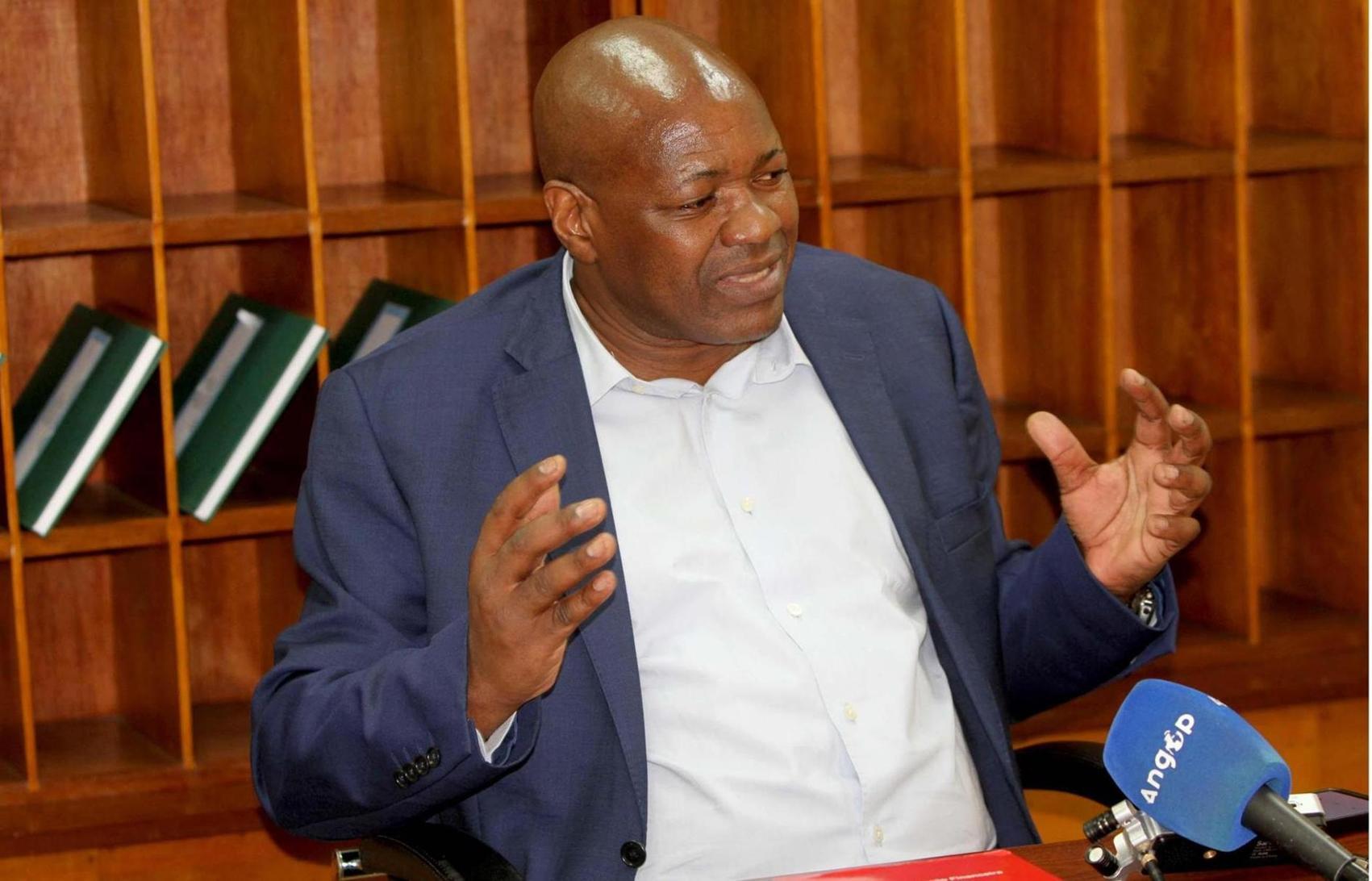
Africa-Press – Angola. Financial decentralization constitutes one of the crucial elements for the institutionalization of local autonomous power, within the framework of its permanence and effectiveness, considered this Saturday, in Luanda, the specialist in legal-economic sciences, Ovídio Pahula.
For the academic, the success of local authorities is linked to financial decentralization, as this local political instrument supports the implementation of local authorities.
In anticipation of the launch of his work entitled “Financial Decentralization – Perspectives for Angola”, scheduled for the 18th of this month, in the city of Lubango (Huíla), the jurist indicated that it is necessary to clarify the understanding of the phenomenon of financial decentralization, based on discussions about the concepts and rebuilding the legal framework relating to the decentralization process.
Ovídio Pahula defends an in-depth analysis of the relationship between the State and decentralized entities, as well as defining the paths towards better financial decentralization in Angola.
According to the university professor, in the master’s degree courses at the Faculty of Law of the Agostinho Neto University, his work presents several perspectives for the implementation of local authorities in Angola, from the point of view of the doctrine of legal-economic sciences.
Asked about the decentralization model for Angola, from an academic/scientific point of view, Ovídio Pahula understands that all forms of decentralization are only consistent and effective, as long as they are strictly accompanied by financial decentralization “as this configures the center of autonomy finance within the framework of local government”.
“Local authorities are no longer the State, they are public legal entities, distinct from the central government apparatus, elected by the communities and which aim to defend their own specific local interests”, he asserted.
The professor defends greater investment in the field of scientific research, because it contains solutions to the political, economic, social and cultural problems that societies suffer from.
For him, each faculty should have a fund for publishing scientific works and the Ministry of Higher Education should require, in regulation, that all regents and deans publish works periodically.
The work Financial Decentralization – Perspectives for Angola, will be launched on the 18th of this month at the Mandume Ya Ndemufayo University (Huila), on the 1st of November in the Medina auditorium at the Faculty of Law of the Agostinho Neto University, in Luanda, and on the 15th of December in Lisbon, Portugal.
The work, which results from the dissertation of his doctoral thesis in Legal-Economic Sciences, from the University of Lisbon, with 457 pages, four chapters, was published by the Portuguese company Edições Almedina.
The author Ovídio Pahula, born in the province of Cunene, and with four works already published, has a PhD in Law in Legal-Economic Sciences, specializing in Public Finance and Financial Law.
He is an associate professor at the Faculty of Law of the Mandume Ya Ndemufayo Universities in Lubango (Huíla) and at the Faculty of Law of UAN in master’s courses.
For More News And Analysis About Angola Follow Africa-Press