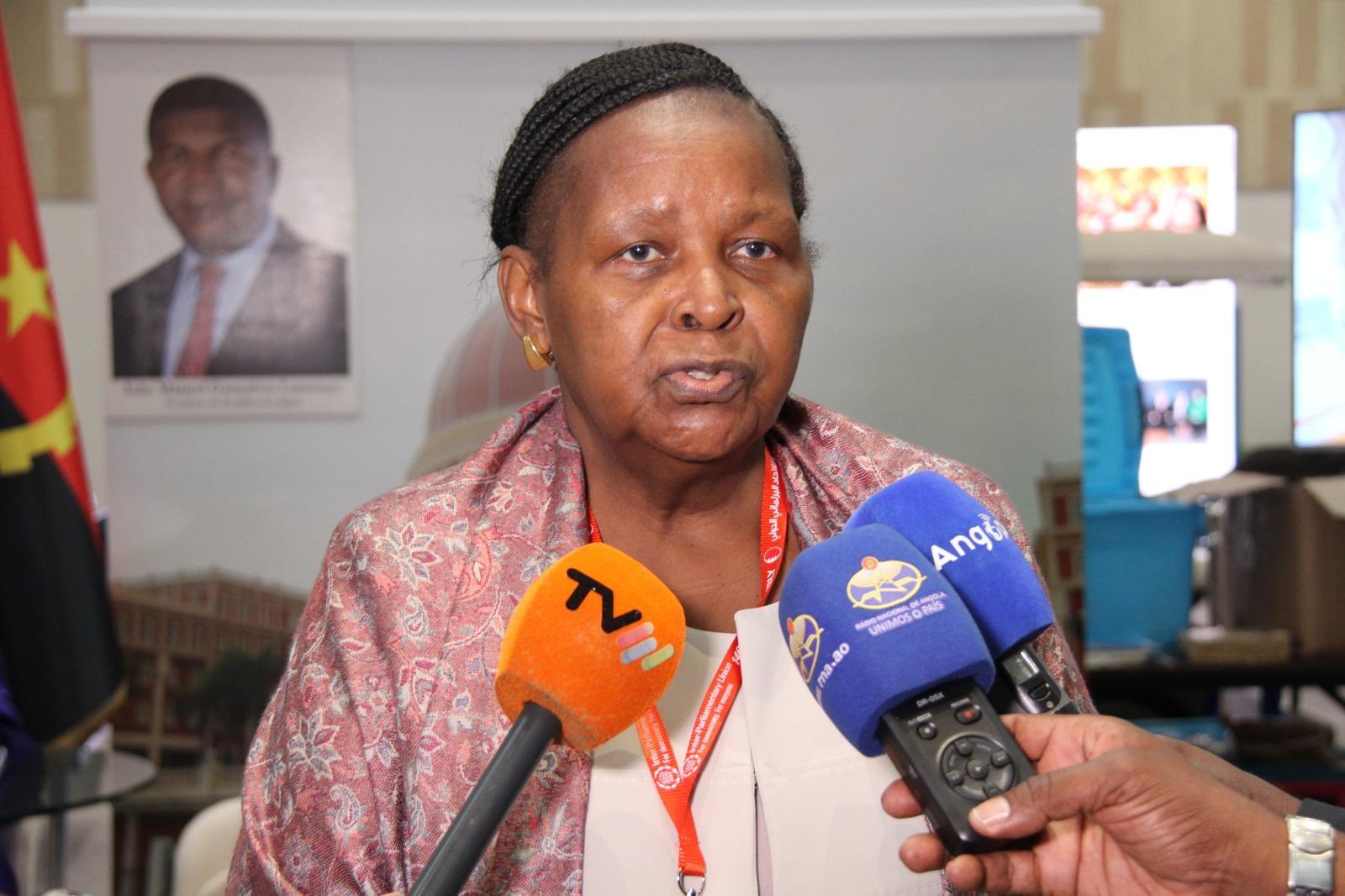
Africa-Press – Angola. The president of the Assembly of the Republic of Mozambique, Esperança Bias, considered this Wednesday, in Luanda, the participation of women in State bodies to be satisfactory, achieving gender parity.
When speaking at the General Debate of the 147th General Assembly of the Inter-Parliamentary Union (UIP), Esperança Bias highlighted that political representation in her country’s Assembly reflects a large participation of women, where of the universe of 250 deputies 108 (43.2%) are women .
According to the Mozambican parliamentarian, the principle of gender balance is a priority issue for the State, thus placing men and women on equality in all areas of political, economic, social and cultural life.
In another area, he reported that Mozambicans have been committed to the search for effective peace, after the end of the fratricidal war that lasted 16 years and claimed thousands of lives, migrated people and destroyed infrastructure vital to the country’s development.
For him, the experience acquired in pacification, mediation in various conflicts and in his positioning for dialogue in global conflicts has been contributing to the country’s action as a Non-Permanent Member of the United Nations Security Council.
“We are a peaceful country in which peace and social harmony prevail, despite terrorist actions in some areas of the province of Cabo Delgado”, he highlighted.
For his part, the leader of Cape Verde’s parliament, Austelino Correia, said that parliaments have a duty to develop and reinforce actions that aim to boost the achievement of the Sustainable Development Goals (SDGs).
In his opinion, the effective implementation of the SDGs “is not achieved through political speeches of convenience and cosmetic actions, nor by transforming parliaments into sounding boards for other bodies of sovereignty and unconfessed interests installed, but through the provision of accounts, transfer and participation of citizens in legislative processes”.
The president of the Parliament of Guinea-Bissau, Domingos Simões Pereira, lamented the fact that his country had gone through institutional crises in which governments were dismissed and parliaments dissolved, almost always outside the law.”
For More News And Analysis About Angola Follow Africa-Press