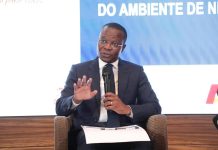
Africa-Press – Angola. The Minister of Energy and Water, João Baptista Borges, considered this Thursday, in Luanda, the combination of efforts between the public and private sectors to be essential for a greater expansion of electrical energy in the country.
To this end, the government official, who was opening the 7th Edition of the African Energy Market, explained that clear regulation is necessary, which is why he works with the Development Bank of Angola (BDA) and other bodies.
Asked about the fact that the BDA defends the removal of energy subsidies, he said that it is a discussion that must take place, when it is opportune to start the process of removing subsidies.
“Today we have a low tariff, less than one cent of dollars and the average in the region is 10 cents. It is clear that, from a perspective of attracting private capital to the energy activity, the tariff to be charged cannot include subsidies, but must be a price that reflects costs and a gradual process of tariff adjustments”, he clarified.
He highlighted that the development of the electricity sector in Angola must be considered, with greater participation of private capital, in particular with the construction of production and exploration assets.
Therefore, he made it known that the Government is considering opening the energy transport segment to private participation, with a view to attracting private capital to serve areas of particular economic interest and cross-border connections.
The official indicated that the creation of cross-border connections, both with Zambia and the DRC, “may allow us to flow part of the energy we have to these regions, guaranteeing Angola foreign exchange resources”.
In recent years, Angola has achieved exponential growth in its installed electricity production capacity, rising from 2,356.36 megawatts in 2015, to around 6,319.43 megawatts, thanks to important investments.
Highlights, for example, are the recent completion of the Laúca Hydroelectric Power Plant, which produces around 2,070 megawatts, and the expansion of the Cambambe Power Plant.
Alongside investments in the field of hydroelectric energy, Angola began the process of restructuring its energy matrix, having recently completed the Biopio Photovoltaic Plants, with around 188 MWdc and Baia Farta, with around 96 MWdc, which contribute with around 3.8%, within the scope of the Public Electricity System.
The minister made it known that 17. 2 billion dollars is the amount needed for Angola to reach an electrification rate of 50 percent by 2027, contrary to the current 43 percent.
He explained that adding another 7% to reach 50% means the creation of one million and 700 thousand home connections.
“The goal is the National Development Plan (PDN) 2023-2027, aligned with the Long-Term Agenda 2050, which also foresees reaching an installed capacity of 8,000 megawatts by 2027”, he asserted.
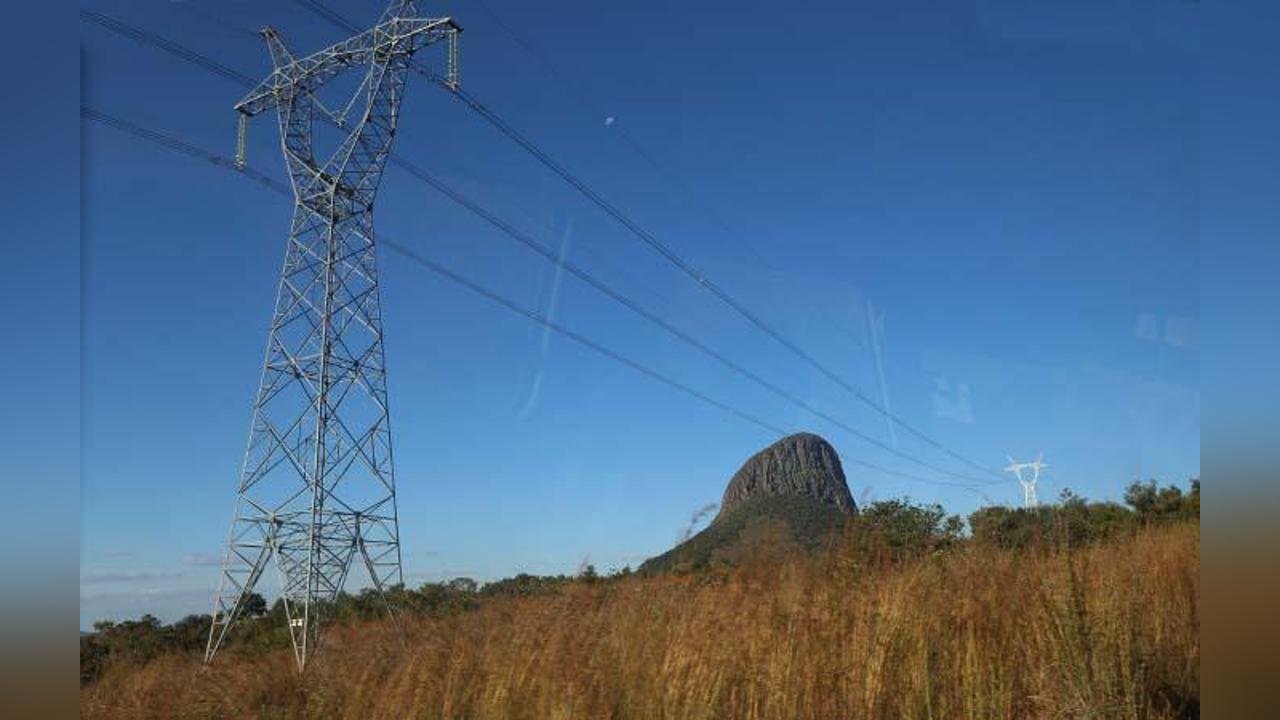
He informed that the African Development Bank (ADB) is already financing the construction of the line between Huambo and Lubango (Huíla), which will allow energy to be taken from the central region to the south, as well as financing the assembly of approximately one million and 300 thousand prepaid meters, to help the National Electricity Distribution Company (ENDE) reduce commercial losses and increase revenue.
The vice-president of Energy, Climate Change and Green Growth at the African Development Bank (ADB), Kevin Kariuki, said that in Angola the banking institution is involved in energy projects costing 1 billion dollars.
He revealed that he had in mind the development of the Angola-Namibia transmission line to export energy.
On the other hand, the person responsible showed interest in working in Cabinda, in the creation of renewable energy.
The 7th Edition of the African Energy Market, in an initiative of the African Development Bank (ADB), with the participation of the Tony Blair Institute for Global Change, has as its central theme “Accelerating Energy Sector Reforms and Increasing Investments in the Sector Energetic”.
The event brings together the main public, private actors and development partners.
For More News And Analysis About Angola Follow Africa-Press