Africa-Press – Angola. The North American oil company Chevron, in partnership with the Government of Angola, is committed to launching a regional energy expansion initiative, to reduce the emission of carbon dioxide into the atmosphere, during the exercise of its activity in the country.
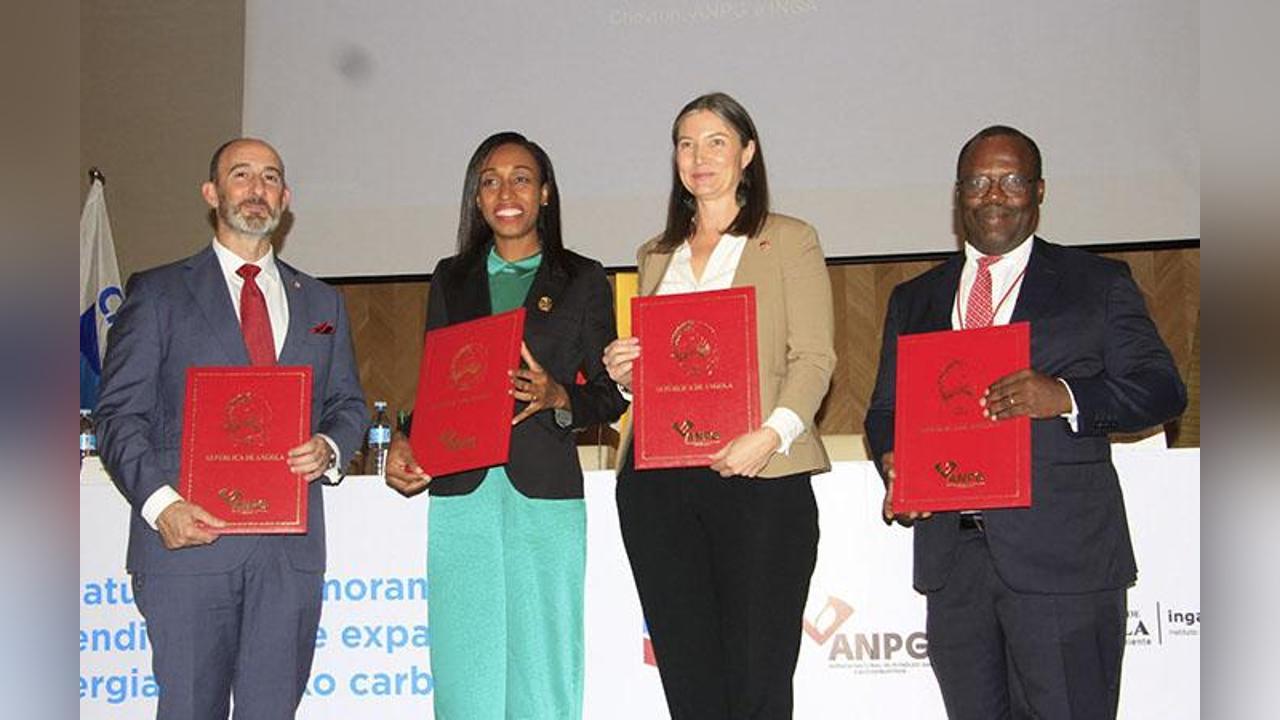
To achieve this challenge, Chevron New Energies (CNE) signed this Monday, in Luanda, a Memorandum of Understanding with the National Agency of Petroleum, Gas and Biofuels (ANPG) and the National Institute of Environmental Management (INGA), with a view to exploring potential low-carbon business opportunities in Angola.
The signing of this document was the responsibility of the general director of Chevron’s Strategic Business Unit in Southern Africa, Billy Lacobie, general director of Chevron New Energies, Katherine Lihlefield, president of the ANPG Board of Directors, Paulino Jerónimo, and the general director from the National Institute of Environmental Management (INGA), Hassana Lima.
Speaking to the press, director Billy Lacobie said that the signed memorandum, with a two-year execution period, brings as value the use of various clean energy sources, such as hydrogen, biodiesel and renewable energy, in oil activity.
“This Memorandum of Understanding creates an opportunity for Chevron to increase its operations in Angola and provide reliable, affordable and low-carbon energy, identifying the best ways to reduce energy poverty, address climate change and improve the quality of life of communities locations,” he highlighted.
On the occasion, the Minister of Mineral Resources, Oil and Gas, Diamantino Azevedo, made it known that the sector hopes to work to at least reduce 20% of greenhouse gas emissions by the end of 2027.
According to the government official, it is a serious and irreversible challenge that requires the collaboration of all actors in the sector, such as companies and agencies, to achieve positive results.
Therefore, the minister considered the signing of the aforementioned memorandum of crucial importance, marking the beginning of tripartite cooperation, taking into account the paradigm of climate change and energy transition at national and global level.
According to Diamantino Azevedo, the objective of the memorandum is to encourage collaboration in areas and production of low-carbon products, through the establishment of an organizational structure, with the participation of all entities.
He said that this document will also allow the implementation of several low carbon programs and projects, which effectively fall within the mitigation pillar of the National Climate Change Strategy and together with other projects, such as solar energy, green hydrogen, green ammonia, blue carbon, forests and biofuels.
He highlighted that the memorandum also includes the participation of the private sector, with the creation of public-private partnerships, which could provide added value in implementing the numerous commitments established in the document.
“Potential areas of collaboration and development are linked to programs for the production of low-carbon products, such as blue and green hydrogen, green ammonia and biofuels, combined with the conservation of biodiversity in ecosystems, providing greater climate resilience for populations”, he added.
It recognized that the oil and gas industry, in general, has its share of responsibility in generating greenhouse gas emissions, and for this reason the Angolan Executive has implemented measures and actions that have led to the reduction of the carbon footprint, complying with to the requirements of the Paris agreement to which Angola is a signatory and the National Strategy on Climate Change.
In turn, the Secretary of State for Climate Action and Sustainable Development, Ana Paula Coelho, stated that the signed document constitutes a milestone for Angola, which is a signatory country to the United Nations Framework Convention with a commitment to achieving the Development Objectives Sustainable Development Goals (SDG), within the scope of the energy transition.
The director of security and environment at the National Oil, Gas and Biofuels Agency (ANPG), Guilherme Ventura, said that the signing of the aforementioned memorandum represents one of the solutions that oil companies present to mitigate the problem of the global climate crisis.
He said that the document will allow the creation of concrete ideas for the production of low-carbon energy.
Chevron operates in Angola through Cabinda Gulf Oil Company (CABGOC), in blocks 0 and 14, being among the largest oil producers in the country, with daily production estimated at 89 thousand barrels of liquid and 340 million cubic feet of natural gas, in 2020, with more than 90% of the workforce made up of Angolans.
Over the years, CABGOC and partners from blocks 0 and 14 have invested more than 250 million dollars in community development projects in Angola’s 18 provinces.
For More News And Analysis About Angola Follow Africa-Press