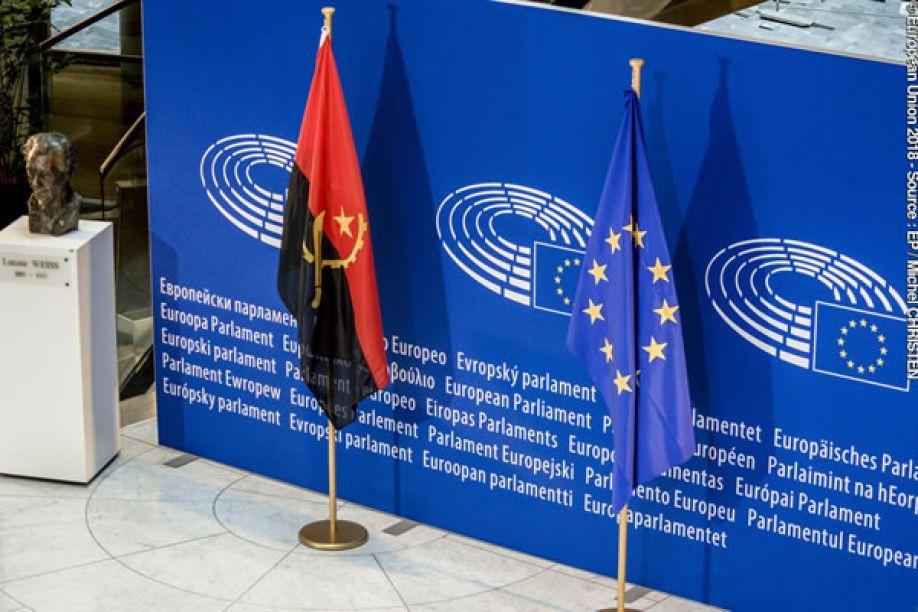
Africa-Press – Angola. The European Union (EU) recognizes that, since 2017, the country has made significant progress in combating money laundering, corruption, illicit financial flows and asset confiscation.
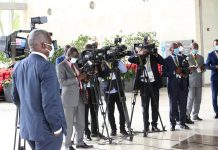
When speaking, yesterday, in Luanda, at the opening ceremony of the training course for trainers, promoted by the Attorney General’s Office (PGR) and the United Nations Organization on Drugs and Crime (ONUDC), which runs until the 14th of this month, the head of the EU delegation in the country, Paulo Simões, admitted that Angola has demonstrated an “exemplary” appropriation accompanied by a firm will to strengthen and protect itself against the diverse formats and configurations of economic crimes. prevention and fight against crimes of money laundering, corruption, illicit financial flows and asset confiscation require firm and coordinated intervention, of a multidisciplinary, intersectoral and international nature, as is the case in Angola in recent years”, he stated.
However, for the EU representative, currently “it is no longer enough to just pursue, capture and punish criminals”. He said that it is “crucial” to build a management and application mechanism for recovered assets so that “they can be applied again in the sectors sustainable development as recommended by the United Nations (UN)”.
Regarding the training course for trainers, Paulo Simões said that the EU has privileged this action for national citizens as an element of strengthening the training capabilities of systems, institutions and sectors in matters of “white collar” crimes.
In this regard, the head of the EU delegation said that, in practice, more than three dozen Angolan trainers have already been trained in the areas of combating organized crime, corruption, money laundering and active confiscation.
“The Project to Support the Strengthening of the Asset Recovery System (PROREACT) began in 2021, and, so far, has trained, in several sessions, more than 30 trainers who are transmitting their knowledge to other trainees. The number is not yet We are going to increase this figure because we are training another group of professionals who will certainly be qualified to provide training to other Angolans, from various parts of the country”, said Paulo Simões.
Strengthening the Rule of Law
The head of the European Union delegation in the country assured, yesterday, on the sidelines of the opening of the training of trainers on combating money laundering and corruption, that Angola and that organization have converged on the need to strengthen the rule of law and, consequently, strengthening the capacities of institutions.
In Angola, he highlighted, several important structural reforms have been carried out to reinforce the rule of law, namely, he said, through the technical training of staff at institutions committed to combating money laundering and corruption.
Finally, Paulo Simões made it known that the training dynamics will continue within the framework of the program to support justice and the rule of law, in order to contribute to achieving the United Nations’ sustainable development objective, on peace, justice and institutions effective.
ONUDC supports the fight against illicit financial flows
The coordinator of the United Nations Organization on Drugs and Crime (ONUDC), Manuela Carneiro, clarified that the training aims to guarantee the sustainability of the project, in order to develop an effective system to combat illicit financial flows in Angola.
“The EU’s support has been fundamental in promoting a positive change that we intend to continue to pursue through cooperation and sharing of knowledge”, highlighted Manuela Carneiro, stating that the training is a “commitment”.
“By improving the skills of trainers, we are equipping them with the tools and knowledge necessary to share their experience and skills with other professionals. Trainers play a fundamental role in building the future”, he reinforced.
The fight against money laundering is part of the reforms that the Angolan Government has carried out in recent years.
Money laundering is a crime foreseen and punishable in the Angolan legal system, namely in Law No. 5/20, of 27 January, on Preventing and Combating Money Laundering, Financing of Terrorism and Proliferation of Weapons of Mass Destruction, and in Law No. 3/14, of 10 February, on the Criminalization of Offenses Underlying Money Laundering, repealed, however, by Law No. 38/20, of 11 November, which approves the Angolan Penal Code.
jornaldeangola
For More News And Analysis About Angola Follow Africa-Press