Africa-Press – Angola. The National Health Service (SNS) currently has 3,325 units, including central, provincial and specialty hospitals.
There are 13 Central and Specialty Hospitals, six Institutes, 23 General and Provincial Hospitals, 172 Municipal Hospitals, 800 Health Centers and 2,311 Health Posts, totaling 3,325 units.
The data was recently revealed by the President of the Republic, João Lourenço, in the message on the State of the Nation, as part of the opening of the 2023-2024 parliamentary year of the V Legislature.
According to the Head of State, the Government invested in the infrastructure of the three levels of the SNS, with 163 new health units being built, expanded, rehabilitated and equipped with new equipment, 155 of which for the first level of care.
“If, in 2017, we had 13,426 hospital beds, this number rose to 37,808 beds in 2022, which means that, in just six years, we added 24,382 hospital beds to the National Health Service”, he highlighted.
He recalled that in the same year, only three provinces had specialized hemodialysis services, while in 2022 this number increased to ten provinces, with a capacity to serve more than three thousand users per week. Eight national reference hospitals were built from scratch.
Admission of new staff
Regarding staff, João Lourenço detailed that in the last legislature alone, 41,093 new professionals joined, including doctors, nurses, diagnostic and therapeutic technicians, hospital support technicians and general regime technicians.
According to the Statesman, all doctors trained in the country and abroad were qualified and around 80% of employees were placed in municipalities and 53,461 employees in the health sector were promoted.
Municipalization and primary care attention
“We are committed to reinforcing our commitment to the municipalization of primary health care, the results of which have been encouraging. The volume of consultations at this level increased by 71%, reflected in the improvement of the main indicators of maternal and child health”, asserted the Statesman.
With primary health care, through the “Born free to shine” campaign, President João Lourenço stated that pregnant women are increasing access to HIV diagnosis in prenatal consultations and increasing treatment for those positive, resulting in an increase in coverage and a reduction in mother-to-child HIV transmission from 28% to 15%.
He admitted that malaria continues to be the most reported disease in the country, however, there was a reduction in the fatality rate from 0.31 to 0.17 between 2017 and 2022.
“We increased by 50% the number of first-level healthcare units that diagnose and monitor the chronic non-communicable diseases that most affect the population, namely high blood pressure and diabetes. All these indicators reveal that today we have a stronger and more resilient National Health Service, however we recognize that there is still a long way to go”, he said.
More projects
The Head of State stated that the portfolio of projects at central level foresees 31 public investment projects, with emphasis on 14 general hospitals, three tertiary level maternal and child hospitals, 10 specialized treatment units, with emphasis on the future Hospital dos Queimados , Oncology Hospital, Traumatology Hospital and Ophthalmology Hospital.
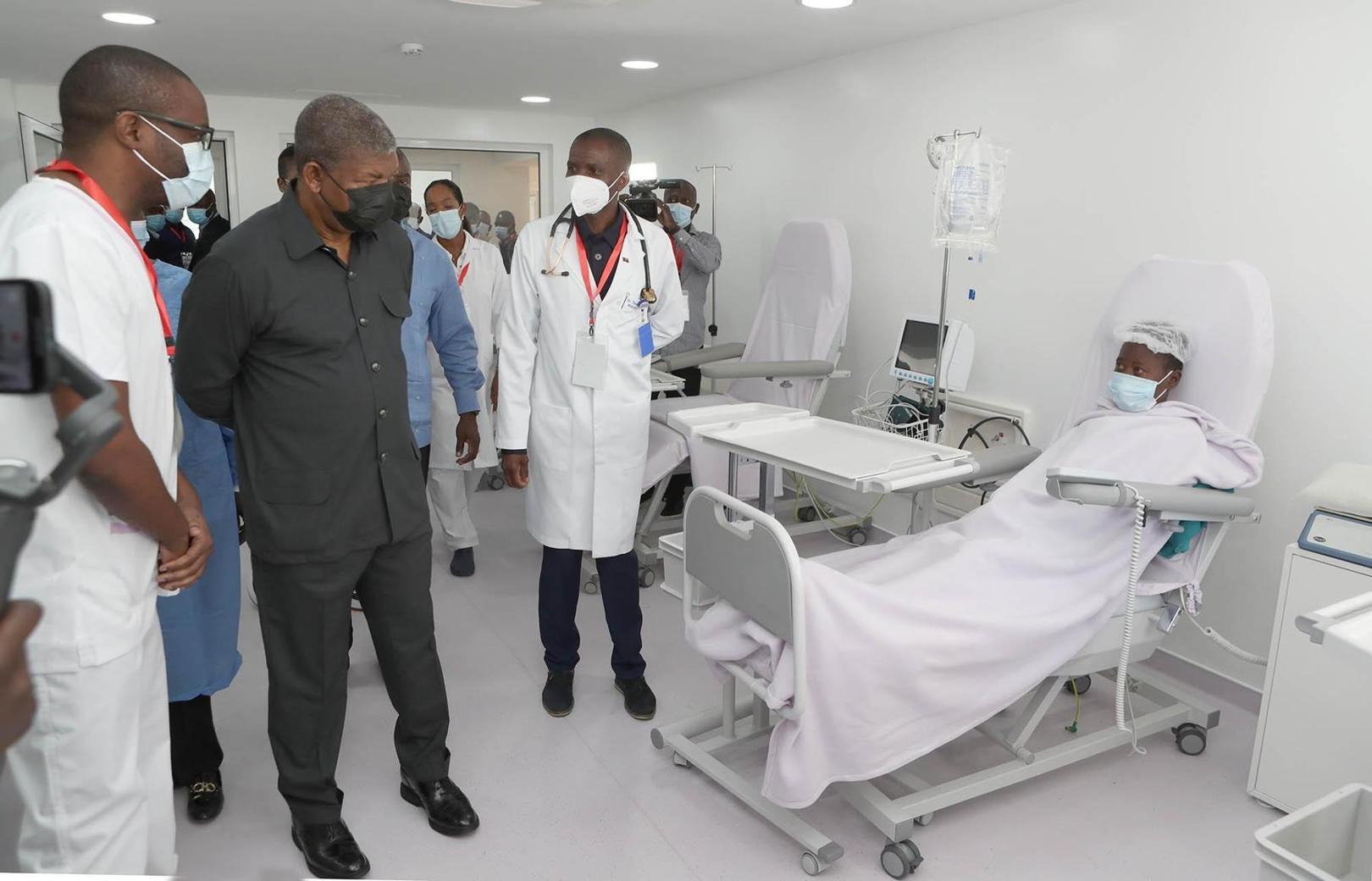
From this perspective, he spoke about the recent reopening of the Neves Bendinha Specialized Hospital, and announced, for this month, the opening of the Caxito General Hospital.
For the next year, a large number of hospitals are expected to be inaugurated, namely the General Hospital of Sumbe, the General Hospital of Ondjiva, the General Hospital of Ndalatando, the General Hospital of Viana, the General Hospital of Cacuaco, the Hospital Geral Pedalé in Luanda and Hospital Municipal do Luau.
According to the Holder of Executive Power, the portfolio of projects for the health sector also includes the construction of the General Hospitals of Catumbela, Bailundo, Dundo, Malanje, the new Main Military Hospital and completion of the Mbanza Kongo General Hospital .
At the local level, within the scope of PIIM, 163 health units are under construction that will increase coverage at proximity levels. By 2027, we plan to hire around 10,800 doctors and 78,500 nurses to join the health units under construction and to be built.
João Lourenço highlighted that attention to primary health care will contribute to increasing the average life expectancy of Angolans by four years, between 2017 and 2022, having increased from 58 to 62 years.
He also added that mortality among children under five years of age fell from 167 to 75 per thousand live births, while access to primary health care tripled, from 25% to 70%.
For More News And Analysis About Angola Follow Africa-Press