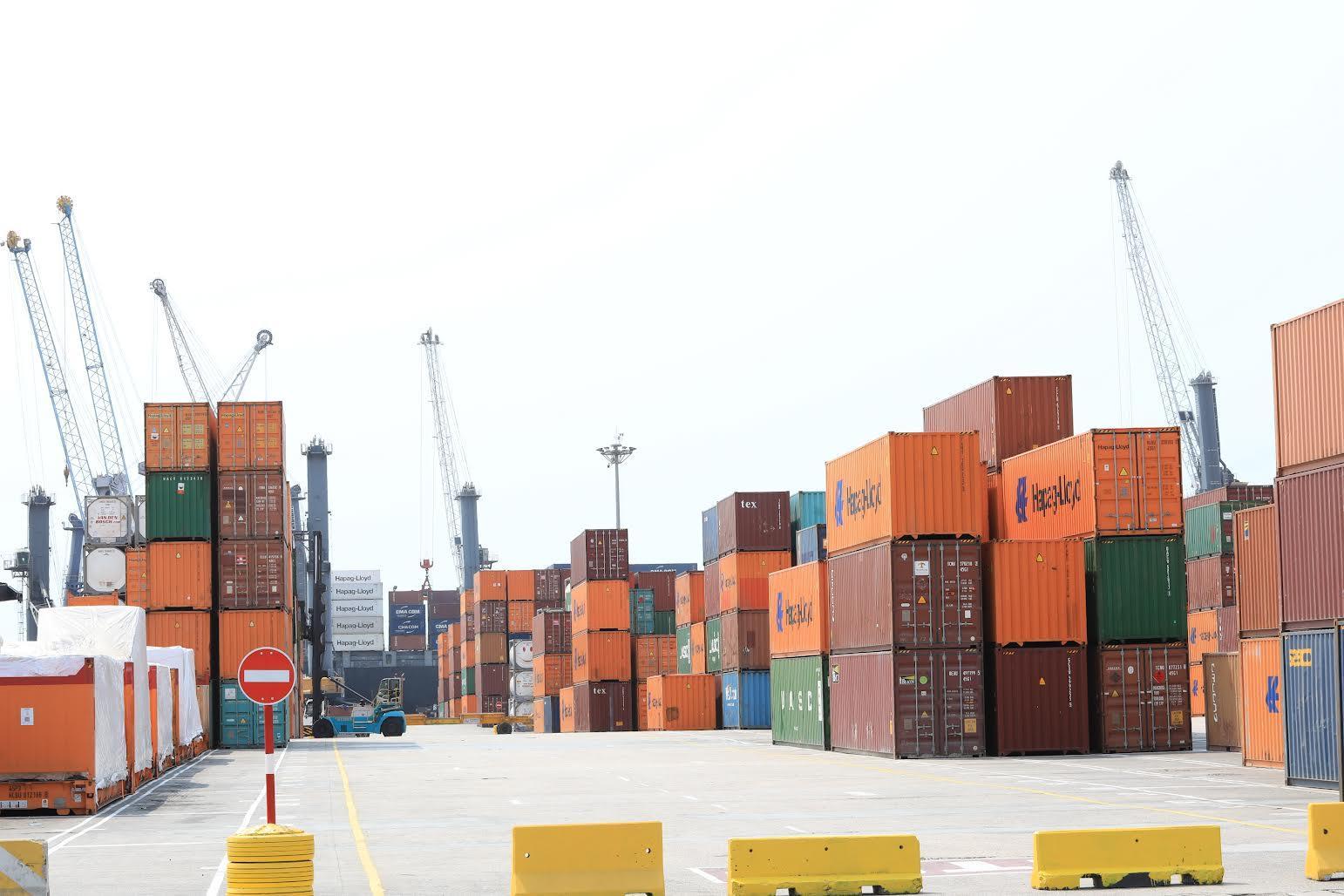
Africa-Press – Angola. Exports of various non-oil goods produced in Angola, within the scope of the Production Support, Export Diversification and Import Substitution Program (PRODESI), were valued at 59 million 396 thousand and 442 US dollars (USD 1 worth Kz 827), from January to June this year.
This amount results from the export of more than 10 products that left Angola, in the first six months of 2023, with emphasis on glass packaging (22 million 370 thousand and 491 kilograms – net weight), budgeted at 13 million 196 thousand and 47 dollars, according to data from the National Directorate of Foreign Trade (DNCE).
Without quantifying the volume of products and the value of exports in the same period last year (first half of 2022), the DNCE, supervised by the Ministry of Industry and Commerce, points out that, in the last half of this year, 364 million 931 thousand kilos of clinker (raw material for the manufacture of cement), which yielded USD 11 million 179 thousand and 320.
This list also included the export of steel rods for construction (9,019,612 kg), worth five million, 378 thousand and 706 dollars.
Also included in the top 10 are wheat flour (7,529,849 kg), valued at five million, 43,292 dollars, followed by banana exports (6,581,634 kg), valued at US$4,433,402.
In the same set of exported products, beans (8 027 296 kg) appear in sixth place, with a weight valued at four million 23 thousand and 508 dollars, followed by sugar (4 945 376 kg), valued at three million 866 thousand and 953 dollars.
Then, in the period in question, there was also the export of one million 562 thousand 734 kilograms of disposable diapers and sanitary towels, worth two million 273 thousand and 353 dollars, while Portland Cement (18 137 990 kg) was budgeted at two million 232 thousand and 175 dollars.
Juices and soft drinks (4,890,513 kg) were valued at one million, 333 thousand and 398 dollars, in addition to other products (24,295,577 kg), estimated at USD 6 million, 436 thousand and 372.
According to the National Directorate of Foreign Trade (DNCE), the respective products were exported to South Africa, Namibia, Ghana, Togo, Democratic Republic of Congo (DRC), Congo Brazzaville, Portugal, France, Cuba and São Tomé and Príncipe .
Imports cost more than 589.8 million dollars
In relation to imports, in the first half of 2023, DNCE also points to the entry of more than 10 different products into Angola, valued at a total of 589 million 829 thousand 943 US dollars.
Among the most imported products, the highlight is chicken meat, with a net weight of 141 million 816 thousand and 116 kilograms, coming from the United States of America (USA) and Brazil, with a value of 183 million 189 thousand and 310 dollars.
Additionally, rice (135 150 668 kg) imported into India and Thailand cost USD 85 million 658 thousand and 898, while the import of palm oil (53 486 368 kg), from Malaysia and Indonesia, cost USD 78 million 325 thousand and 988 dollars.
Soybean cooking oil (18,502,400 kg), coming from Argentina and Portugal, had a cost of 49,94,822, followed by pork (27,268,605 kg) from Brazil and Portugal, with an estimated value at 41 million 412 thousand and 563 dollars, respectively.
Along the same lines, importing milk (8,346,021 kg) from the United Arab Emirates (UAE) and France cost US$38,81,888, compared to the US$19,409,155 spent on sugar (24,962,370 kg ) imported from Brazil and India.
The list of more than 10 products imported by Angola also includes construction paints (2 489 780 kg), valued at USD 12 million 147 thousand and 499, wheat flour (18 015 812 kg), worth 11 million 920 thousand and 765, as well as beans (9,865,325 kg), with a cost of 11 million 667 thousand and 175 dollars.
These goods were imported from Portugal and China, Turkey and Portugal, as well as Canada and Argentina, respectively.
In addition, there was also the import of other products (99,236,542 kg), which cost 58 million, 921 thousand and 875 dollars.
Regarding the process of certifying the quality of imported products, the DNCE clarifies that this mechanism may vary depending on the country, the types of products and the specific regulations applicable.
In Angola, for example, the certification of these goods is done through the issuance of certificates of conformity that attest that the products comply with local standards, by the National Institute of Quality Control (INACOQ), if these products pass the tests and inspections of so-called quality audits.
In the matrix of goods analyzed, the emphasis is on dairy products, flour products, pasta, dry grains, cereals and similar products, as well as oils and similar products, which normally do not register notable levels of adulteration, while water and meat products are those that most present irregularities subject to punishment.
For More News And Analysis About Angola Follow Africa-Press