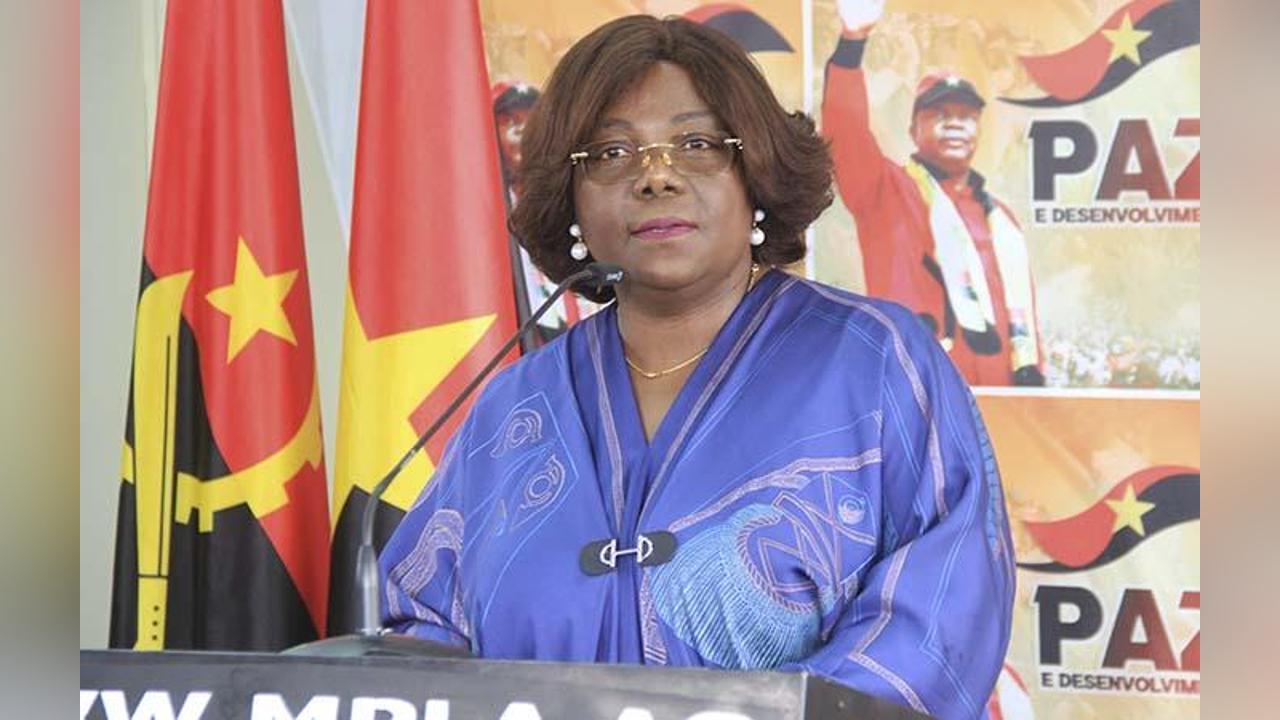
Africa-Press – Angola. The Vice-president of the MPLA, Luísa Damião, highlighted this Wednesday, in Luanda, the historical value of the 8th of November 1974, the date on which the arrival in the country’s capital of the first delegation from the leadership of this political formation was marked .
This statement was made by the Vice-President of the MPLA to the press at the end of a ceremony to commemorate and honor these activists who disembarked in a composition of 26, transported by a Zambia airline aircraft.
According to Luisa Damião, the delegation was welcomed by around 50 thousand people living in the country’s capital and beyond.
The official highlighted that it was a historic moment not only for political formation, but above all for the country, “which is why 49 years later we are remembering this moment, taking into account its historical value and the need to pass on this testimony to new generations.”
The arrival of the MPLA in the country’s capital, until then a liberation movement that fought Portuguese colonialism in the forests, resulted from an agreement to hand over the governance of Angola to the nationals, initially with independence (on November 11, 1975) through a transitional government integrated by the three movements and the colonial entity, which would be followed by an electoral election.
Luísa Damião added that the MPLA “is what it is today due to the fact that several generations passed through it, where each one did their part and we have to demonstrate to young people that this journey to achieve independence and peace cost the sacrifice of many sons and daughters of Angola”.
He also said that the MPLA has always worked “for the people and with the people, which is where its strength lies”.
For the historic activist of this political formation, Ângela Bragança, at the time a young woman who in the capital, alongside others, worked to create conditions for the reception and installation of the party leadership in Luanda, the 8th of November is of great importance for the history of the party.
Intervening during the ceremony, he also highlighted some of the first actions of this same leadership towards installing and developing the party, among which he mentioned the role of the Dona Amália building (Rangel), which “encloses within itself a history of great relevance and which One cannot help but reflect, as important decisions were made in the early stages”.
To younger people, he drew attention to the importance of dates and moments like this as “helping to grow within the politics and spirit of the MPLA, making it increasingly stronger”.
Through his testimony, he spoke about some memories and highlighted the need to “construct the building (Nation) on firm pillars, with muscles, vein and knowledge forged in unquestionable discipline”.
Another important intervention was from another MPLA leader, Eufrazina Maiato, who also gave her testimony and asked the youth to continue the party’s achievements, using their strength and dynamism.
In turn, the retired general, and one of the members of the party leadership group that landed in Luanda at the time, Mbeto Traça, said that this moment had a very strong influence, not only because it legitimized the party’s presence in the country’s capital and its reorganization, as well as the demonstration of acceptance by Angolans.
He also added that this was, in the same way, the reunion of the soldiers with their family and friends, whom many had not seen for years, after a long period in the forests.
Mbeto Traça also highlighted the fact that, on November 8, 1974, the then Craveira Lopes Airport (in Luanda) was too small for the immense human frame and an occasion that motivated the expression, which later became one of the main slogans of the party, said by the head of the formation delegation, Lúcio Lara, that “the MPLA is the people and the people are the MPLA”.
Homage
The occasion served to pay tribute, in person, to two characters who were part of the delegation, specifically, the retired generals Hélder Vieira Dias “Kopelipa” and Mbeto Traça, as they symbolized the large contingent of the MPLA and FAPLA who were in the forests.
At the same ceremony, along with other moments, revolutionary songs by artists Santos Júnior and Santocas were performed to the joy and nostalgia of those present.
On board a Zambia airline plane, the 26 members of the party leadership were received by a large group of people, including Lúcio Lara, who headed it, Lopo do Nascimento, Carlos Rocha “Dilolwa”, Ludy Kissassunda, Joaquim Kapango, Saydi Mingas, Manuel Francisco Tuta “Battle of Angola”, Jacob Caetano João “Imortal Monster”, Pedro Maria Tonha “Pedalé”, Henrique Santos “Onambwe”, Joaquim Domingos “Valódia”, Bento Ribeiro “Kabulo” and Pascoal Luvualu.
Also taking part were Evaristo Domingos “Kimba”, Ambrósio Lukoki, Pedro Gomes “Kituxi”, Maria Mambo Café, Sílvio de Almeida, Luísa English, Elsa de Almeida e Sousa “Ndjolela”, António Jacinto do Amaral Martins, Albano Machado, Mbeto Traça , Guinapo, Pascoal Macossi, Garrido “Che Guevara” and Manuel Hélder Vieira Dias “Kopelipa”.
For More News And Analysis About Angola Follow Africa-Press