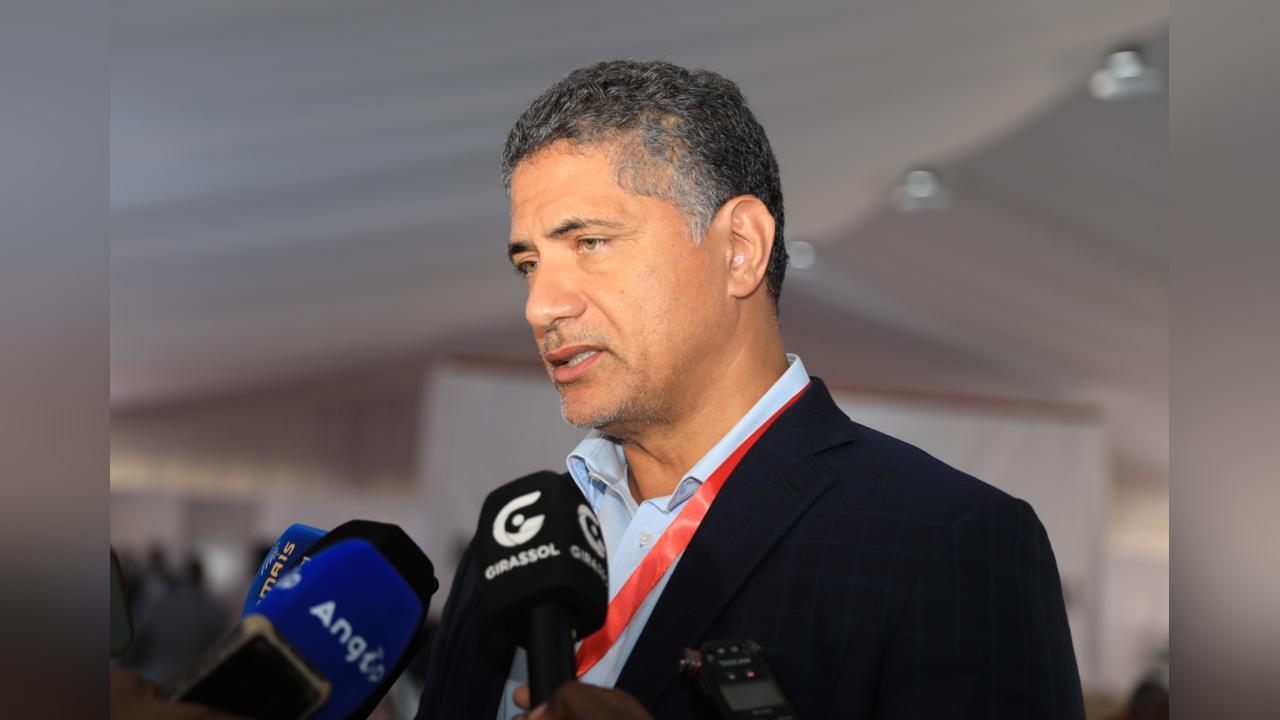
Africa-Press – Angola. Ethics and scientificity in making political decisions reconciled with environmental preservation and national interest were under discussion, this Thursday afternoon, at the Luanda Biennale.
In the panel “Climate change: challenges, impact, adaptation and vulnerabilities”, the Minister of Energy and Water, João Baptista Borges, stated that ethics requires us to differentiate between science and politics and that decisions must respect technical assessments.
The government defines priorities, but they are then evaluated at a technical level on national and regional issues in the interests of the populations, the State and neighboring countries.
João Baptista Borges also informed that the sustainability strategy integrates policies to counteract climate change, with energy transition goals, producing clean energy, through the construction of hydroelectric dams and the construction of solar parks, to compensate for periods of hydrological irregularity.
The Minister of Energy and Water defended the promotion of education programs to increase the population’s feelings of ownership in relation to public assets and help protect them and prevent their vandalization.
He mentioned that the dispersion of indigenous families, mainly in the south of the country, has made assistance and the provision of services to these populations difficult.
Mineral resources
The Minister of Mineral Resources, Oil and Gas, Diamantino de Azevedo, defended environmental protection policies at the same time that countries must respond to their development needs and promote the well-being of their populations.
He stated that the biggest problem with climate change is man, so he must be educated to master technologies for the benefit of all and in the values of the country, without pointing to oil and other resources as the villains.
He defended a fair and equitable mineral and digital energy transition, lamenting the fact that 600 million inhabitants of the continent do not have access to energy, despite the resources existing on their soil.
He reported that the government intends to maximize each barrel of oil by building refineries, to then go into petrochemicals and in the future contribute to the production of fertilizers.
The Minister of Mineral Resources, Oil and Gas advocated more serious and convincing global policies, based on education and research to contain climate change, recognizing that Africa has the right to use its resources as a blessing and not as a curse.
African Union
The African Union Commissioner for Agriculture, Rural Development, Blue Economy and Sustainable Environment,
Josefa Sacko believes that the continent is lacking public policies to take advantage of its resources and guarantee self-sufficiency.
He said that the Covid-19 pandemic and the war between Russia and Ukraine raised fears of a lack of food when African countries have fertile land to produce enough to feed their populations.
He spoke of the need to correct justice in the world market, such as the fact that a ton of carbon produced in Africa is worth between 2 and 3 dollars and that produced in Latin America or Asia costs 18 dollars.
He recalled that the Nairobi climate summit encourages the growth of the green economy, identifying sources of financing and the need to provide knowledge about the functioning of the carbon market.
The Programs and Projects Coordinator of the African Indigenous Women’s Organization of the Central African Network, Hajara Haman, called for greater inclusion of indigenous communities, investment in their education so that they can participate more actively in the development of their countries.
He said that when dealing with populations with knowledge of environmental preservation techniques transmitted from generation to generation, they should be listened to more as they are also authors of change.
Hajara Haman pointed out as challenges facing indigenous communities marginalization, gender discrimination, land conflicts and migration that can cause loss of identity.
The panel was moderated by university professor and Climate Change Specialist, Gabriel Luís Miguel.
For More News And Analysis About Angola Follow Africa-Press