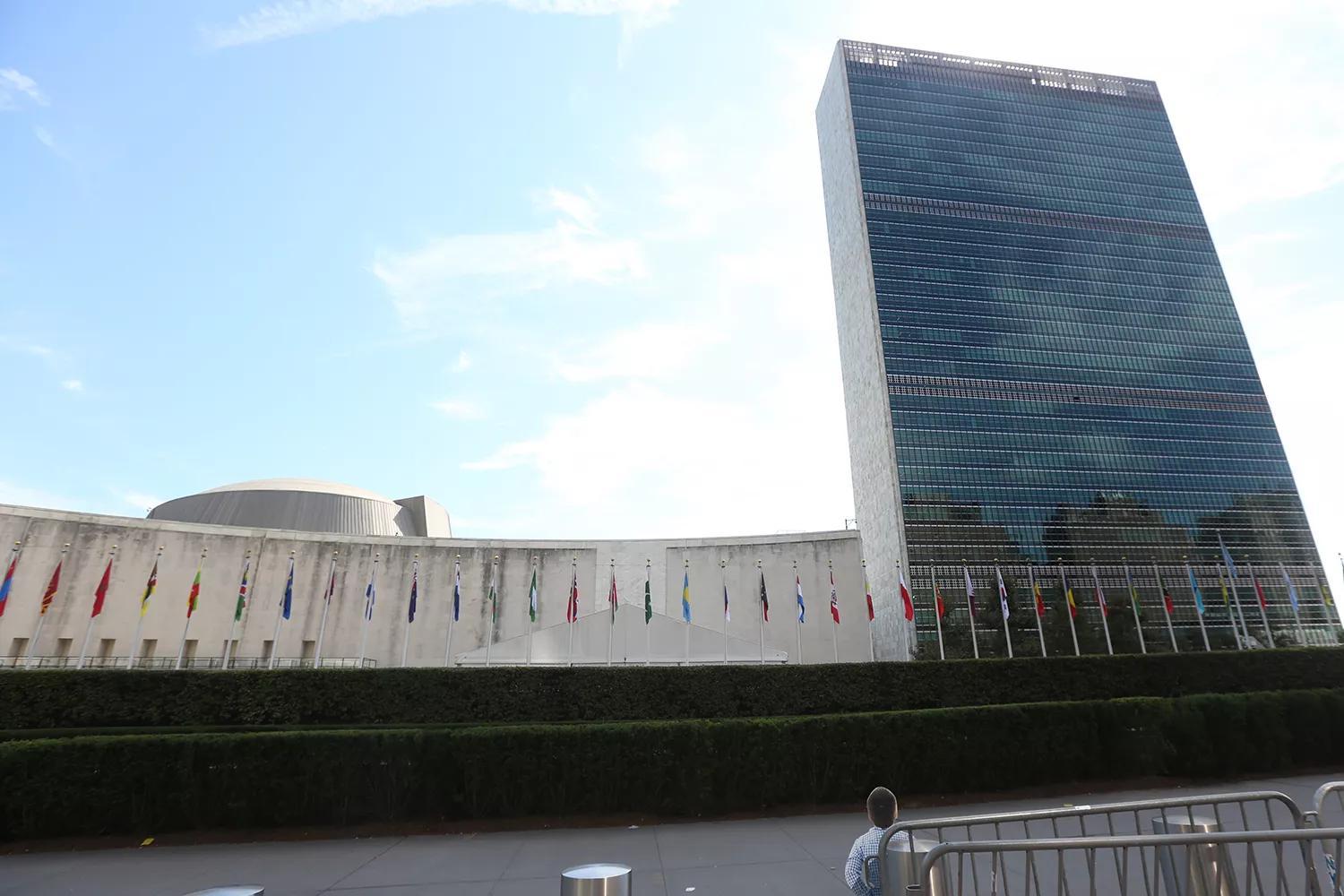
Africa-Press – Angola. The gains of the Battle of Cuito Cuanavale were praised, Friday (22), during the Southern African Liberation Day celebrations, for the first time, at the United Nations headquarters, in New York.
According to a press, the event, organized by the Member States of the Southern African Development Community (SADC), had as its main speaker the president of the 78th Session of the UN General Assembly, Dennis Francis.
On the occasion, Dennis Francis highlighted the historical transformation of this region from a past filled with racial domination, injustice, liberation struggles and conflicts, to a present marked by peace, prosperity and “great hopes” for a better future.
He added that the credit for this transformation belongs to the people of Southern Africa and their visionary leadership, who, with unwavering determination and bravery, fought against tyranny, colonialism and apartheid.
In his address, he paid tribute to the anonymous heroes and heroines as the true giants, and the imposing figures of history such as Agostinho Neto, Nelson Mandela, Desmond Tutu, Sam Nujoma, Robert Mugabe, Eduardo Mondlane and Samora Machel.
On the other hand, he stated that SADC continues to play a constructive role in the United Nations system in multiple areas, from peace and security to regional cooperation.
“SADC peace interventions in Lesotho, Madagascar and Mozambique serve as admirable examples of the role of regional bodies in preventing conflicts and peacefully resolving disputes, while supporting the strengthening of democratic processes and institutions” he maintained the president of the 78th session of the UN General Assembly.
Dennis Francis further highlighted that SADC’s contributions to UN-led peacekeeping missions, such as the deployment of troops to the Eastern Democratic Republic of Congo, are commendable and noteworthy.
At the continental level, he noted that SADC members contributed to ensuring the alignment of the Constitutive Act of the African Union and the Protocol Relating to the Establishment of the Peace and Security Council of the African Union with the principles and values of the United Nations Charter.
Furthermore, he said SADC has demonstrated great leadership in addressing global challenges, from climate change to the COVID-19 pandemic, while working to promote gender equality, women’s empowerment and youth development.
In turn, the Permanent Representative of the Democratic Republic of Congo (DRC), Ambassador Zenon Ngay Mukongo, in his capacity as a member of the SADC Troika, recalled that the date of 23 March as Southern Africa Liberation Day, was established by SADC Heads of State Summit in 2018, to pay tribute to the liberation of the region in recognition of the Battle of Cuito Cuanavale.
He highlighted that the decisive battle was fought on March 23, 1988, putting an end to a protracted war, which resulted in a continuous peace movement, negotiations, which culminated in the signing of the New York Accords on December 22 of this year – an agreement tripartite between Angola, Cuba and South Africa on the implementation of UN Security Council Resolution 435/78.
“The implementation of Security Council resolution 435/78 paved the way for the release of Nelson Mandela from prison (11 February 1990), the independence of Namibia (21 March 1990) and the collapse of apartheid, giving way to a new page of freedom in South Africa (1994)”, he highlighted.
After 36 years, he reiterated that SADC member states are committed to the principles and objectives enshrined in the SADC Treaty, namely: achieving development and economic growth; alleviate poverty; improve the standard and quality of life of the population of Southern Africa; promote and defend peace and security; and including the realization of AU Agenda 2063 and UN Agenda 2030.
The event commemorating the Liberation Day of Southern Africa, at the headquarters of the United Nations in New York, also included interventions by Representatives of the African Group, the African Union Observation Mission, the Group of Arab Countries, the Regional Group Asia-Pacific and the Republic of Cuba.
angop
For More News And Analysis About Angola Follow Africa-Press