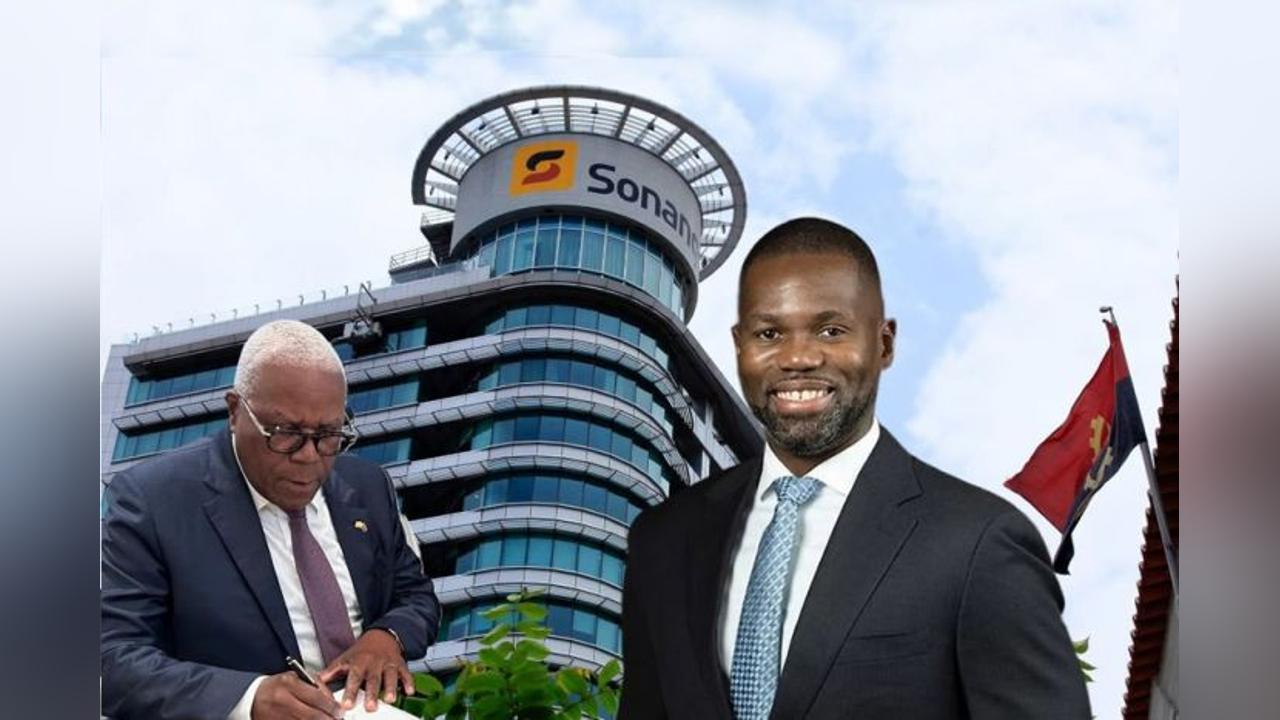
Africa-Press – Angola. Sonangol provided $35 million in financing to Alfort Petroleum, a private company led by Gianni Policarpo Gaspar Martins, son of the chairman of the state oil company’s board of directors, Sebastião Pai Querido Gaspar Martins.
The case, which involves the KON 8 block, a high-potential onshore asset, is being highlighted as one of the most serious examples of nepotism and conflict of interest since João Lourenço promised to streamline the company’s management.
The production sharing agreement (PSA) for the KON 8 block was signed in August 2022 and, in November of the same year, Alfort Petroleum took control of the onshore asset, considered to have great potential.
According to the terms disclosed, the company committed to investing approximately US$35 million in initial activities, namely the acquisition of seismic data and environmental programs, since 90% of the concession area is located within the Quiçama National Park.
What wasn’t widely reported is that this amount didn’t come from Alfort Petroleum’s own coffers, but rather from Sonangol. Instead of mobilizing private resources to meet the contract’s requirements, the CEO’s son’s company benefited directly from public funding, in an apparent conflict of interest that raised strong accusations of nepotism.
Critics of the regime consider this case a paradigmatic example of state capture. Sonangol, instead of acting as a guardian of the national interest, becomes a financier of the private businesses of figures with privileged connections to power.
Thus, the promised “clean-up” of the oil company did not eliminate the family privileges that marked the past, it merely transferred them to new circles of influence.
Faced with criticism, Gianni Policarpo Gaspar Martins reacted, stating that his position is the result of merit and work, not favoritism.
“If people knew the enormous effort required for foreign investors to understand the importance of corporate social responsibility in Angola, they would view my work differently. Leading a company under Angolan law but with foreign investment, I have to ensure that the social agenda is a top priority,” he said.
He added: “We talk so much about foreign companies not investing in local managers. When that happens, they call it nepotism. I’ll focus on helping the country’s youth, creating jobs, and supporting training. Giving up is not an option.”
It’s worth noting that in 2017, President João Lourenço removed Isabel dos Santos from the leadership of Sonangol, citing mismanagement and nepotism, presenting himself as a reformer who would clean up the state-owned oil company and put an end to the abusive use of public resources. Seven years later, a new episode has undermined this narrative.
The episode reignites the debate over Sonangol’s transparency and integrity, at a time when the government is insisting on fighting corruption.
The public financing granted to a private company controlled by the son of the chairman of the board of directors of the state-owned oil company itself is seen by many as a serious setback and a sign that, in Angola, power over oil remains concentrated in the hands of families close to the state apparatus.
For More News And Analysis About Angola Follow Africa-Press