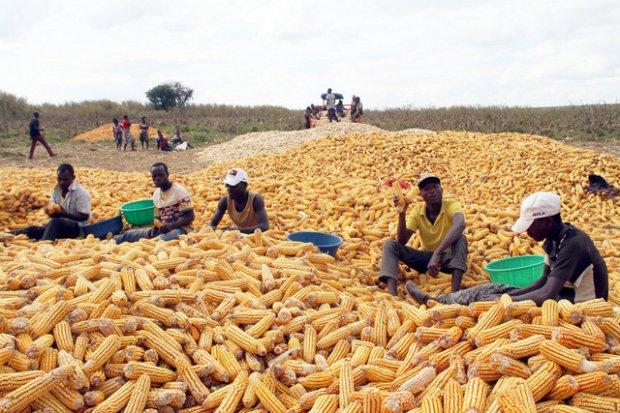
Africa-Press – Angola. The Agriculture sector in Caála, in Huambo province, expects a harvest of 900,000 tonnes of maize by the end of the agricultural season that started in September 2021, according to the municipality administrator, Rubem Etome.
In a brief communication, Rubem Etome said that more than 20,000 peasant families benefited from direct aid from the Government of the Province of Huambo (GPH) in this campaign, essentially in the purchase of agricultural inputs and the basic food basket.
The administrator underlined that the improved practices for cultivation, which the peasants receive in the Field Schools, help to raise the levels of production in the region and are stimulating the increase of productivity and the financial autonomy of the families.
“Within the scope of several programs that the Government is implementing with the peasants, it is empowering farmers in the scale cultivation of various products, such as beans, corn, potatoes, among other cereals”, he said.
The increase in production, he stressed, is also the result of the distribution of agricultural inputs in fields cultivated by peasant families, which encouraged increased production that should improve the quality of life of the beneficiaries and contribute to the socio-economic development of the region.
On the other hand, the Municipal Administration of Caála, through the disbursement of expenses to support development, installed 32 luminaires of local initiative, which make it possible to overcome integral public lighting. However, another 15 others, supported by solar panels, will be applied in the Catata commune in the coming days.
The director of the Agricultural Development Station (EDA) in Ukuma, Benévola Aguiar, said that the MOZAP II project, carried out by the Ministry of Agriculture, brings better harvests. The project aims to enhance family production, to achieve food self-sufficiency and fight poverty.
In the municipality of Ukuma, 86 Field Schools are controlled, where 2,580 peasants have already been trained. Benévola Aguiar said that the project is helping to increase production, making it possible to diversify cultures throughout the municipality, with the cultivation of vegetables at any time of the year.
The director of the EDA said that the methodology of the Field School is of great importance, since the exchange of experience is improving the relationship between farmers and researchers and helps to strengthen the capacity of farmers to make decisions, which always result in in the significant and sustainable improvement of the crops and in the increase of self-esteem.
For More News And Analysis About Angola Follow Africa-Press