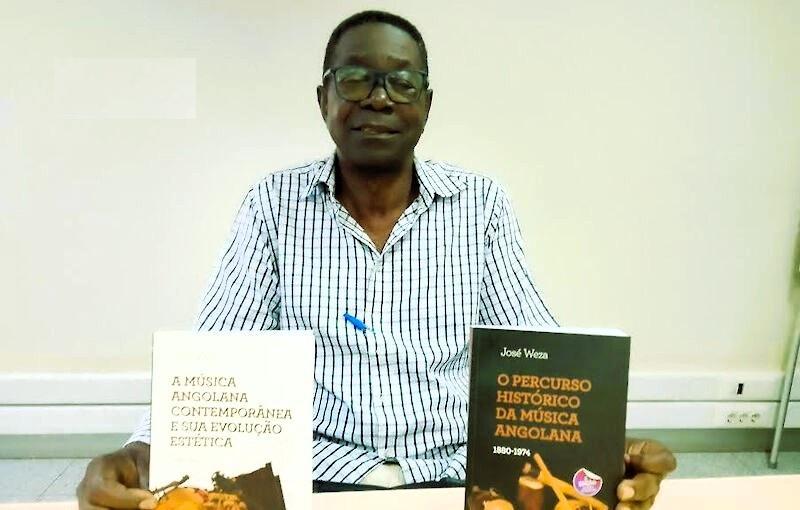
Africa-Press – Angola. The book “A Música Angolana Contemporânea e Sua Evolução Estética” (Contemporary Angolan Music and Its Aesthetic Evolution), written by Angolan journalist José Junior, better known by the alias José Weza, was presented on Friday at the Kilamba Recreational Center in Luanda.
The 389-page book was published by Mayamba Editora and offers an in-depth analysis of Angolan musical production between 1975 and 2000, a period marked by aesthetic, social, and cultural transformations.
The book, whose first print run was 1,000 copies, is composed of 15 chapters. It is the result of meticulous research that presents the trajectory of artists and musical movements between the 1980s, 1990s and 2000s, exploring musical genres such as Kizomba, Kuduro, Semba and other expressions that shaped the contemporary sound identity of Angola.
At the time, the writer took the opportunity to presented as well the second edition of the book entitled “The Historical Journey of Angolan Music” (O Percurso Histórico da Música Angolana), a work he published in 2008.
Meanwhile, speaking to ANGOP, José Weza stated that both books arose from the need to address the scarcity of written reference works on Angolan music, a reality he noticed especially when he began his journalistic career, at which time he observed the lack of documentary sources for the production of cultural studies.
“There were no precedents or sufficient elements to support writing about Angolan music, which led me to begin a work that took many years to complete”, he emphasized.
According to the author, the research was essentially based on living, oral and written sources, the latter being quite limited, which required numerous interviews with musicians and cultural agents.
He added that the editing process for both books was also lengthy, due to the lack of support and sensitivity from some entities linked to culture.
José Weza argues that both books aim to stimulate academic and artistic interest in Angolan music, serving as a reference for students, researchers and musicians.
“The more there is written literature, the greater the value of our music and those who contributed to its growth”, he stated.
The author also announced plans to translate the books into English, with the support of the Obrabella Foundation, with the goal of promoting Angolan music abroad.
He was born in Luanda and raised in the Bairro Popular neighborhood. He grew up influenced by the itinerant performances of the musical and cultural project named Kutonoka, which shaped his interest in national music.
Throughout his career, he worked as a journalist at the Angola National Radio station (RNA), as well as at the Angola Press Agency (ANGOP).
In the artistic landscape, he began his career with the group Anangola in 1978, and later founded the group Balança-8, maintaining an active presence in the music scene until the 1990s.
For More News And Analysis About Angola Follow Africa-Press