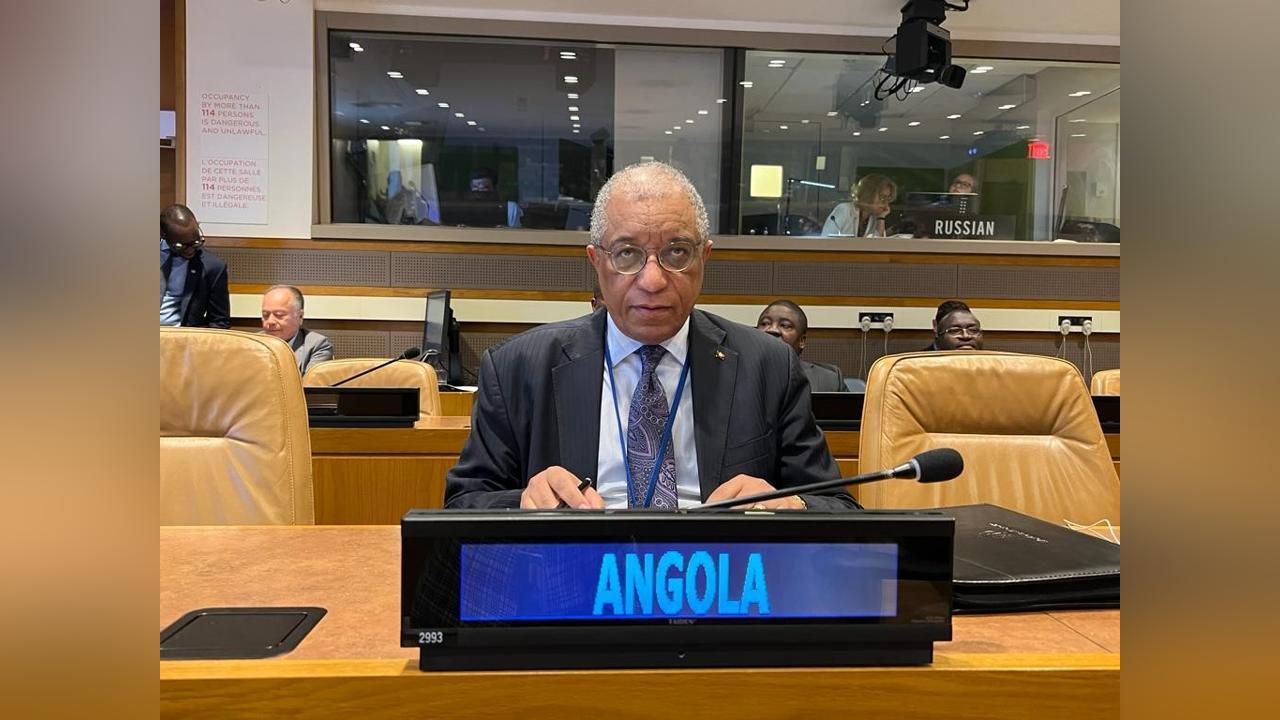
Africa-Press – Angola. Angola’s Permanent Representative to the United Nations, Francisco da Cruz, on Tuesday at United Nations (UN) headquarters in New York, United States of America (USA), declared that investment in resilient infrastructure and the promotion of integrated understanding to water, energy, and food remain the country’s strategic priorities.
The Angolan diplomat made the statement during a “Roundtable on Water Policies, which included the Launch of the Global Report on Water Sector Failures”, co-organized by the UN University’s Institute for Water, Environment and Health and the Permanent Mission of Canada to the UN.
“Water is not just a sectoral issue, it is a cornerstone for sustainable development, social stability and economic resilience”, he stressed adding that for Angola, water security is “intrinsically linked to food production, energy generation, public health and adaptation to climate change.”
He said due to the above mentioned, the Angolan Government has integrated water, sanitation and hygiene into its national development initiatives, in line with the Angola 2050 Long-Term Strategy.
At the time, he recalled that the African Union (AU) has defined as its theme for 2026: “Ensuring the sustainable availability of water and safe sanitation systems to achieve the goals of Agenda 2063”, reflecting a vital commitment to life, development, and climate resilience.
In this context, he highlighted the importance of holding the event, the upcoming preparatory meeting scheduled to take place in Dakar, Senegal and the progress and ambitions of the 2026 and 2028 United Nations Water Conferences process.
The government official emphasized that these platforms serve to “align priorities, identify concrete pathways for engagement” and ensure that the commitments are accompanied by adequate means of implementation, including financing, capacity building and technology transfer.
Francisco da Cruz expressed the will of Angola to contribute significantly to the preparations for the 2026 United Nations Water Conference and to the advancement of collective action in support of Sustainable Development Goals (SDGs).
According to the study presented at the meeting, the world is rapidly depleting its natural water reserves, as more than half of the world’s large lakes have decreased since the early 1990s, while approximately 35% of the natural wetlands of the Pantanal have been lost since 1970.
The human cost is already significant. Almost three-quarters of the world’s population live in countries classified as water insecurity or critical water insecurity.
The study further states that about four million people suffer from severe water scarcity for at least one month a year, while the impacts of drought cost approximately USD 307 billion annually.
However, amid chronic groundwater depletion, soil and land degradation, deforestation, and pollution, worsening by global warming, the UN report declares the beginning of an era of global water failure, inviting world leaders to facilitate an “honest and science-based adaptation to a new reality”.
For More News And Analysis About Angola Follow Africa-Press