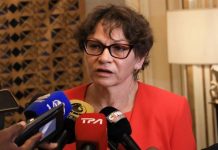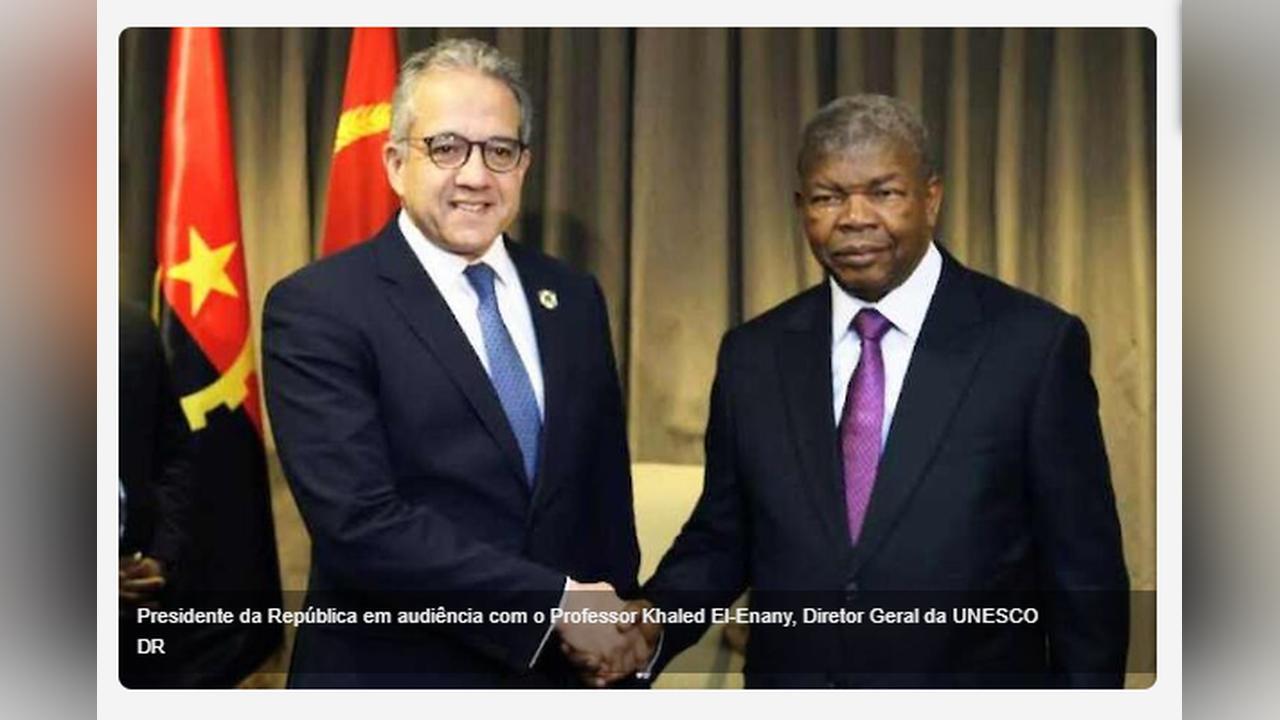
Africa-Press – Angola. Angolan president João Lourenço granted an audience on Friday to the Director-General of the United Nations Educational, Scientific and Cultural Organization (UNESCO), Khaled El-Enany, with whom he discussed cooperation with that United Nations body.
The meeting took place on the sidelines of the 39th Summit of Heads of State and Government of the African Union, taking place in Ethiopia.
The cooperation between Angola and UNESCO, established in 1977, is consolidating itself as one of the central pillars of the country’s foreign policy in the fields of education, culture, science and communication, with a direct impact on the implementation of the 2030 Agenda for Sustainable Development.
The partnership stands out for promoting a culture of peace, with emphasis on the Luanda Biennial – Pan-African Forum for a Culture of Peace in Africa, an initiative that projects the country as a platform for dialogue, tolerance and continental integration.
Education and Sustainable Development
In the education sector, Angola and UNESCO prioritize the transformation of educational systems, mainly in the sustainable development, education for peace, and strengthening pre-primary education.
Cooperation includes support for UNESCO Associated Schools, training of personnel, and the definition of policies aimed at inclusive, innovative education aligned with global challenges.
Heritage Enhancement and Creative Industries
In the cultural field, Angola works with UNESCO on the inscription of new sites on the World Heritage List, as well as on the preservation and enhancement of national heritage.
Among the milestones is the classification of the historic city of Mbanza Kongo as a World Heritage Site.
Cooperation also encompasses the digitization of cultural collections, the strengthening of creative industries, promotion of sustainable tourism, and initiatives aimed at facilitating the return of cultural assets.
Science, Environment, and Innovation
In the area of science and the environment, the partnership focuses on promoting scientific research, the sustainable management of natural resources, and technical capacity building.
Environmental education and conservation projects benefit from the involvement of national institutions, including the Kissama Foundation, with a view to protecting biodiversity and the responsible use of ecosystems.
In the communication and information sector, Angola cooperates with UNESCO in actions aimed at combating disinformation, promoting freedom of expression, digital literacy and improving Information and Communication Technologies infrastructures.
Active participation in the organization
Angola maintains an active presence in UNESCO’s governance bodies.
The country recently completed a term on the Board of the International Bureau of Education (IBE) and is a member of the organization’s Executive Board, reaffirming its commitment to the values of education, science, culture and the promotion of peace.
Bilateral cooperation reinforces Angola’s role as a strategic partner of UNESCO in Africa, with relevant contributions to sustainable development, scientific innovation and the consolidation of a culture of peace on the continent.