Africa-Press – Angola. The Minister of State and Chief of Staff of the President of the Republic, Dionísio da Fonseca, on Saturday considered the Angolan youth as guardians of peace, which is why the authorities expect their commitment to the development of Angola.
According to the official, who was spoke at the central event of the 4th of April, Day of Peace and National Reconciliation, he clarified that the present and the future depend on the energy of youth, talent and commitment to the development of Angola.
Therefore, he urged Angolans to preserve peace, value the achievements achieved, work together for the country’s development and view the future of Angola and Angolans with high optimism.
He pointed out that only with the achievement of peace was it possible to build a State of Law and Democracy, reconcile the nation, design and implement a program for the national reconstruction of infrastructures and define public policies more focused on people’s development.
He highlighted that Angola is committed to world peace, sustainable development and regional economic integration.
“The 4th of April is not just a date on the national calendar, but also a profound symbol of national reconciliation, forgiveness and hope”, highlighted Dionísio da Fonseca.
He called for coexistence between public and private institutions, political parties, communities and families, as there is an opportunity to continue building a more cohesive nation, open to private investment and welcoming tourists and investors.
Incursion on the paths of peace
The Minister of State highlighted that the 4th of April, which is celebrated under the motto “for the economic development and well-being of Angolans, together hand in hand”, constitutes the most precise asset that the Angolan people achieved after national independence”.
“The war devastated infrastructure, separated families and profoundly limited the country’s economic and social potential, but the Angolan people demonstrated an extraordinary quality, which is the ability to forgive, reconcile and start over”.
He mentioned that, from this moment on (peace), the national priority became clear – rebuilding the country, reconciling the people and laying the foundations for sustainable and inclusive development.
He stated that one of the greatest achievements of the post-war period was the reconstruction of roads, bridges, railways, airports, hospitals and schools built or rehabilitated.
He pointed out that the spaces where great battles were fought, such as in Cuito Cuanavale, Quifangondo, Ebo, Nto (Cabinda), Cangamba, Mavinga and other places of memory, are now linked to agricultural production and urban development.
Relevance of Cuando in the peace process
According to Dionísio da Fonseca, Menongue has a special meaning, as this land was a direct witness to the sacrifices of the Angolan people in which today it flourishes as an example of reconstruction and peaceful coexistence.
“The province of Cubango is a symbol of resistance, unity, sustainability and future”, he said.
He recalled that the province was once nicknamed “Lands at the End of the World”, today it presents itself as the land of progress, built with the daily efforts of everyone.
With the achievement of peace, it allowed the construction of 156 schools, making a total of 1,781 classrooms, serving the various educational subsystems, 82 health units, provided by 1,84 health employees.
He highlighted that the province can, therefore, have a more relevant and significant weight in the diversification of the country’s economy.
He guaranteed that the Executive will continue to promote the structuring projects planned for Cubango.
He pointed out the national road 140 / 295, in the Caiundo Mbala Chavo/Chavati section, the completion of 212 apartments in the first phase of the Menongue centrality, the Cuito Cuanavale University Campus, as well as the extension of the electrical network and the water supply system.
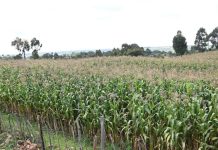
The agricultural sector deserved a word from the Minister of State with growth results in the cultivation of cereals (corn, sorgo, millet, rice and others.
In this sector, he defended the need to strengthen families and expand the 213 field schools, as well as enhance the 44 associations and 145 cooperatives, as well as the seven existing farms in the province.
April 4 commemorates the end of the civil war in Angola and the peace agreement signed in 2002.