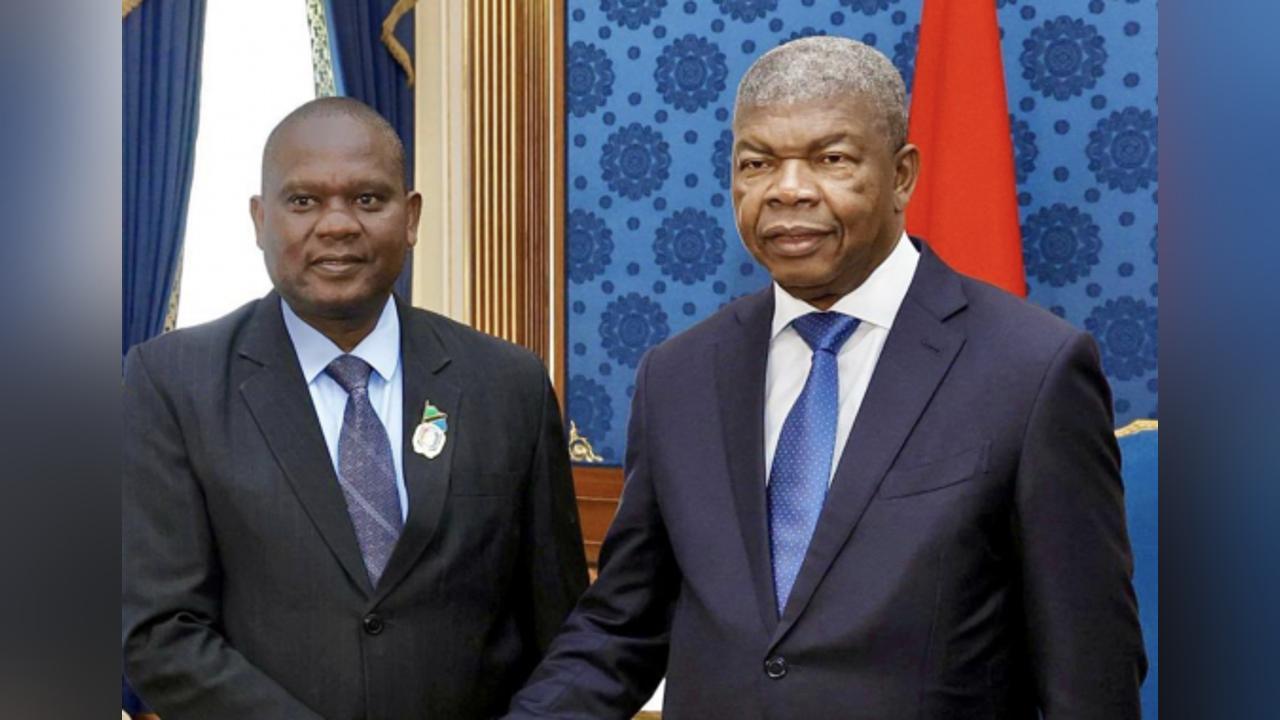
Africa-Press – Angola. The Lobito Corridor will boost economic and logistical cooperation between Angola and Tanzania, said Tanzanian non-resident ambassador Matheus Edward Mkingule in Luanda.
The diplomat made the statement to the press after a farewell audience granted by the President of the Republic, João Lourenço, at the end of his diplomatic mission in Angola, following his appointment as Tanzanian ambassador to the Republic of Cuba.
Matheus Mkingule pointed to the Lobito Corridor as a central piece of regional integration, highlighting the planned interconnection with the Tanzania-Zambia Railway Authority, which will allow the establishment of a logistical axis between the Atlantic and the Indian Ocean.
“The objective is to create a corridor that starts from the Port of Lobito, crosses Zambia and reaches Tanzania, with a view to facilitating regional trade and boosting the economic development of the countries involved,” he said.
The ambassador described the bilateral relations between Angola and Tanzania as “excellent,” with notable progress since 2024, the year in which he presented his Letters of Credence to the Angolan Head of State.
He also recalled the State visit made in 2025 by the President of Tanzania, Samia Suluhu Hassan, to Angola, which he considered a milestone in deepening bilateral cooperation, with new perspectives in the political, economic, defense and security fields.
The diplomat expressed gratitude to President João Lourenço for the support received during his term and reiterated Tanzania’s commitment to consolidating ties of friendship and cooperation with Angola.
Expanding Cooperation
Relations between Angola and Tanzania are based on a solid historical foundation and have seen continuous strengthening, notably with the development of the Lobito Corridor, considered a structuring axis for regional economic integration.
Diplomatic ties were formalized on August 25, 1981, following a period of close cooperation during Angola’s national liberation struggle, a phase in which Tanzania supported the ruling MPLA party. Currently, the two countries share common interests in organizations such as the African Union, Southern African Development Community (SADC), and the Group of 77.
In the political-diplomatic sphere, cooperation is characterized by stability and the intensification of institutional dialogue, with regular exchanges of official visits and coordination of positions in African forums.
Economic cooperation encompasses sectors such as trade, agriculture, mineral resources, transport, and logistics, with mutual interest in strengthening the mobility of people and goods, as well as improving air and infrastructure connections.
The Lobito Corridor plays a central role in this process, linking the Port of Lobito to the interior of the continent, with connections to Zambia and the Democratic Republic of Congo, and potential extension to Tanzania via TAZARA, creating a transcontinental corridor between the two oceans.
The infrastructure allows for greater efficiency in the transport of goods, reduces logistics costs, and boosts regional trade, impacting exports of minerals and agricultural products.
In the field of defense and security, Angola and Tanzania maintain active cooperation, contributing to the stability of Southern Africa and responding to transnational threats.
The outlook points to the deepening of regional integration, focusing on infrastructure development, increased intra-African trade within the framework of the African Continental Free Trade Area, and the expansion of joint projects in the energy, transport, and logistics sectors.
The evolution of cooperation between Angola and Tanzania reflects the transition from historical solidarity to a modern strategic partnership, with the Lobito Corridor establishing itself as a catalyst for economic development and African regional integration.
For More News And Analysis About Angola Follow Africa-Press