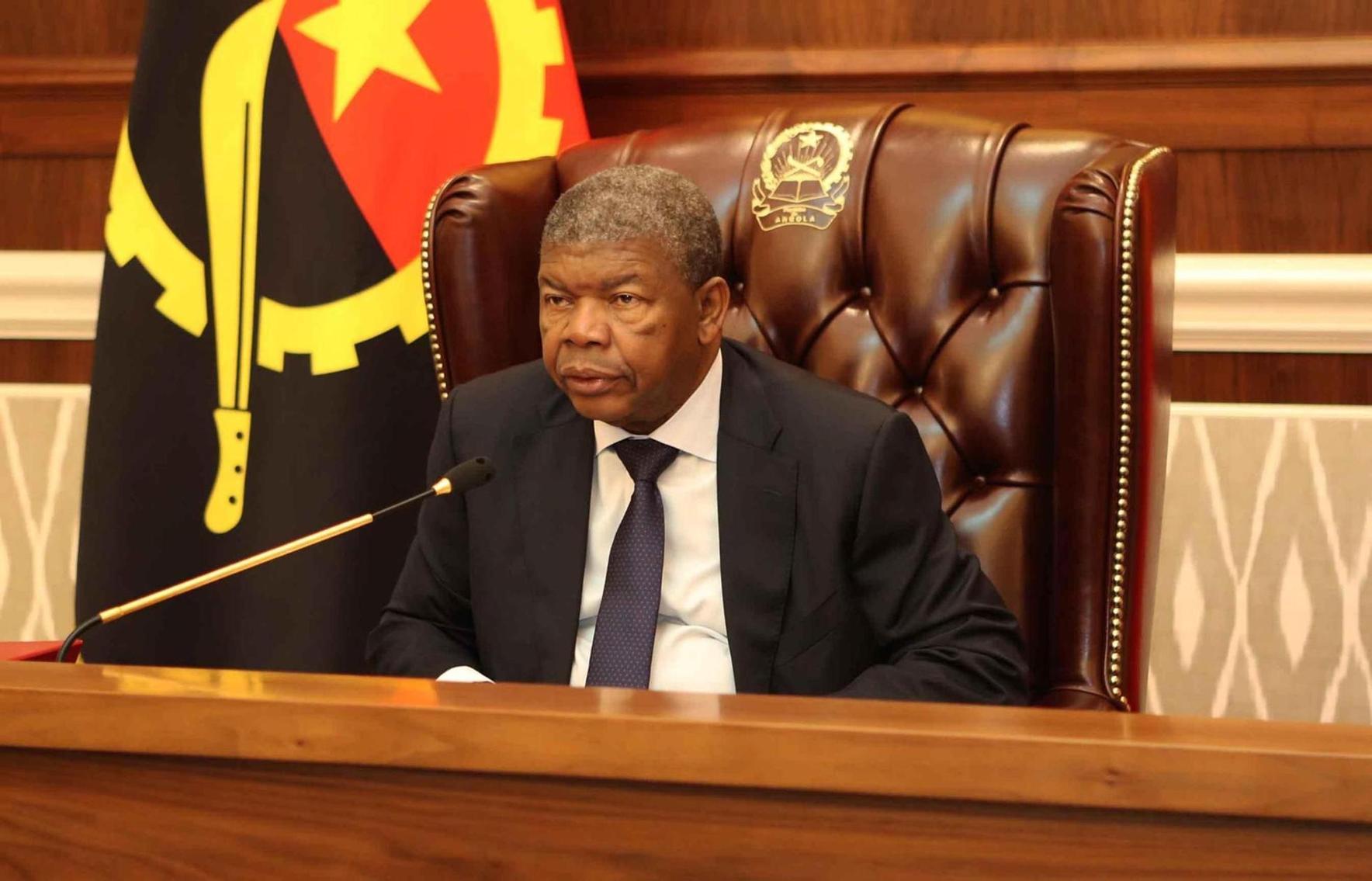
Africa-Press – Angola. The Council of Ministers reviewed, on Wednesday, two legislative proposals authorizing the President of the Republic, João Lourenço, to legislate on additional tax incentives for oil blocks 34 and 35.
According to the final communiqué from the 6th Ordinary Session of the Council of Ministers, held today under the leadership of the Head of State, the legislative proposals aim to ensure the profitability of hydrocarbon operations and production.
The documents, accompanied by the respective Presidential Legislative Decrees, will be submitted to the National Assembly for review.
In the same sector, the Council of Ministers also reviewed measures to grant Sonangol the mining rights for the prospecting, exploration, appraisal, development, and production of liquid and gaseous hydrocarbons within the concession areas of blocks 34 and 35.
Proposals were also reviewed regarding authorization to enter into Risk Service Contracts for the aforementioned concession areas and to amend the Block 15 Production Sharing Contract, including the setting of respective production and investment bonuses.
During the meeting, amendments to the organizational and operational framework of the auxiliary bodies of the President of the Republic were also approved.
Tourism sector adopts new asset management structure
In the tourism sector, the body approved the new Organic Statute of the Ministry of Tourism, creating the position of Secretary of State for Asset Management and Tourism Concessions, as well as a new directorate.
The measure aims to strengthen the monitoring of the transformation of national tourism potential into actual assets and concessions, as well as the management of institutional relationships with concessionaires and investors, in coordination with AIPEX and provincial governments.
The new structure is expected to ensure the monitoring and oversight of concessions located in areas of tourism interest and potential.
Transplant Service
In the health sector, the draft Presidential Decree establishing the Transplant Coordination and Supervision Service (SECOSTRA) and approving its Organic Statute was reviewed.
This institution, operating as a specialized service, will be tasked with coordinating and supervising the process of collecting, managing, and distributing cells, tissues, and organs intended for transplantation.
Gender Equality
In the area of Social Action, Family, and Women’s Advancement, the Council of Ministers reviewed Angola’s 2nd Generation National Action Plan regarding UN Security Council Resolution 1325 on Women, Peace, and Security.
The instrument aims to promote the full participation of women and girls in conflict prevention and resolution, increase their representation in decision-making mechanisms, prevent and combat gender-based violence, and strengthen the protection of their rights in vulnerable situations.
The government also reviewed the draft Presidential Decree approving the National Policy for Gender Equality and Equity and its corresponding Implementation Plan, designed to guide the Executive’s actions in promoting equal opportunities, justice, social inclusion, and the protection of human rights.
Dissolution of INADEC
Among the legal instruments reviewed was the Presidential Decree dissolving the National Institute for Consumer Protection (INADEC); the management, supervision, and oversight of the Complaints Book, whether physical or electronic, will now be transferred to the entity responsible for economic inspection and food safety.
The Council of Ministers also reviewed the Organic Statute of the National Authority for Economic Inspection and Food Safety (ANIESA), which becomes the single entity for the inspection and oversight of economic activities, without prejudice to the powers assigned by law to other regulatory bodies.
As part of the reform, municipal oversight services will no longer exercise powers regarding the inspection of economic activity and food safety.
Consequently, their activities will focus on matters of civic order, such as street vending, construction site inspections, and on-street vehicle parking.
The new organizational statutes for the General Labor Inspectorate and the National Social Security Institute (INSS) were also reviewed; these are intended to align these institutions with the state reform process and the economic inspection system.
Sports and infrastructure
The session reviewed the draft Presidential Decree approving the Legal Framework for Sports Program Contracts, designed to regulate agreements between the State and sports entities for the pursuit of public interest objectives.
The Legal Framework for Sports Infrastructure was also reviewed; it establishes standards for the design, construction, management, use, and oversight of public sports facilities, as well as requirements regarding safety, access, and operations.
Other legal instruments
During the same session, the Council of Ministers reviewed the Organizational Statute of the Angolan Active Venture Capital Fund (FACRA), aiming to align its operations with current economic realities and boost the economy.
Amendments to the Organizational Regulations of the Criminal Investigation Service (SIC) were also reviewed to remove its powers regarding the inspection or oversight of economic activity, in accordance with the reform of the economic inspection system.
Another legal instrument reviewed provides for the transformation of the Angolan Customs Warehouse (EAA-E.P.) into a public limited company (Sociedade Anónima), which will henceforth be governed by the Commercial Companies Law, with the aim of adopting a management model focused on efficiency, profitability, and institutional competitiveness.
Strengthening regional cooperation
Within the framework of international cooperation, the Council of Ministers reviewed the draft Resolution approving—for ratification—the Treaty establishing the Southern African Science Service Centre for Climate Change and Adaptive Land Management (SASSCAL).
The instrument aims to strengthen regional capacity to generate and utilize scientific knowledge in order to address the challenges posed by climate change.
Also reviewed was the draft Resolution approving Angola’s accession to the Agreement establishing the African Association of Accountants General (AAAG); this body aims to foster cooperation among the accountants general of member countries, thereby contributing to improved public finance management and governance.
Ordinary sessions of the Council of Ministers take place during the last week of each month, while extraordinary sessions are convened by the President of the Republic whenever necessary.