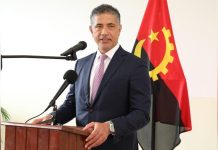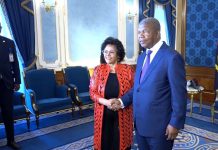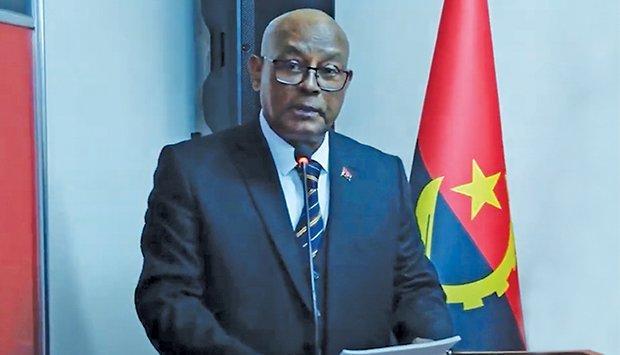
Africa-Press – Angola. In the brief interview, alluding to the 30th anniversary of relations between Angola and the United States of America, José Patrício shared unique moments in the course of diplomacy between the two countries.
What was it like representing Angola in the United States of America, at a complex moment in the relationship between the two countries?
It was not easy, taking into account the Cold War context in which we still found ourselves and ideological prejudices.
The Angolan Government was labeled Communist, Marxist-Leninist due to its ties to Cuba and the then Soviet Union (today the Russian Federation), being part of the so-called black list of countries with which it did not maintain diplomatic relations.
A refined and professional work was needed to combat ideological stigmas, through a new open and dialoguing stance that conveyed confidence and seriousness.
From the point of view of unconditional support, America was UNITA’s “headquarters” and there was war. Did you feel “despised” in diplomatic terms?
I never felt neglected. Instead, he could be seen as an adversary who arrived in Washington DC at the invitation of the North American Administration due to the evolution of the negotiation process in the search for compromises for a definitive solution that could put an end to the war in Angola.
As for the perception that the USA was UNITA’s sanctuary, I will resort to a passage from the book “Diplomacy” by Henry Kissinger, according to which, I quote: “the enemy of my enemy is not necessarily my friend, no is nothing more than a circumstantial ally.”
What strategic instructions did he take to America, in order to achieve the mission’s objectives?
As expected, the strategy was to maintain alignment with the Government’s policy, which had demonstrated considerable seriousness and a spirit of commitment in the Bicesse negotiations that would lead us to the ceasefire agreement, formation of the single national army and the realization of the first democratic elections in Angola.
As a senior member of the Presidency of the Republic, the Americans interpreted my appointment to Washington as a positive sign from the President of having a person very close to him and of political trust carrying out that mission, under direct leadership.
In fact, my appointment to Washington created some controversy in certain circles, as I was too young for a mission of such responsibility.
Angola and the United States celebrated, in 2023, the 30th anniversary of bilateral relations. What does it represent for you and for Angolans?
For Angolans, this date of the 30th anniversary that we celebrated represents a reason for satisfaction, as we see that the levels of friendship and cooperation relationships are increasing and strengthening.
For me personally, it is a source of satisfaction and pride for having been able to interpret the guidelines given to me and for being part of the group of diplomats, politicians and military personnel who, at different stages, raised the flag of our diplomacy high in negotiation processes. so complex that it would be possible to write an Encyclopedia of Political Science and International Relations.
What political significance do you attribute to these relationships today?
All relations between two States have a unique political significance, because they unite countries and open the way to cooperation based on agreements and agreements of various natures.
In the specific case of the United States, we also shared blood ties that history certifies and, even when we did not yet have formal relations, we already enjoyed dynamic cooperation in the field of hydrocarbons and beyond.
How do you look at America, taking into account the way bilateral relations began?
We have to look at the United States of America as the great superpower that it is, and for the role and influence it has in international organizations, particularly as a permanent member of the United Nations Security Council.
In the context of international politics, the world has completely changed. It’s not like it was when he performed his duties in the United States. What aspects continue to be a priority, to this day, in these relationships?
The priority of priorities is respect for the sovereignty, territorial integrity and identity of our States and peoples. This is the main pillar to preserve in the relationship with any State.
The rest is to maintain relationships with reciprocal benefits and respect the international conventions that bind us.
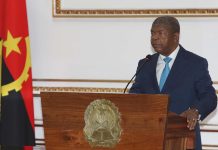
The President of the Republic, João Lourenço, expressed his intention to expand cooperation in the Defense and Security sector, with the purchase of weapons and equipment for the FAA. Based on your experience in the United States, do you believe that the initiative can lead to more solid cooperation in terms of the Angolan military industry?
Cooperation in the field of Defense and Security is not limited to the purchase of weapons. It currently exists within the scope of joint military exercises of a humanitarian nature, military medical readiness, land and air exchange programs, demining and destruction of weapons in Angola.
This is not to say that cooperation cannot be extended further, including, of course, issues relating to the modernization of the Angolan Security and Defense Forces.
For More News And Analysis About Angola Follow Africa-Press