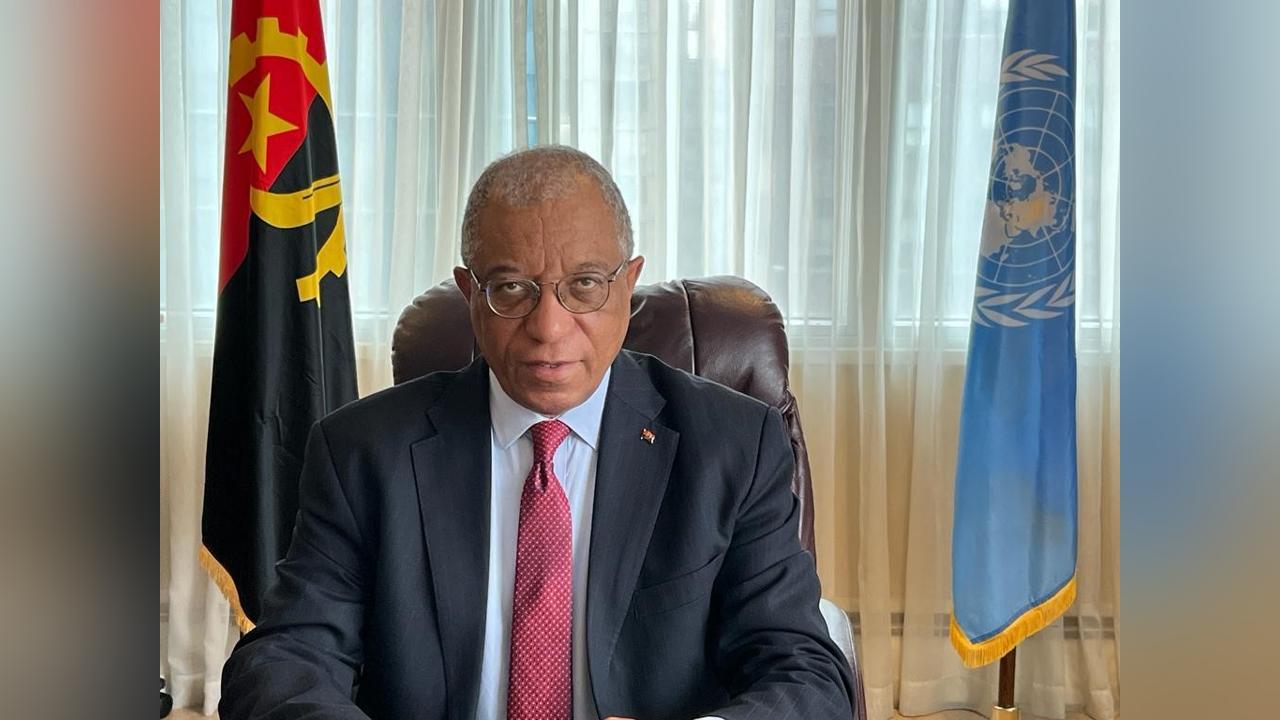
Africa-Press – Angola. The Permanent Representative of Angola to the United Nations, Francisco José da Cruz, defended this Monday, in an interview, the urgent need to combat the root causes of conflicts in Africa.
According to the diplomat, who was speaking about the 3rd edition of the Pan-African Forum for the Culture of Peace – Luanda Biennial, taking place from the 22nd to the 24th of this month, it is imperative that pragmatic and feasible solutions be found for conflicts.
According to the source, Africa’s challenges justify the need to combat the root causes of conflicts, starting by recognizing that development, peace, security and human rights are interconnected and mutually reinforcing.
Therefore, it considers the Luanda Biennial as a catalyst in mobilizing will for the implementation of national policies that include education for peace.
Regarding the approach to higher education on the continent, included in the event’s agenda, it advocates the creation, reinforcement and mobilization of synergies for its quality, in order to constitute an active and engaged agent of transformation and change for development economic, social and environmental aspects of Africa.
Here is the interview:
– Angola hosts this week the third edition of the Luanda Biennial, an event essentially linked to the promotion of the culture of peace. What is your opinion about the country’s role in the continent’s pacification efforts?
Francisco José da Cruz (FJC) – The increase in political conflicts, religious, ethnic and cultural intolerance, radicalization and violent extremism that we are witnessing in various parts of Africa justifies, more than ever, the need to find pragmatic and practicable for the prevention, management and resolution of conflicts.
As a country that experienced decades of violence and fratricidal divisions before achieving national unity and stability in 2002, Angola defends peace as a comprehensive and dynamic process that requires non-violent relations, whether between States and/or between them and its citizens, whether between individuals, social groups and between human beings and their environment. The holding of the 3rd Edition of the Pan-African Forum for the Culture of Peace – Luanda Biennial demonstrates, once again, the commitment of the President of the Republic of Angola, João Manuel Gonçalves Lourenço, to diplomatic initiatives in favor of peace and stability in Africa, particularly as President of the International Conference on the Great Lakes Region (CIRGL).
It was in this context that the Angolan Head of State was designated by his peers as “Champion of the African Union for Peace and Reconciliation”, thus leading the dissemination and materialization of these two strategic themes for the stability and sustainable development of the continent. In line with the African Charter on Democracy, Elections and Governance, which in its Article 12 establishes that “States Parties undertake to implement programs and carry out activities aimed at promoting democratic principles and practices and consolidating the culture of democracy and peace”, Angola decided to organize, in September 2019, the “1st Edition of the Pan-African Forum for the Culture of Peace – Luanda Biennial”, in partnership with the African Union (AU) and UNESCO. Since then, this initiative has brought together, every two years, actors and partners from a pan-African movement committed to preventing violence and conflicts and promoting a broad and inclusive culture of peace, based on full adherence to principles and norms. international standards of human rights, democracy and the fight against corruption and impunity in Africa.
– What has been missing for the African people to have a peaceful, united and developed continent?
FJC- Peace and security are indispensable conditions for socioeconomic development and regional integration in Africa, and are therefore the central theme of the African Union’s Agenda 2063 for “the Africa we want”. The challenges that Africa faces justify the urgent need to combat the root causes of conflicts, starting by recognizing that development, peace, security and human rights are interconnected and mutually reinforcing to ensure a fair sharing of economic and social issues and strengthening the rule of law.
The Luanda Biennale represents an important contribution to the promotion of a culture of peace in Africa, leading to the strengthening of the national unity of States, democratic institutions and the protection of the environment, as well as respect for human rights to guarantee the existence of dignity human. After all, these are necessary bases for achieving sustainable and comprehensive development that prioritizes the eradication of poverty and the reduction of inequalities.
– How can the affirmation of African citizenship be an important tool for the sustainable development of the continent?
FJC – Sustainable development in Africa requires that society conserve and use its natural resources more consciously, ensuring a stable relationship between human activities and nature, to provide an improvement in the quality of life of present communities and future generations . It therefore represents a process in which Africans, individually and collectively, must assume an increasingly assertive and civic-minded stance in the way in which the continent should promote its development and satisfy the basic needs of populations such as basic sanitation, drinking water, energy, food, education, among others. The dissemination and domestication of the culture of peace constitute fundamental bases for the full realization of citizenship in Africa, based on accountability and ownership of the continent’s challenges and opportunities without compromising its future and sustainability.
– What gains can Angola, in particular, and Africa, in general, derive from holding this event?
FJC – The Luanda Biennial is part of President João Lourenço’s agenda as Champion of the African Union for Peace and Reconciliation in Africa to strengthen a Pan-African movement for a culture of peace and non-violence, through the establishment of a multilateral partnership between governments, civil society, the artistic and scientific community, the private sector and international organizations. This is yet another diplomatic initiative by Angola for the prevention, management and resolution of conflicts in Africa. In this sense, this event represents a catalyst in the mobilization of wills for the implementation of national policies that include education for peace, tolerance and diversity, advocating the promotion, dissemination of values, attitudes and behaviors that reflect respect for life, for being human rights and their dignity, and must be practiced by all member states, to achieve the silencing of guns in Africa.
– Of the topics in focus for the event, the planned approach to higher education on the continent stands out. What is your assessment of the effectiveness and efficiency of higher education in Africa?
FJC – Quality education aims to ensure that children and young people acquire knowledge, skills, values and attitudes that allow them to be agents of change in achieving the United Nations 2030 Agenda on Sustainable Development and the African Union 2063 Agenda for “A Africa we want”, namely contributing to the reduction of poverty, the preservation of the environment, the promotion of peace and prosperity. The growth of higher education in Africa has been affected by the economic crisis, with profound implications for functional and academic conditions and knowledge production, as well as the fact that its role in determining the continent’s future development is often not properly understood. and supported.
However, the importance of its contribution to achieving sustainable development objectives in its most diverse dimensions is evident. We need to create and strengthen alliances, mobilize desires and synergies so that higher education in Africa is truly of quality, to become an engine for creating and sharing knowledge and experiences and an active and engaged agent of transformation and change for development economic, social and environmental of the continent.
In this sense, this edition of the Luanda Biennale will be an opportunity to reflect on higher education from the perspective of the future of the continent, using as a reference the recommendations of the recent report published jointly by UNESCO and the African Union called “Education in Africa”.
The Africa we want must be built in the minds of the young generation, namely through an approach centered on dialogue, tolerance and the development of the continent, based on common and shared values. As we continue to be adversely affected by violent conflicts and political crises, redoubled efforts are recommended in Africa in establishing quality education systems that are the main drivers of a culture of Human Rights, Democracy, Gender Equality, Peace and Inclusive Development.
History of the Luanda Biennial
The Luanda Biennial has been a reference in Africa in terms of promoting and disseminating good practices that aim to prevent and resolve conflicts, through interactive sessions that bring together politicians, experts, academics and representatives of civil society.
The event, which will bring together more than 600 personalities, aims to strengthen and disseminate the Pan-African movement for the culture of peace and non-violence, in order to contribute to the construction and realization of an Africa undergoing economic and social transformation , train a generation of young Africans as agents of peace, stability and development.
It is a partnership between the African Union, UNESCO and the Angolan Government with the aim of strengthening the pan-African movement towards a culture of peace and non-violence, thus contributing to the achievement of objectives 16 and 17 of the 2030 Agenda for Sustainable Development , to the 7 aspirations of the African Union’s agenda 2063, the silence the guns initiative, as well as UNESCO’s Operational Strategy for Africa Priority 2022-2029.
angop
For More News And Analysis About Angola Follow Africa-Press