Africa-Press – Angola. The Government of Angola has already sent the Organization of Petroleum Exporting Countries (OPEC) the document that formalizes its voluntary exit from this Economic Bloc, as of January 1, 2024.
According to the Ministry of Mineral Resources, Oil and Gas (MIREMPT), the communication was sent to the secretary general of OPEC, Haitham AL Ghais, with a view to formalizing Angola’s withdrawal from the intergovernmental organization.
“The Government of Angola hereby communicates the decision to withdraw from the Organization of Petroleum Exporting Countries, with effect from January 1, 2024, in accordance with Presidential Decree No. 233/23 of December 21”, MIREMPT clarifies in a note sent.
Although the country’s withdrawal from OPEC has been made official, the Angolan Government is grateful for the support that this Organization has provided to member countries and wishes them well in carrying out their work towards the stability of the oil market.
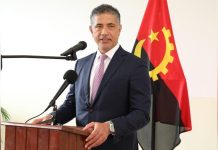
The sending of this communication to the Organization comes a few hours after the Minister of Mineral Resources, Oil and Gas, Diamantino Azevedo, publicly announced Angola’s withdrawal from OPEC.
According to the Government, the Republic of Angola has been a member of the Organization of Crude Oil Exporting Countries for more than 16 years and during this period it has fully complied with all obligations owed to the association, as well as sharing the efforts that the countries signatories of the OPEC and Non-OPEC Declaration of Cooperation (OPEC+) have developed, with a view to stabilizing the international oil market.
Despite this, Angola currently needs to focus its efforts on implementing the strategies defined in the National Development Plan for the national oil sector.
However, the country’s decision to abandon OPEC, which it voluntarily joined in 2006, follows the 36th Ministerial Meeting of this Organization and its allies, held on November 30th of this year, via video conference, which decided on the attribution to Angola of a production quota of 1,110 million barrels of crude oil per day.
In this regard, minister Diamantino Azevedo explained that the decision “was not taken unanimously and went against Angola’s position, which is why the Angolan Government reiterated and maintained its proposal to produce 1,180 million barrels of crude oil per day, in 2024.
In reaction to the deliberation of participants at the Ministerial Meeting, which would force Angola to cut its production by 70 thousand barrels of oil per day, the Angolan Government sent a note of protest to the General Secretariat of the Organization, a fact that culminated in its departure from OPEC .
With the abandonment of Angola, the Organization of Petroleum Exporting Countries (OPEC or OPEC, in English) now has 12 nations.
Founded on September 15, 1960, in Baghdad, by the five founding members (Iran, Iraq, Kuwait, Saudi Arabia and Venezuela), the Intergovernmental Organization represented 44% of global crude production and 81.5% of proven oil reserves. ‘ in the world, in 2018, when the Organization had 14 member countries.
On the other hand, OPEC also does not have the participation of other large producing countries, such as the United States of America, Canada, Brazil, China and Qatar.
Furthermore, with the acronym ‘OPEC+’, this Organization also includes the so-called ‘allied countries’, which are not exactly part of this Block, but act jointly in some international policies linked to oil trade and mediation between members and non-members.
Among the allies that make up OPEC+ are currently countries such as Azerbaijan, Bahrain, Malaysia, Mexico and Russia.
For More News And Analysis About Angola Follow Africa-Press