Africa-Press – Angola. Angola will host, from March this year, the headquarters of the Regional Center for Renewable Energies and Energy Efficiency of Central Africa, whose role will be to develop studies focused on the needs of the region in terms of these matters, capital of the Democratic Republic of Congo.
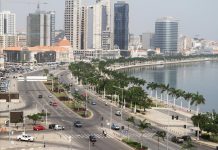
The institution will be located in the province of Luanda and will aim to improve access to modern, reliable and accessible energy services, energy security and the mitigation of negative externalities of energy systems.
The aim of this institution is to promote the creation of an integrated and inclusive Economic Community of Central African States (ECCAS) market for products and services related to renewable energy and energy efficiency.
The institution’s mission will be to coordinate the implementation of the ECCAS policy on renewable energy and energy efficiency.
The interventions of the Regional Center for Renewable Energy and Energy Efficiency in Central Africa will be centered on Renewable Energy and Energy Efficiency activities and projects aimed at covering one or more ECCAS countries, regional impact or national projects with strong potential for extension or regional reproduction and the scale that benefits the whole region, thus covering urban, peri-urban and rural areas.
The inauguration ceremony of the said center is scheduled for the 10th of March, at the institution’s headquarters, located in the operational area of Gamek, in the Grafanil area, Rua das Antenas, in Viana, Luanda, under the presidency of the Ministry of Energy and Angola waters.
Representatives of the administrative authorities, the private sector, civil society in Angola, the ambassadors of ECCAS Member States and the organisation’s strategic partners, as well as other entities, should be present at this ceremony. It will be on this occasion that the Government of Angola will officially hand over the institution to the Economic Community of Central African Member States.
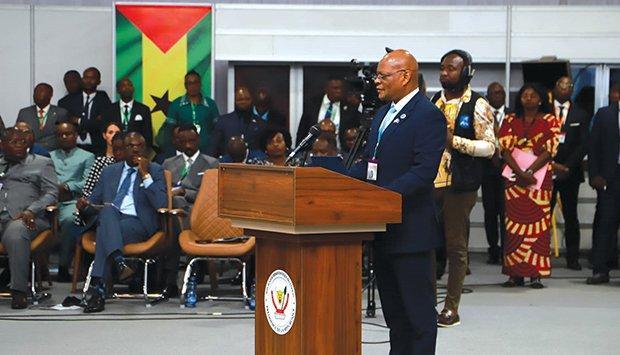
In an exclusive interview, on this subject, the chairman of the Commission of the Economic Community of Central African States, the Angolan ambassador Gilberto Veríssimo, revealed that the choice of Angola to host the headquarters of the Regional Center for Renewable Energies and Energy Efficiency from Central Africa came from the Heads of State and Government of the region, which Angola is also a part of, due to the advances registered by the country in the context of renewable energies.
“Angola is one of the countries in our region that has better structured a really existing program on renewable energies, especially solar”, highlighted Gilberto Veríssimo, noting that Angola has a program that is not very visible in the region, but “it has a advance that was considered by the other States, which is why this decision was taken, in July 2021, in Brazzaville”.
80 percent clean energy within three years
It should be recalled that the President of the Republic, João Lourenço, announced, in December last year, in Washington, United States of America (USA), during his participation in the USA-Africa Summit, that the country’s target is to reach 80 percent of clean energy within three years.
The Head of State made it known, on the occasion, that the electricity produced at the moment in the country no longer comes from polluting sources, such as thermal power stations running on diesel or gas, and is now increasingly favoring more, that of hydroelectric power stations.
The President, who spoke at the Business Forum of the US-Africa Summit, which analyzed the theme “Building a sustainable future: partnerships to finance African infrastructure and the energy transition”, referred that the country has already started, some time ago, to the energy transition process, partially abandoning polluting sources of electricity production, in this case thermal power stations, to invest heavily in the production of hydroelectric energy.
President João Lourenço made it known that, in addition to the Laúca and Cambambe dams, the country is building, scheduled for completion in three years, the Caculo Cabaça dam which, as he underlined, will alone produce about 2.1 gigawatts of energy and, at that time (within three years), it will produce approximately 9 gigawatts of electrical energy. Following that, he said that the distribution network for that same energy, which is being produced in the Kwanza River Basin, to be taken to all corners of the country, is also under construction, with some part already completed.
The Head of State referred that this energy already covers the entire North and Center of the country, namely, the provinces of Huambo and Bié, and work is currently being done to obtain funding to transport it to the South, to cover the provinces of Huíla, Namibe, Cunene and, in the east, the provinces of Lunda-Norte, Lunda-Sul, Moxico and Cuando Cubango.
At the same time, the President said that he had already started the production of solar energy in the country, with the construction of photovoltaic parks, two of which are already supplying energy to the National Electric Grid.
“There are two parks that we inaugurated this year, one in Biópio and the other in Baía Farta, both in Benguela province, which were built by a consortium that also includes the American company Sun Africa”, highlighted the President, adding that these two projects are already contributing to increasing the supply of energy for industries and populations.
The President also assured that the solar energy production project would continue and added that one of them would be the biggest that the country would ever see. “It will be built in the south of Angola, to essentially benefit four provinces, namely Namibe, Huíla, Cunene and Cuando Cubango”, he highlighted.
The president of the ECCAS Commission added that the Regional Center for Renewable Energies and Energy Efficiency of Central Africa will develop all the studies referring to renewable energy that the region needs, as well as being responsible for developing the studies related to the interconnection of energy between the different States in the region, to generate, in this case, energy efficiency.
“Today, we have, for example, in Equatorial Guinea, the energy capacity that the border region needs. Another case is Chad, which has serious energy problems and could receive help from Cameroon, which has fewer problems in this area. area,” he concluded.
The Economic Community of Central African States
The Economic Community of Central African States (ECCAS) was created in Libreville, Gabon, in December 1981, becoming operational only in 1985.
The organization aims, essentially, to promote cooperation and self-sustainable development, with particular emphasis on the stability and economic integration of Member States and contribute to improving the quality of life of the respective populations.
It is made up of 11 Member States, namely Angola, Burundi, Cameroon, Central African Republic, Chad, Republic of Congo, Equatorial Guinea, Gabonese Republic, Rwanda, São Tomé and Príncipe, Democratic Republic of Congo.
The Economic Community of Central African States mobilizes all its resources and energy to make Central Africa a region of peace, prosperity and solidarity, based on a unified economic and political space in which each citizen can circulate freely, in order to guarantee sustainable development. sustainable and balanced.
The ECCAS Commission, the organisation’s executive body, covers all the activities of public institutions, private companies, civil society and the populations of the region in an integral dynamic perspective, based on five pillars: peace and security, common market, environment and natural resources, land use planning and infrastructure, gender and human development.
The organization argues that economic growth, social well-being and nature preservation are built through the regional integration that ECCAS develops among the 11 member countries.
Preserving peace and collective security constitutes, in fact, a strong axis of the Commission’s missions, in a hostile climate that involves terrorism, big banditry and religious radicalism, against which the ECCAS and its partners have structured the alert mechanism speed, multinational force and protocol of action.
The protection and enhancement of the environment is also a priority for ECCAS to protect fauna and flora against looting and trafficking and guarantee perennial income through its sustainable exploitation and the promotion of ecological tourism for the benefit of local populations.
To guarantee these multiple missions, the ECCAS Commission is financed by the member countries and carries out, in parallel, several programs in collaboration with international partners.
For More News And Analysis About Angola Follow Africa-Press