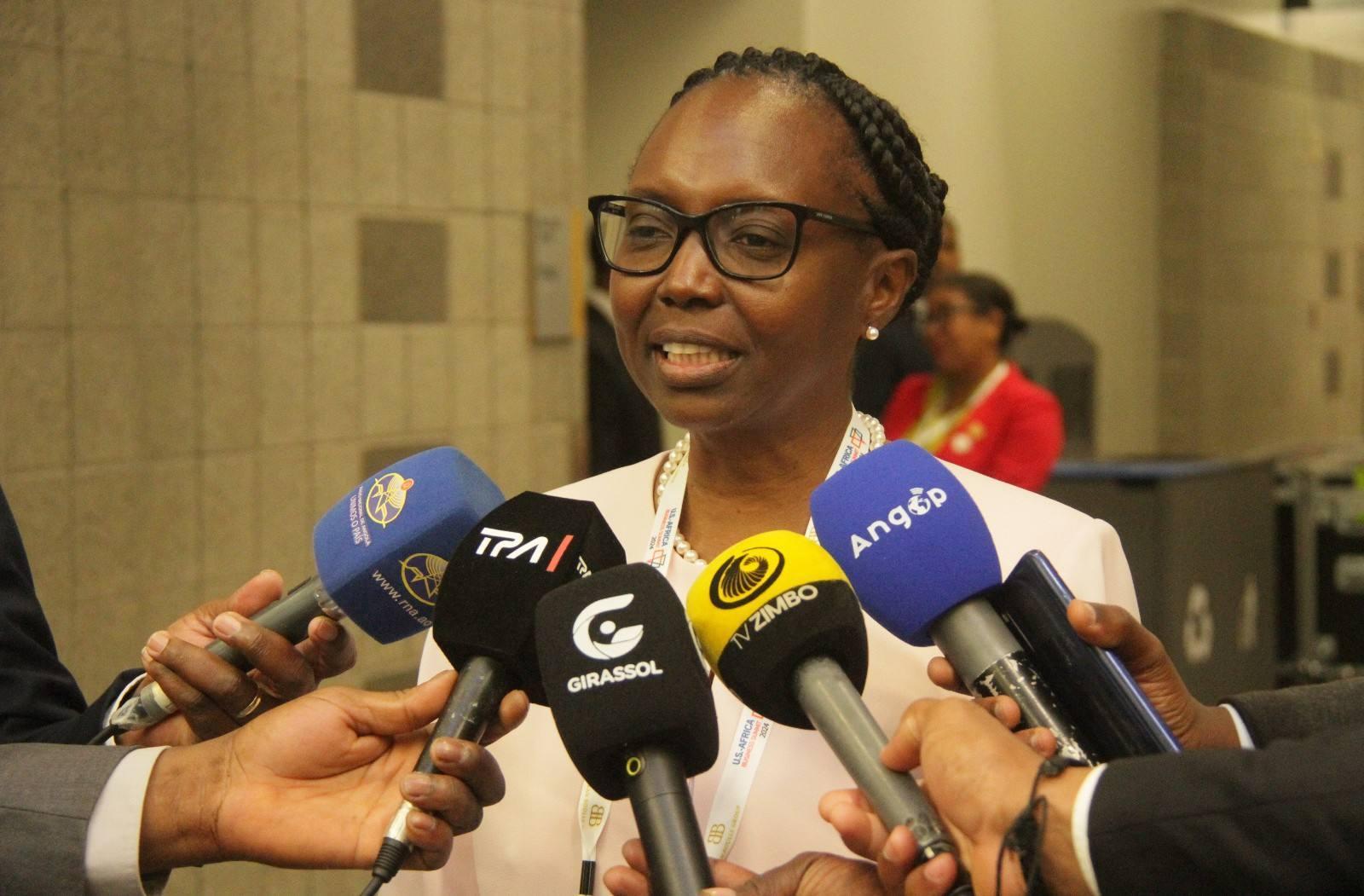
Africa-Press – Angola. The Minister of Health, Sílvia Lutucuta, defended in the city of Dallas, state of Texas (USA), the need for Angola to continue working to attract investors, in order to diversify the sector’s sources of financing.
Speaking to the press on Tuesday, regarding the US-Africa Business Summit, the minister said that the National Health System depends almost entirely on the General State Budget (OGE) and receives a percentage of international donations of less than five per cent.
According to the head of the Health portfolio, this is a very low percentage of contributions, which forces the Executive to work on a strategy to find new sources of financing.
Other sources of revenue for the sector, according to Sílvia Lutucuta, can be through contributions, public insurance or public-private partnerships.
“This is a strategy that we are working on with the ministries of Finance, Planning and Social Action”, he said, highlighting the imperative need for the country to seek other sources of financing for the sector outside of the OGE.
In recent years, the Angolan Government has made strong investments in the health sector, with the construction of new hospital units, including reference hospitals.
The objective is to reduce the burden of spending on sending patients abroad and improve internal assistance.
Official data indicate that, between 2017 and 2022, the mortality of children under five years of age fell from 167 to 75 per thousand live births, and access to primary health care tripled, going from 25% to 70% in the reference period.
The Executive invested, with resources from the OGE and PIIM, in the infrastructures of the three levels of the National Health Service, having built, expanded, rehabilitated and equipped with new equipment 163 new health units, 155 of which for the first level of care.
By 2023, the National Health Service had 13 Central and Specialty Hospitals, six Institutes, 23 General and Provincial Hospitals, 172 Municipal Hospitals, 800 Health Centers and 2,311 Health Posts, totaling 3,325 units.
The number of hospital beds went from 13,426 in 2027 to 37,808 in 2022.
Malaria continues to be the most reported disease in the country, however, there was a reduction in the fatality rate from 0.31 to 0.17 between 2017 and 2022, a period in which first-level health units increased by 50% of care that diagnose and monitor the chronic non-communicable diseases that most affect the population, namely high blood pressure and diabetes.
Minister Sílvia Lutucuta said that Angola will share its experience with other countries participating in the US-Africa Business Summit, taking place until Thursday, and seek reliable partnerships to improve its national public health system.
“We will have the opportunity to share our experience and hear from panelists from other countries what has been done in the private sector, what we can do together to have our health systems increasingly stronger”, he expressed.
He stated that Angola has held meetings with potential partners and there is already an interest from very large American investors to invest in our country, stressing that the priority of the Angolan Executive, with possible partners, is the training of staff, the pharmaceutical industry, the reinforcement of health systems and communication technologies.
Furthermore, he highlighted, Angola wants to invest heavily in the equipment manufacturing industry. “We hope there are good results. We already have good indications from some potential investors”, concluded the minister.
For More News And Analysis About Angola Follow Africa-Press