Africa-Press – Angola. The country is looking for alternatives for the decarbonization (reduction of carbon emissions) of its energy matrix to move from the current 62 to 70 percent of renewable energy sources by 2025, according to the Secretary of State for Oil and Gas, José Barroso. .
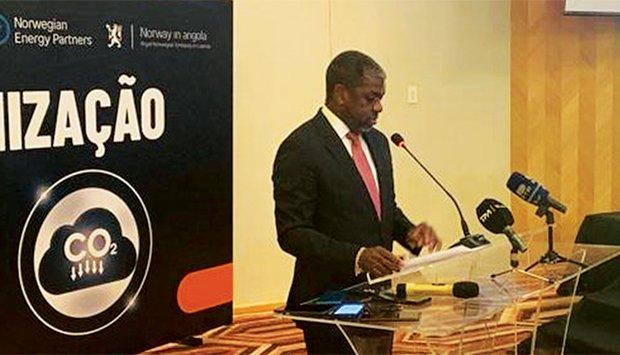
According to the official who was speaking yesterday, in Luanda, at the workshop on carbon reduction, promoted by the National Agency of Petroleum, Gas and Bio-
(ANPG), the sector is taking important steps towards the decarbonization of the oil industry and has carried out campaigns aimed at establishing an emissions inventory in the country.
In order to find solutions that allow continued development and the rapid oil potential, “increasingly environmentally friendly”, the official said that the sector works in collaboration with the United Nations program and with some companies operating in the market, having already started to present its own initiatives that will allow it to reduce carbon emissions in its operations.
“The issue results from the need, together, to implement measures that aim to limit the increase in the global average temperature to mitigate climate changes that are caused by the emission of greenhouse gases in the atmosphere”, said José Barroso.
Energy Need
He said that the Organization of Petroleum Exporting Countries (OPEC) estimates that the world’s energy need will grow by 28 percent by 2045, with oil and gas accounting for 52 percent of the world’s energy mix at that time.
This demand forecast, following José Barroso, is justified by the increase in population and economic growth in regions such as Asia, Africa and the Middle East, demonstrating that oil and gas will continue to be part of the world’s energy needs in the coming decades. He stressed that, like several other countries, Angola still faces major challenges in terms of access to electricity for its population and that hydrocarbons are the main source of income for the development of the economy and the sustainability of energy transition actions.
The energy transition, in his view, means for the country to continue to explore and produce its resources, with levels of greenhouse gas emissions so low as to allow for technical and economic viability and with the resulting revenues to finance the introduction of cleaner energy sources.
The workshop promoted by ANPG in partnership with the Norwegian Agency, Norwegian Energy, which ends today, aims to exchange experiences between national and foreign entities operating in the market.
For More News And Analysis About Angola Follow Africa-Press