Africa-Press – Angola. The Angolan State collects, monthly, one million 725 thousand kwanzas in charging fees to users of refrigerated containers for preserving fish, at the “Asa Branca” market, in the municipality of Cazenga, in Luanda.
According to the Market administrator, Izequiel João “Pele”, there are a total of 115 cold rooms installed in private backyards and rented to wholesale frozen fish sellers, who pay the Market administration 15 thousand kwanzas each month.
Properly numbered, the cold rooms are managed by the owners who assume responsibility for leasing them to wholesale sellers of frozen fish, who, in turn, pay monthly fees to the State, he explained.
He added that the Market administration is responsible for regularizing and supervising the commercial activity of fish and creating the conditions for sellers to carry out their activity and fulfill their duty to pay the installments owed to the State.
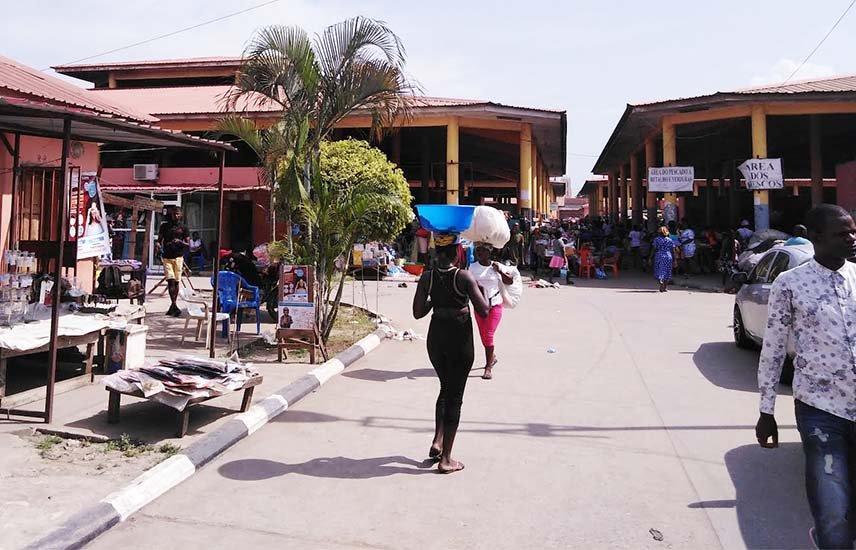
Equipped with four naves and several open-air spaces, the Market is managed by a Management Committee that is responsible for the fate of the fees collected monthly, he said.
But, he lamented, despite there being enough space and appropriate conditions for a greater number of vendors, there are still people who insist “on selling products in prohibited places and on public roads, taking all the risks”.
He clarified that the places are given to interested parties “at zero cost”, with only the obligation to pay a daily fee of 150 kwanzas for the maintenance of the place and the removal of solid waste by individuals.
“ King ” market for frozen fish and used clothing
Asa Branca is recognized as the main reference for the purchase and sale of products such as frozen fish of all species and used clothing, or commonly “bale”.
Its 115 refrigerated conservation containers receive fish from the provinces of Benguela, Huíla, Namibe, Cuanza-Sul (Porto Amboim) and Luanda, a product that arrives by delivery via refrigerated trucks, which, after all legal procedures, is deposited in the chambers.
The diversity and wide supply of this merchandise has provided customers with the possibility of more competitive prices, especially with the “arreiou” policy that works according to the desired quantity and prompt payment.
Anelisa Frederico, one of the customers, told a reporting team that, since a young age, she has heard that “the source of fish for deaths and other events is in this market”.
“We lost our uncle at the beginning of the week, and we came here to purchase and negotiate the best prices for fish to cook at his death”, he explained.
Prices tend to be formed depending on the value of the purchase from suppliers and other factors such as transportation costs, profit margins and storage.
However, in the final sales price the “arreou” philosophy always prevails, in which the value of the installment can be changed in a negotiation process against prompt payment.
As an example, traders say, a box of 30 kilograms of mackerel fish – the most sought after – is being sold at 35 thousand and 500 kwanzas, a 15 kilogram bagel at 17 thousand and 100 kwanzas, that of sea fish 10 kilograms at 13 thousand and 300 kz and caulking at 40 thousand kwanzas.
Mariquinha Adão, a fish trader for 16 years, ensures that sales are going well, despite the fluctuation in the national currency, but that he is able to support his family and make savings, meaning that a large part of the assets he currently has come from sales. of the fish.
For his part, Alberto Kitangaxi, a fish seller for more than 20 years and responsible for a cold storage, confirms that prices are affordable depending on the value of acquisition at source, which allows it to maintain stability and generate profits.
He explained that a box purchased for 17 thousand kwanzas can be resold for 20 thousand kwanzas, including transportation, loading/unloading and conservation expenses.
He made it known that he likes what he does and that he does it “with love and affection”, because above all, he explained, “it helps many families and the country to grow”, so he would never exchange his business for any other, “even to receive a job offer at any institution”.
Antónia do Rosário, a former fish seller at the “Roque Santeiro” market, and her colleague Ana Cardoso admit that the business “was once very good”, but that, today, with the emergence of other points of sale they are encountering some difficulties.
A “heavy weight” also of “ burdens ”
In addition to fish, Asa Branca also has “established credentials” in the sale of used clothing (bales) from various locations around the world and at highly competitive prices that leave other competing markets with little “room for maneuver”.
For the pieces displayed on the floor or hanging on hangers, prices vary from 300 to 10 thousand kwanzas for all types of clothes arranged and organized by sections.
One of the sections that most attracts the attention of any visitor is that of wedding dresses, which has become a kind of obligatory passage for brides, including public figures or “socially well-positioned and well-known women”, according to testimonies by Maria Sebastião, one of the salespeople in this section
The trader says that the prices for the pieces, in general, are attributed according to the quality presented when opening the balloons or clothing ties and that the first concern is to recover the amount spent on purchasing these balloons from wholesalers and then focus on profits.
For her part, Elisa Miguel confirms that, with the rise in prices for new clothes, the solution for many city dwellers has been to resort to off-the-rack clothes as they are “more affordable”.
The weight of the commercialization of the burden is such that it led to the emergence of a tailoring section, where many customers end up having their clothes adjusted on site, turning the market into a kind of large ready-to-wear store.
Public security
The main risk in the field of public security lies in the transport of money, associated with the precarious condition of the roads where many traders have already lost their lives in armed robberies, in some cases in broad daylight.
It is a situation limited to the area outside the establishment, where users are persecuted especially when they take large sums of money with them from the end of sales, generally reported due to information leakage.
But internally, the traders point out, the situation is completely different, because there is a security system within the market that is activated, through the administration, to intervene in any situation of threat, irregularity or disturbance to order.
ANGOP
For More News And Analysis About Angola Follow Africa-Press