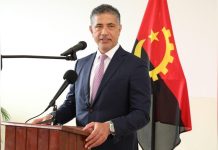
Africa-Press – Angola. The existing conflicts in Africa will only come to an end when all the direct and indirect players walk hand in hand in the search for solutions for a lasting peace, admitted, yesterday, in Luanda, the Minister of Foreign Affairs, Téte António.
Speaking at the opening session of the High Level Meeting of Representatives and Special Envoys of the United Nations, which began yesterday in Luanda and ends today, Téte António said it was imperative that everyone be imbued with the same spirit and hand in hand to resolve existing conflicts on the mainland.
According to the Minister of Foreign Affairs, the High Level meeting will serve to make recommendations and deep reflections with a view to a common strategy, capable of bringing tangible results in all regions of Africa.
This meeting, stressed Téte António, takes place approximately one week after the Mini-Summit in Luanda on peace and security in the eastern region of the Democratic Republic of Congo, which culminated in the signing of the final communiqué and the Action Plan.
Téte António referred that the Luanda Mini-Summit proved to be a learning process in that it resulted in decisions that underpinned the initiatives of the various sub-regions, such as, for example, the complementarity that now exists between the Luanda Process and the Nairobi Process, as well as the support of the United Nations during the implementation of the deliberations of the Heads of States.
The minister of foreign affairs referred that the holding of the High Level meeting of Special Representatives and Special Envoys of the United Nations for the Central African Region is an initiative that could become a mechanism for permanent concertation and consultation.
The presence of the Special Representative of the Secretary General for Central Africa and head of the United Nations Regional Office for Central Africa (UNOCA), Abdou Abarry and others, stressed the Minister of Foreign Affairs, demonstrates the dedication and work in favor of noblest causes of the African continent and its peoples, as well as world peace and stability.
“The African people must live in peace so that development and respect for human rights become a reality in all its fullness”, said Minister Téte António.
UNOCA representative
The Secretary-General for Central Africa and head of the United Nations Regional Office for Central Africa (UNOCA), Abdou Abarry, said that this is the first of several meetings that will take place to analyze peace and security in the African sub-region. .
In two days, stressed Abdou Abarry, the participants discussed the common priorities of the existing frameworks to guide a joint strategic vision that requires the involvement of the United Nations in the sub-region of the continent.
Abdou Abarry said that the Luanda meeting aimed at coordinating actions and complementing the work of the United Nations on peace and security in the sub-region.
For the resident coordinator of the United Nations in Angola, Zahira Virani, the holding of the High Level meeting of Special Representatives and Special Envoys of the United Nations for the Central African Region is a clear sign of support and the importance that Angola has for peace from the mainland.
According to the United Nations resident coordinator in Angola, Africa needs strong stability and Angola has played a crucial role, recognized within the United Nations.
“We need to maintain dialogue and find joint and coordinated solutions, to achieve concrete advances in the achievement of peace, security and stability for all African peoples”, underlined Zahira Virani.
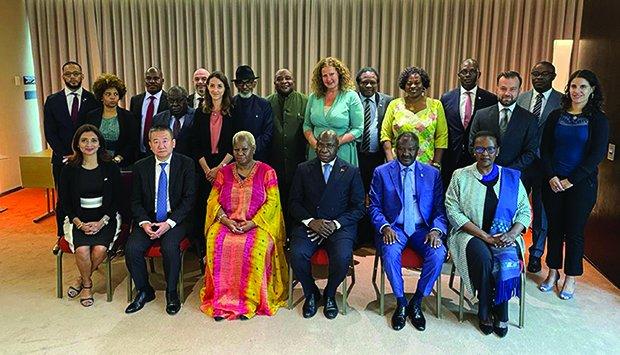
In addition to the Special Representative of the Secretary-General for Central Africa and Head of the United Nations Regional Office for Central Africa (UNOCA), Abdou Abarry, the meeting was attended by the Special Representative for the Democratic Republic of Congo and Head of the UN Stabilization Mission United Nations Organization in the DRC (MONUSCO), Bintou Keita, the Special Representative for the Central African Republic and head of the United Nations Multidimensional Integrated Stabilization Mission in the Central African Republic (MINUSCA), Valentine Rugwabiza, as well as Envoy UN Secretary-General for the Great Lakes Region, Huang Xia.
The holding of the High-Level Meeting of United Nations Special Representatives and Special Envoys for the Central Africa Region was initiated by the United Nations Regional Office for Central Africa (UNOCA).
Téte António presents diplomatic strategy
The Minister of Foreign Affairs, Téte António, presented, in Brussels, Belgium, the strategic vision of Angolan diplomacy, essentially focused on African policy, without neglecting issues of foreign policy and international cooperation.
In his address to the African, Caribbean and Pacific Organization (ACP)/European Union (EU) Council of Ministers, he made it known that commitments with other international bodies and organizations are also part of the country’s diplomatic agenda.
According to a press note, which Angop had access to yesterday, the government official explained that this bet is due to the existence of armed conflicts, reigning in certain regions, insecurity and food shortage, as well as the need for a profound reform in the United Nations Organization. (UN).
On the other hand, he argued that Africa should work to change the concept of a continent of hunger, insecurity and conflict and show the world its true potential, given the existing natural resources.
In the diplomat’s view, Angola should mature the idea of holding a summit at African level, to discuss the major challenges for the development of the African continent.
He took advantage of the meeting to share the strategy and mode of action of Angolan diplomacy, in addition to addressing the preparation of the 10th Summit of Heads of State and Government of the OACP to be held from the 6th to the 10th of this month, in Luanda.
Téte António also discussed the new partnership agreement between the OACP and the EU, which will constitute the new legal framework for relations between the European bloc and the 79 countries of Africa, the Caribbean and the Pacific (ACP).
This document aims to strengthen the capacity of the EU and the ACP countries to jointly respond to global challenges. It establishes common principles and covers areas such as democracy and human rights, development and sustainable economic growth,
climate change, human and social development, peace and security, among others.
The agreement included a common basis at the ACP State level combined with three regional protocols for Africa, the Caribbean and the Pacific, with a focus on the specific needs of these regions.
The ACP-EU Council of Ministers is the highest institution of the ACP-EU partnership. It meets once a year, in Brussels, and alternately in one of the organization’s countries.
For More News And Analysis About Angola Follow Africa-Press