Africa-Press – Angola. The Angolan Executive will implement, from this year onwards, a new customs tariff to protect and ensure national production, announced (Wednesday), in Cambambe (Kuanza- Norte), the Minister of State for Economic Coordination, José de Lima Massano.
Without going into details about the new customs tariff, nor the date on which it comes into force, he stated that it aims to ensure the full functioning of the country’s textile industries, such as África Têxtil (in Benguela), Textang II (Luanda) and Textaf (formerly Satec), in the city of Dondo, Cuanza Norte province.
Speaking to the press, at the end of the visit to Textaf, José de Lima Massano assured that this factory, in particular, has the technological conditions to start operating, “within a short time” and respond to the need for fabric in the country.
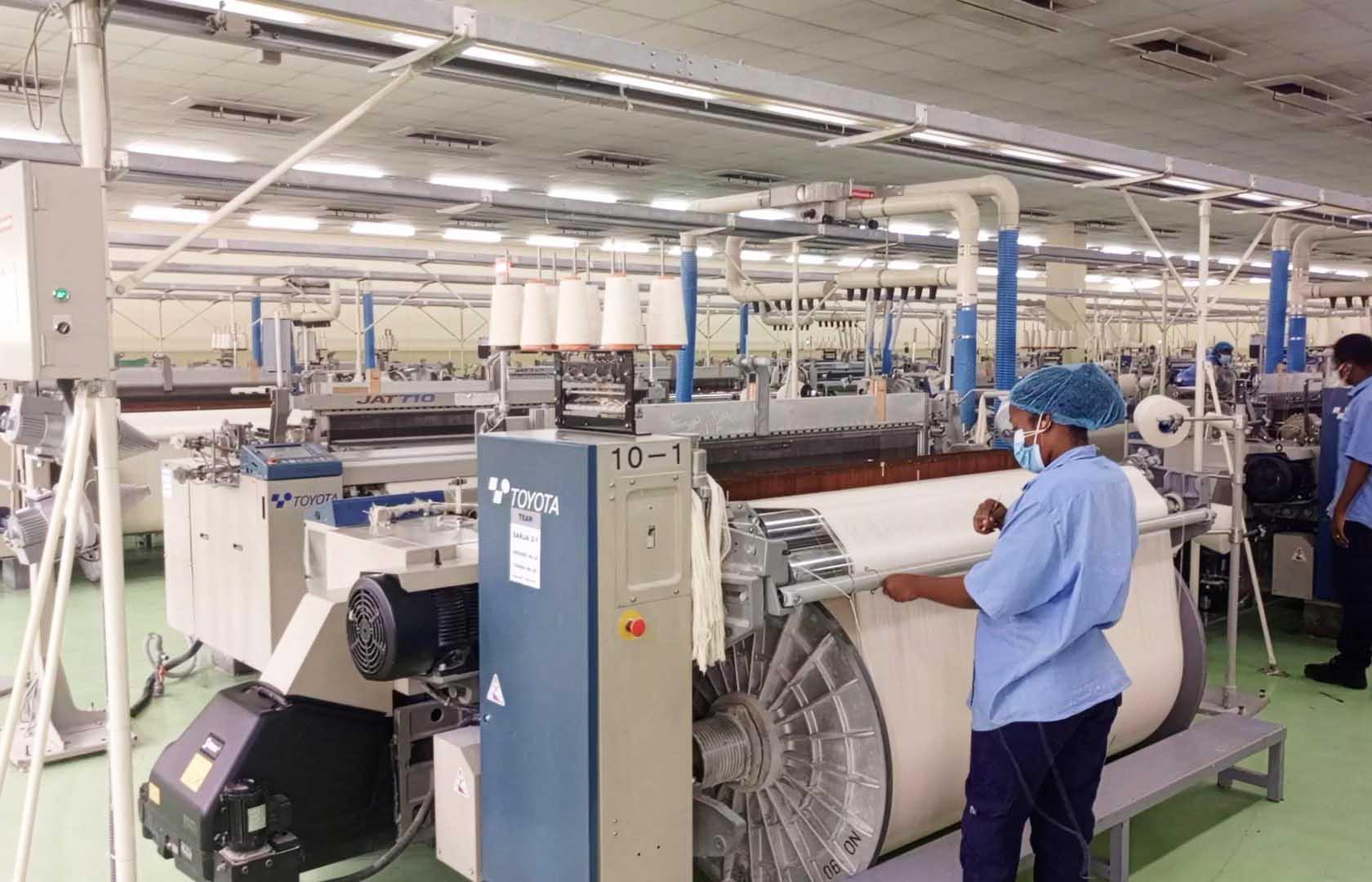
For the Minister of State, Textaf is an integrated unit, equipped with the conditions to explore the entire fabric production chain, from cotton treatment, spinning, knitting, dyeing and clothing.
Under the management of the Zimbabwean group Boabab, since 2021, the factory in Dondo has been inoperative due to difficulties in acquiring chemicals in the country to dye the fabrics.
Regarding this issue, the coordinator of economic activities reported that he received guarantees from the company’s managers regarding the acquisition of undetermined quantities of these products, which are already in Angola.
The acquisition of this raw material, he explained, will allow the manufacturing unit to start operating in the shortest possible time and offer three thousand jobs. Currently the factory has 77 workers.
José de Lima Massano announced that with the full operation of Textaf, the Executive will regularize the market, by facilitating the flow of products, in a first phase, through the supply of clothing to small, medium and large national buyers and, subsequently for export.
He indicated as possible buyers, in the first phase, hospital units, defense and security bodies, penitentiary services, the education sector, among others, which depend on imports.
Raw Material Provision
According to the Minister of State, in addition to customs protection measures, the Ministry of Agriculture and Forestry has identified around 30 thousand hectares, which will contribute, from 2026 onwards, to the country having an acceptable cotton production rate, to stimulate the national textile industry.
A group of national producers, he pointed out, is producing cotton on a small scale, to assess the adaptation conditions of seeds and the climate in different provinces.
This process, he explained, aims to start cotton production, on a large scale, from January 2026, essentially in traditional areas, such as Malanje and Cuanza Sul, and could be extended to more provinces, to ensure the textile industry.
“In Angola we have three large fabric factories, which need to operate at the height of their installed capacity and, therefore, the Government ensures the viability of cotton production policies, including the financial component”, he reinforced.
However, Textaf administrator, Nuno Andrade said that the factory’s testing process, since signing the exploration contract in 2021, allowed the production of one million and 200 thousand meters of linear fabrics.
This material is in storage and will begin to be dyed in the coming days, with the arrival of the first quantities of chemicals, acquired in South Africa.
Accompanied by the governor of Cuanza Norte, João Diogo Gaspar, the Minister of State for Economic Coordination made a guided tour of the factory to find out about its operational status.
Textaf, Ex-Satec, was built between 2011 and 2015, replacing the previous structure, built in the colonial period.
The construction of the new building was financed by the Japanese Government, valued at 420 million dollars (one dollar is worth kz 828,077), which also allowed the training of 1,050 young people.
It occupies an area of 88 thousand square meters, brings together spinning, knitting, dyeing, finishing, clothing manufacturing services and an area for the manufacture of “jeans” fabrics.
The first line has an installed capacity to produce 180,000 sweatshirts and 150,000 shirts per month, while the second can manufacture 480,000 meters of denim fabric per month.
For More News And Analysis About Angola Follow Africa-Press