Africa-Press – Angola. Angolan fishing production fell, from January to September, last, to 396,372 tons, a decrease of 11 percent compared to the same period, when the production volume was 445,599 tons, announced, Friday (2), in Luanda, the Ministry of Fisheries and Marine Resources.
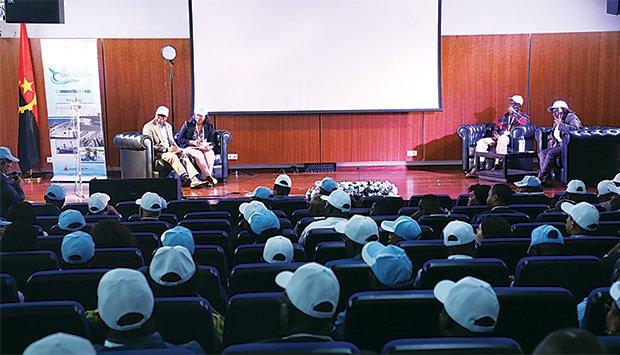
The representative of the Studies and Planning Office of the Ministry of Fisheries Moisés Samuel released these data during the Consultative Council of the Ministry of Fisheries Marine Resources, when presenting a balance of fishing, aquaculture and salt production for the period 2021 to 2022.
Moisés Samuel stressed that the weak production in the fishing sector was the result of several constraints, with greater emphasis on the overlapping of the vedas, stoppage of vessels and administrative impositions.
The highest fish catch rates are attributed to the Industrial Fishing sector, with around 279,362 tons produced in 2021.
Salt production recorded, in the last four years, 578,997 tons, with Benguela as the province that most contributed to the volume reached, with 88 percent of the total, followed by Namibe, with six percent.
Data for the last two years point to salt production from January to September 2022 of 167,239 tonnes, up from 133,527 tonnes in the same period last year.
In this segment, Moisés Samuel noted that there was a 25 percent increase in production, as a result of the expansion of salt pans, the increase in beds and the opening of new salt pans.
Moisés Samuel argues that salt has great potential in the socio-economic context and becomes a key element for diversification and growth in the national economy.
The national director highlighted the product that is used in the preparation and conservation of food, particularly in rural areas, in feeding livestock, in the fish processing industry and in the preparation of preserves, and can also be used to obtain other by-products used in chemical industry and export.
Imported horse mackerel
The national director of Fisheries, Víctor Chilamba, said that the country imports around five thousand tons of fish per year, a volume lower than in the period between 2017 and 2018, when the Government established a customs exemption with which companies importing horse mackerel they did not have to pay import duties.
Import duties, at the time, were almost zero, but, despite the fact that since 2019 the importation of horse mackerel remains open, companies can bring this fish as long as they comply with the legal requirements, mainly the payment of customs duties, which range from 30 to 35 percent.
The national director of Fisheries guaranteed that the sector does not have commercial products listed among the species considered endangered or vulnerable.
For example, one of the species is horse mackerel, which according to Víctor Chilamba, is prohibited from being exported, as the 55,000 tonnes per year established as the total allowable catch do not meet national demand.
“Horse mackerel is one of the most commercialized and consumed species on the market”, stressed the national director of Fisheries, highlighting the licensing of around 250 vessels, of which 120 are dedicated to purse seine fishing, 40 defined for fishing activity, dorsal and industrial trawling and 15 for semi-industrial fishing.
This includes vessels that use passive gear, such as fish cages, which makes a total of 200 vessels for the industrial and semi-industrial fishing segment. There are around 5,500 vessels for artisanal fishing.
For More News And Analysis About Angola Follow Africa-Press