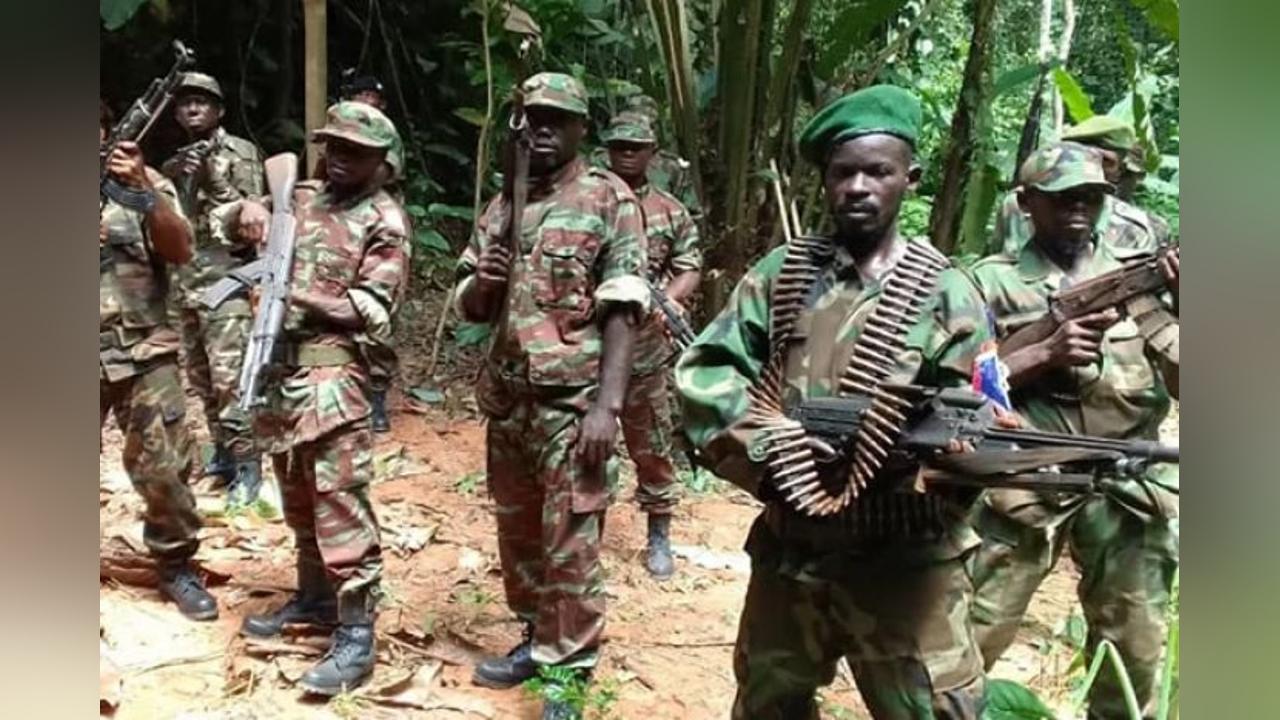
Africa-Press – Angola. The Cabinda State Liberation Front (FLEC), an independence movement, announced today the death of “24 Angolan soldiers and eight military officers of the FAA”, by the Cabinda Armed Forces (FAC), according to the FLEC-FAC General Staff.
In a “War Statement”, in which it calls “on all French and Portuguese investors to immediately abandon Cabinda”, FLEC-FAC claims that, this morning, near the village of Tando-Maselelee Nviedi, in the Belize region, the FAC “launched several attacks with heavy weapons against positions of the Angolan occupying forces FAA [Angolan Armed Forces]”.
According to the note, “24 Angolan soldiers and eight military officers of the FAA died during the fighting and 11 [were] injured (…). Thousands of people have fled to the neighboring Democratic Republic of Congo since the fighting began”, this morning.
The document, signed by the head of the FAC Special Forces, Lieutenant General João Cruz Mavinga Lúcifer, highlights that, after the interview with the President of Angola, João Lourenço, to the magazine Jeune Afrique, “the FAC decided to intensify military action throughout the territory of Cabinda”.
The Angolan head of state, in that interview, stated that the security situation in the oil province of Cabinda is stable and FLEC-FAC does not pose any threat to Angolan territory.
According to the statement, the FAC “calls on all French and Portuguese investors to immediately abandon Cabinda”.
“The FLEC/FAC Military High Command recalls that the entire area of Cabinda is a territory in a state of war, with FLEC-FAC preserving its legitimate duty to protect the Cabindan populations against the Angolan occupation forces”, reads the document.
For several years, FLEC/FAC has been demanding the independence of the territory of Cabinda, the province from which a large part of Angolan oil comes, invoking the Treaty of Simulambuco, of 1885, which designates that territorial part as a Portuguese protectorate.
Lusa tried to contact the Ministry of Defense, but without success.
For More News And Analysis About Angola Follow Africa-Press