Africa-Press – Angola. New data has revealed a complex regional network led by the UAE, responsible for recruiting, transporting, and training thousands of foreign fighters in a conflict that fuels a devastating war threatening the stability of the Horn of Africa and East Africa.
In its extensive investigation, which relied on field testimonies, travel records, digital data, and documented evidence, a local source outlined a logistical route extending from Colombia to the UAE, then to Bossaso in Somalia, Kufra in Libya, and finally to Nyala and El Fasher in Sudan. The network, described as the most complex of its kind in the region, reflects a strategic shift in Abu Dhabi’s foreign policy, which has expanded beyond economic investments to direct military involvement in the continent’s conflicts.
UAE’s Incursion Beyond Economics to the Battlefield
At the beginning of its investigation, the local source noted that the Gulf state has intensified its investments, influence, and military capabilities in various regions of Africa in recent years, aiming to benefit from trade and natural resources in the post-oil era. However, this expansion, according to testimonies from African politicians and officials, is no longer limited to the economic sphere but has turned into a tool for exerting pressure and influencing the political and military landscape.
The local source quoted the Eritrean Minister of Information, Yemane Gebremeskel, close to President Isaias Afwerki, stating that “the problem lies in an unjustified ambition to control the entire region.” He added that the UAE’s presence began by taking control of secondary ports in East Africa before evolving into a show of force and resource exploitation.
The investigation also indicates that UAE influence has expanded to include relationships with non-governmental armed groups and paramilitary formations, providing weapons and facilitating illegal gold trade. The local source cites estimates from an organization indicating that about $30 billion worth of gold is exported annually from Africa to Dubai without declaration.
A senior official in West Africa, who requested anonymity for fear of retaliation, stated that the UAE, particularly Abu Dhabi, “has negatively intervened in African politics.” Conversely, Ethiopian academic Mehari Tadelle Maru argued that the accumulated UAE influence with Western powers, alongside oil investments and political pressure, has granted Abu Dhabi a wide margin for maneuvering within Africa.
Thousands of Colombian Mercenaries in the Ranks of Rapid Support Forces
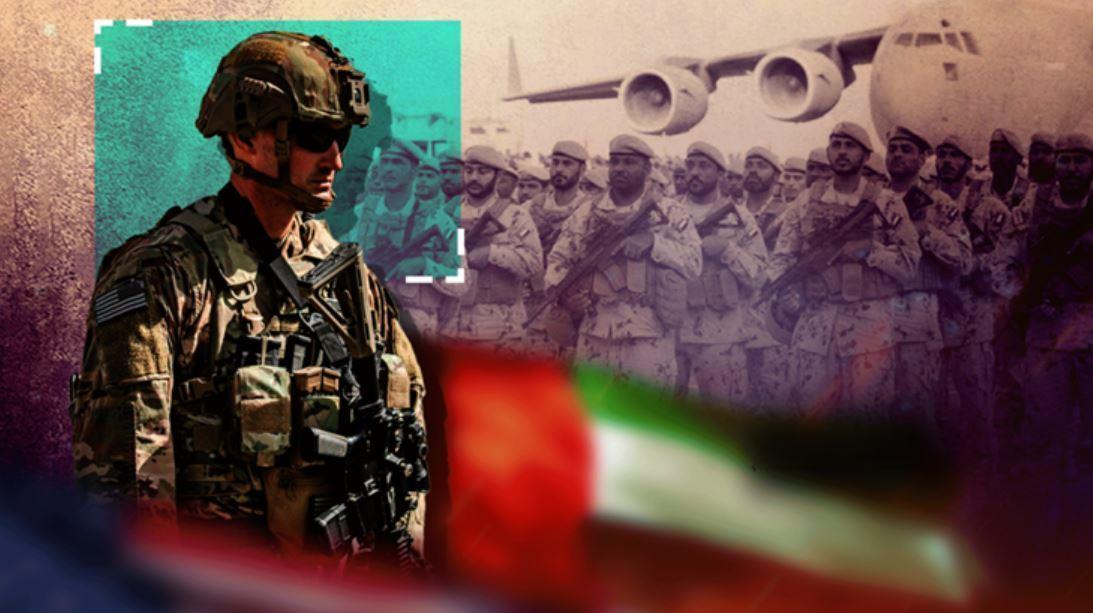
The most striking aspect of the investigation reveals a network responsible for recruiting and transporting thousands of Colombian mercenaries to Sudan to fight alongside the Rapid Support Forces. Numerous recruits transported to Sudan confirmed that the UAE-based company, Global Security Services Group (GSSG), handled their recruitment and transportation.
These findings are particularly significant in light of the connections revealed between the company and prominent Emirati officials; GSSG was established in 2016 by Ahmed Mohammed Al-Hamiri, the Secretary-General of the UAE Presidential Court. Other investigations indicate ongoing business and political relationships between the company and figures linked to the Emirati authorities.
The company did not respond to requests for comment from investigative journalists, nor did Al-Hamiri respond to inquiries directed to his office.
Organized Route from Colombia to Darfur
According to the investigation, the first group of Colombian recruits arrived in the region in October 2024, on a mission aimed at establishing a logistical corridor to secure supplies across eastern Libya to Darfur. This narrative is supported by findings from Human Rights Watch, which concluded in May 2026 that GSSG appears responsible for employing Colombian military contractors deployed in Darfur to support the Rapid Support Forces, documenting the crossing of fighters through Emirati military facilities and some receiving training within the UAE.
Evidence shows that the transfer of fighters was not a random process but was conducted along an organized route; recruits departed Colombia for Dubai, then Abu Dhabi, and from there to Benghazi in Libya, before being transported overland to Darfur. The organization stated that at least 300 Colombian military contractors had been transferred to Sudan by September 2025, while the local source reported a larger network comprising about 2,000 former Colombian fighters recruited to participate in the war.
Investigations also revealed that some fighters underwent training in the use of drones and anti-aircraft weapons, as well as utilizing facilities within the UAE as transit points before being sent to combat zones.
Testimonies on War Funding and Arms Transfers
The local source quoted a former Colombian fighter, referred to as Manuel, stating that the UAE funds the conflict and provides weapons to the Rapid Support Forces, adding that Abu Dhabi injects the majority of the funds and resources fueling the war.
A Regional Network Beyond Sudan’s Borders
The picture painted by these investigations indicates the existence of a network that transcends Sudanese territory, linking Colombia, the UAE, Somalia, Libya, Chad, and Sudan through air and land routes and logistical centers used for transporting personnel, equipment, and supplies. In light of this data, the Sudanese war does not appear to be merely an internal conflict but a dispute intertwined with regional and international interests, alongside cross-border financial and military networks.
These findings shed light on the growing role of external powers in the Sudanese conflict and the increasing transformation of private security companies and mercenary networks into potential tools for managing conflicts and enhancing regional influence.