Africa-Press – Angola. Clandestine gold exploration along the banks of the Luali River, in the municipality of Buco-Zau, Cabinda province, 120 kilometers from the city of Cabinda, continues to worry local authorities. In addition to polluting the waters and harming the ecosystem, the activity represents a serious threat to the health of the population. There are reports of cases of deaths during the process of excavating the soil to find the gold deposit (mine).
Press recently visited places that miners consider to be fertile areas, where gold, according to testimonies, appears more frequently.
The countless craters along the bank of the Luali River and the instruments used for these practices are proof of the miners’ activities.
According to findings, the work is so hard and risky that it has already claimed the lives of many protagonists, due to the landslide.
Moisés Cussumbo, 16, says that his uncle, Gabriel Cussumbo, died last year due to a landslide, when he and his friends were digging for gold on the river bank.
According to Moisés Cussumbo, the victim, who was inside the hole, was surprised by a piece of earth that left him completely buried.
The companions, he continued, frightened by the situation, used hoes, shovels and pickaxes to remove the earth, in order to save Gabriel Cussumbo, but without success. “They didn’t go in time. My uncle came out of the hole lifeless”, he lamented.
Water contamination
The dangers posed by easy money, the contamination of the river’s waters, which are always cloudy and the constant complaints from the public due to the harmful effects of consuming the liquid, led local authorities to intervene to find a solution.
If, on the one hand, illegal gold exploration puts the quality of the river’s water at risk, on the other, the population of the municipality of Buco-Zau claims they have no alternative when it comes to drinking water. Ester Nhangue, found washing clothes in the river, said that in the last two years, community residents have faced problems with severe skin allergies after bathing in the river, to the point of going to the hospital. “It’s really itchy! When people take a bath in the river they itch all the time”, he lamented, arguing that “there is no alternative”, because the Luali River, since ancient times, has always been used for bathing and washing clothes.
Genesis of mining
The activity of illegal gold exploration on the bank of the Luali River, in the municipality of Buco-Zau, according to reports, has existed for more than 50 years, started by citizens of the Democratic Republic of Congo (DRC), in areas considered difficult to access. Over this period, clandestine activity, which currently employs dozens of adults and children, gained space and expanded throughout the community and has been a real “alkyle’s heel” for the authorities. The nature of this work requires a lot of physical effort miners, since the means used for this purpose are very rudimentary and, as a rule, make use of psychoactive substances, with emphasis on liamba and drinks with high stimulating power, such as whiskey(the so-called packet), to stay energetic.
According to information from some inhabitants near the bank of the Luali River, the use of these toxic substances weakens the health of a large number of miners, whose financial gains “are ephemeral”. “It’s like spell money, it doesn’t take long in your pocket”, he said. one of the residents.
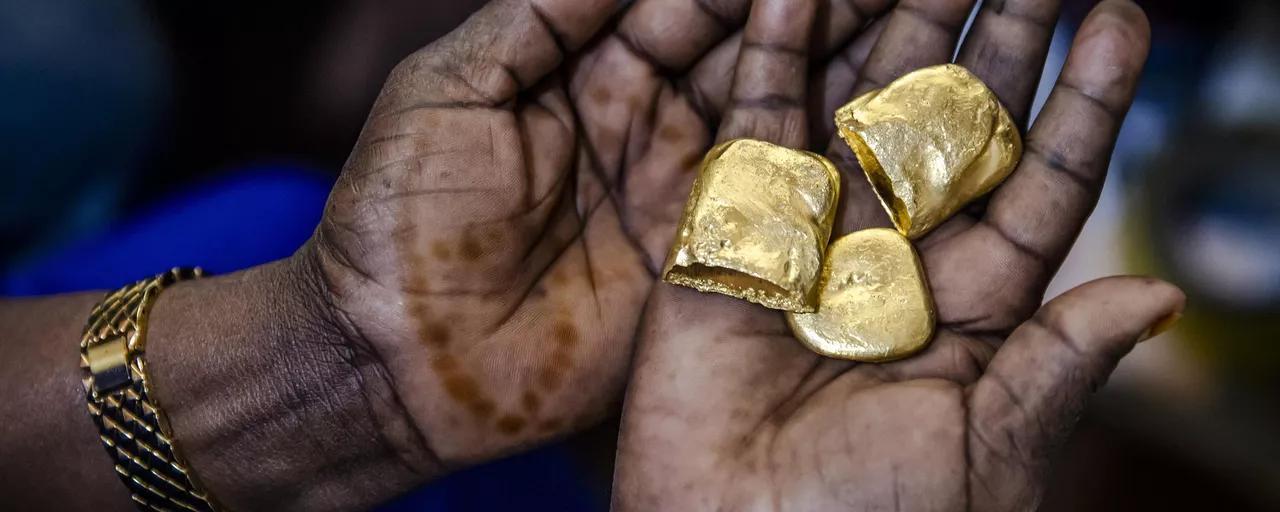
The holes reach a depth of around three meters to extract a quantity of gold pieces weighing just under eight grams, equivalent to a mechanical pencil cap, which can cost around 30 thousand kwanzas. This value, as a rule, is divided between four to five people who make up the work team. What do they do, after all, with that money?
The weakened physical state of the young people involved in this activity answers this question: “part of this goes to alcohol and they eat poorly”, one of the inhabitants of the municipality confided to us, adding that many of them end up acquiring lung diseases, such as tuberculosis, leading to their death.
Dysentery and skin allergies
Every day, the municipal hospital of Buco-Zau receives patients with dysentery, intestinal parasitism and typhoid fever, due to the ingestion of water from the river that is contaminated, as a result of mining on the banks of the main river, informed the municipal secretary of Health of Buco-Zau. Zau, Inácio Tamba.
Constant skin allergies when residents come into direct contact with river water is another problem that worries families and health workers in that municipality.
To respond to these situations, while mining prevails, Inácio Tamba said that the Health department has drawn up a plan that aims to educate people regarding the treatment of drinking water, with a view to minimizing negative effects.
“We are holding lectures in communities, churches and schools, instructing people to boil water before drinking or bathing”, he informed. Regarding medicines, the person in charge stated that the hospital units in the municipality of Buco-Zau have pharmaceuticals available. enough to serve the population, especially for these specific situations.
Inácio Tamba called on miners to practice this as soon as possible, to avoid more serious consequences.
Dozens of children dropped out of school
In addition to water contamination and becoming a vector of diseases, the consequences of gold mining range from the loss of human life, alteration of the ecosystem, endangering aquatic life and extends to the education sector, according to the Deputy Administrator for the Technical Infrastructure and Community Services sector of Buco-Zau, Joaquim Barros Macosso.
The Deputy Administrator added that dozens of children from Buco-Zau, influenced by adults, dropped out of school to dedicate themselves to gold mining, putting their future at risk.
Teachers, he said, have been reporting to those in charge the absence of boys at school on normal school days, but the situation continues.
The majority of those in charge of education, he maintained, are dedicated to agriculture and do not have full control over their children’s attendance in the classroom. Mining has also caused inconvenience to peasants who cultivate close to the banks of the Luali River, due to the number of holes on the perimeters of the mines. Until the authorities take action, the law of the strongest prevails.
Thus, farmers are forced to endure the damage around their crops or look for other land for cultivation.
Traditional authorities
The governor of the village of Chionzo, Tiago Chicaia, said that the traditional authorities are up to the task of providing a solution to the phenomenon of illegal gold mining, because most of the practitioners reside in the community.
Asked about the reasons for the silence of traditional authorities in the face of illegal gold exploration, Tiago Chicaia responded that traditional authorities cannot take any measure in relation to illegal gold exploration without authorization from the municipal administration or defense and security bodies.
However, one of the most important points discussed in the Buco-Zau Municipal Audit Committee has to do with the need to involve all forces in solving this problem.
At the end of the meeting, the governor said that in the coming days the traditional authorities will meet with those in charge of the young people who mine, in order to find a solution to put an end to the practice.
Tiago Chicaia also informed that the main difficulty lies with citizens of other nationalities, especially those from the Democratic Republic of Congo (DRC), who mine in completely inaccessible areas of the municipal district.
Micro supervision operation
The municipal commander of the National Police in Buco-Zau, António César, informed that a micro operation is currently underway to supervise mining sites, in collaboration with local communities, with a view to appealing to young people to stop this practice.
António César said that, in the last operation carried out with all defense and security bodies, around two months ago, 44 foreign citizens were detained and their respective means of work were subsequently presented to the Public Prosecutor’s Office, with this body taking the perpetrators to trial.
Measures to end mining
The municipal administrator of Buco-Zau, Óscar Dilo, is concerned about the situation, especially with the issue of children who drop out of school to dedicate themselves entirely to mining, considering that this conduct tarnishes the image, not only of families, but also of municipal administrative authorities.
For this reason, he said, the authorities will use all mechanisms to put an end to gold mining in the municipality of Buco-Zau.”If the father or mother is poor, it is not the child who will dig for gold to support the house, we have to put an end to this”, he declared. Óscar Dilo warned people who send children to carry out this type of activity to stop this practice, under penalty of being held responsible.
Number of miners registers increase
Recently, the Buco-Zau administration held a meeting that involved Defense and Security bodies, religious and traditional authorities and civil society, in order to study mechanisms to put an end to illegal gold mining in that district.
The deputy advisor for the legal area of the municipal administrator of Buco-Zau, António Guia, indicated that the number of miners has been increasing in recent years, due to the appetite for easy profit.
In his opinion, the lack of structures in the community that can guarantee youth employability is one of the causes that leads young people to embrace gold mining, without measuring the consequences that come from this work.
The lack of rigidity in sanctions is another element that must be seen, maintaining that the fines applied to offenders caught in the act are not discouraging.
One of the measures to be taken, he said, would be the promotion of events that make it possible to educate the population on legal matters, to be informed about the consequences of illegal gold exploration.” Since the District Court of the municipality of Buco-Zau is new , we must first undertake a set of actions aimed at educating the population in legal matters”, he suggested.
Heavier fines
The business From now on, reinforced the jarista, the fines will become “heavier” for mining cases because the municipality is adopting a new legal instrument that aims to inhibit, mainly, the illegal exploration of gold, as well as poaching.
The source admitted, on the other hand, that even with the stiffness of the fines, which could result from the change in the law, the total elimination of gold mining will not be an easy task because it is a traditional practice and is often carried out in inhospitable places outside control by authorities. “There are no means of monitoring the entire territory”, he acknowledged. The jurist defended the involvement of all the living forces of society, starting with families, churches, political parties, associations and traditional authorities in the fight against gold mining, to banish it. this evil that harms everyone.
Who buys the gold?
The gold business does not depend on a formal market, because most companies that manufacture and sell gold pieces buy the primary product from miners, former employee of the goldsmith shop Pedras Rubras Maura Luía Kikongo told.
The other goldsmith shops spread across Luanda, Benguela, Huambo and Huíla, he explained, acquire the product from unofficial sources.
Maura Luía Kikongo highlighted that the main sources of goldsmiths across the country are miners. “No goldsmith in Angola buys gold legally, miners are the main suppliers.”
“The only solution is for the miners, if this is not the case, the gold stores across the country will close” he concluded. Recently, the Government inaugurated two gold dredgers, in the municipalities of Buco-Zau and Belize, province of Cabinda, with with a view to making the sector more productive. With the inauguration of two mining companies, namely Lufo, in Belize, with the capacity to produce 10 kilograms of gold per month and 120 per year, and the Buco-Zau mining company, with a production capacity of 150 kilograms per year, the province of Cabinda increases its production to 270 kilograms of primary gold.
jornaldeangola
For More News And Analysis About Angola Follow Africa-Press