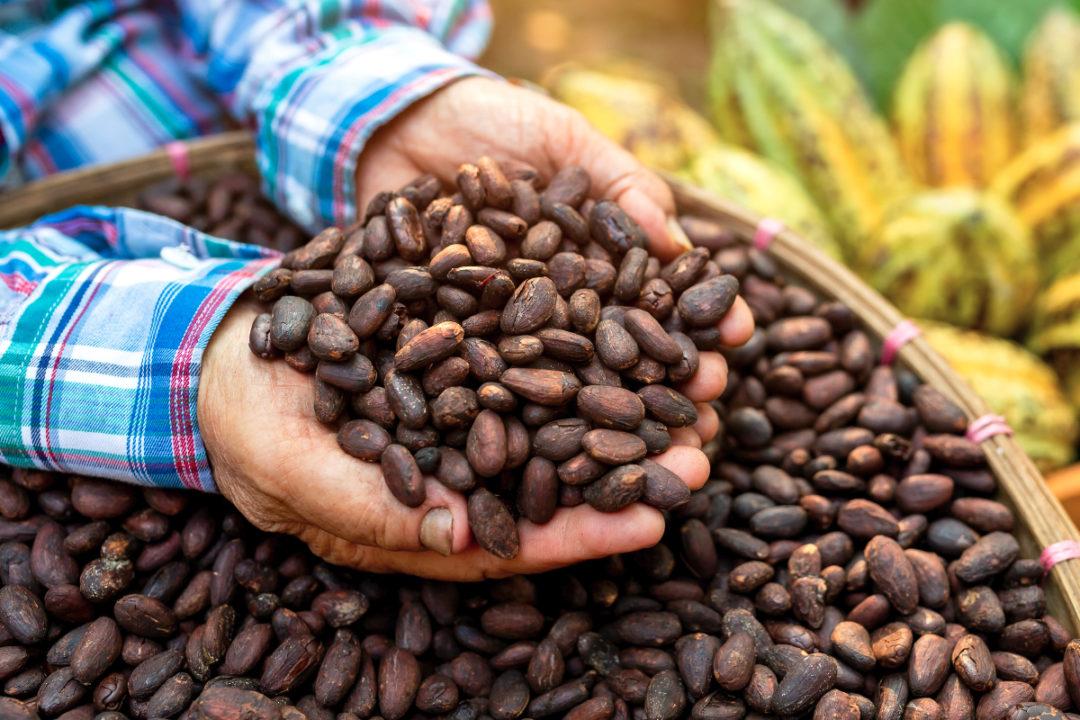
Africa-Press – Angola. A harvest of five tons of cocoa is expected in 2023, in the Nova Ereira region, in Amboim, Cuanza-Sul, at the end of an operation started in 2019 by the private capital company Mafecon, according to information obtained from the company.
Mafecon’s Production Manager, Paulo Nunes, told our report that the operations, designed to relaunch cocoa production in Nova Ereira, take place in an area of 200 hectares, of the 500 owned by the company in that region.
According to Paulo Nunes, 22,000 cocoa seedlings were planted, with 15,000 in the process of growth. “Since 2019, when we started the project, we have planted a total of 22 plants in an area of 25 hectares, but 7,000 have not withstood various weather factors and we are replacing them as time goes on,” he said.
To ensure expansion, according to Paulo Nunes, the farm has a nursery with 48,000 cocoa seedlings, which will allow planting in another 25 hectares, in the second phase. “We are betting on the multiplication of seedlings so that we can reach the planned goals, of 200 hectares, and we already have the land and plants prepared”, he guaranteed.
Forecasts now indicate that, after the initial five tons, production will increase each time the project is carried out. “The planted area, which is rapidly growing, gives us guarantees that, by the end of next year, we will be able to have the first harvests, and this encourages us a lot”, he said, considering based on this experience that “the difficult thing is to start, but the reality The current situation guarantees that we are on the right path”.
The Mafecon farm, located in an area that housed the former Revolutionary Instruction Center (CIR) “Comandante Raúl Diaz Arguelles”, has 110 workers, 70 of whom are permanent and technically guided by two agronomists of Indian nationality.
Paulo Nunes considered the project as the guarantor of jobs in the region, declaring that he felt “proud” to be part of the Executive’s efforts to provide employment, especially for local youth.
“We have an ambitious plan for the communities, especially in the field of creating jobs that generate income within families, as recommended by the Angolan Executive”, he stressed.
Paulo Nunes assured that, in addition to the project to supply the domestic market, the company’s challenges include increasing production in order, in other stages, to create the conditions for exporting the product, as a premise to diversify the sources of revenue for the national economy.
The head of production at the Mafecon farm said that the climatic conditions in the Nova Ereira and Amboim regions, in general, are favorable for cocoa production, appealing to the authorities to support initiatives that contribute to revitalizing the cultivation of cocoa products high performance in the domestic market.
“It is the first large-scale cocoa production trial in the province of Cuanza-Sul and I appeal to the Executive to also support family farmers who invest in cocoa production”, he concluded.
Institutional strategy
The project to revitalize cocoa production is part of a project by the Executive which, through the National Coffee Institute (INCA), leads a Strategic Plan for the relaunch of coffee, cocoa and palm plantations.
According to available information, the first approaches to the Cuanza-Sul component related to this plan took place at a technical meeting held in the city of Gabela, in 2018, between those responsible for the agricultural sector, with a view to collecting revenue for the country.
According to studies carried out, Angola has favorable climatic conditions for the relaunch of cocoa cultivation, especially in the provinces of Cuanza-Sul, Cabinda, Uíge, Zaire, Bengo and Cuanza-Norte.
INCA’s plan, estimated at the time at 8,181 million kwanzas, with public investment of 2,223 million (with the remainder being supported by the private sector on the basis of bank credits to the producers to be involved), provided for the relaunch of cocoa production in the period between 2018 and 2022.
For More News And Analysis About Angola Follow Africa-Press