Africa-Press – Angola. Five hundred vulnerable families from the communes of Dinde and Impulo, in the municipality of Quilengues, province of Huíla, have been benefiting, since 2019, from resilience projects, to counteract the negative impact of the drought, in an initiative by the department of Social Assistance, Studies and Projects, from the Congregational Church of Angola (IECA).
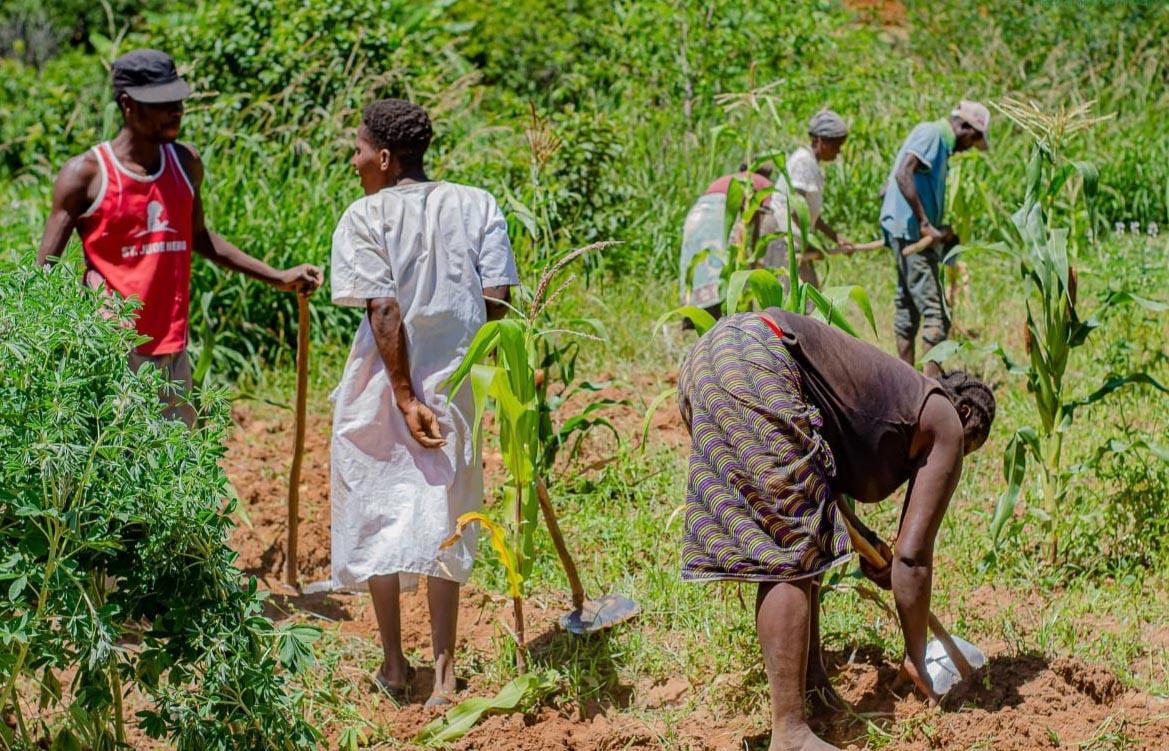
The project with support from the church, from Norway, is minimizing the difficulties caused by the lack of rain, by encouraging agricultural activity in peasant families, with the delivery, without reimbursement, of various improved seeds, such as massambala, Massango, infeijão , cabbage and tomato.
When speaking about the initiative, the coordinator of the climate change and sustainable livelihoods project, Artur Eliot, said that the idea is to contribute to reducing hunger in communities.
He mentioned that several actions are underway that the project is developing, whose mission is to contribute to strengthening the capacity to deal with climate change and livelihoods in the communes of Dinde and Impulo.
“With these seeds, once planted in the soil, families will have the possibility of having their diets diversified, because a family that has nothing to cultivate, if they receive seeds, automatically looks for a space to cultivate and only with that idea will to reduce hunger rates in the municipality”, he explained.
He mentioned that from 2019 until the current year, the effort that the community has made in response to the support they have received from the climate change project has been visible.
He made it known that the project is financed by Aid of the Churches of Norway and the funds are intended to mitigate drought and famine in the communities.
In addition to promoting agriculture, according to Artur Eliot, water retention infrastructures were also implemented, such as 52 thousand liter sidewalk-type cisterns, 12 of which in the commune of Impulo and one in Dinde, as well as water holes coupled to panels solariums and drinking fountains.
He reinforced that the actions aim to combat drought in communities, as well as to end the distance of five to 10 kilometers that families travel when there is no water infrastructure nearby.
For More News And Analysis About Angola Follow Africa-Press