Africa-Press – Angola. The sustainable appreciation of the Angolan currency, Kwanza, could occur in the next four years, due to the exponential growth in the production levels of the most consumed goods in the country, economist Augusto Fernandes considered this Monday, in Luanda.
Regarding the 47th anniversary of the entry into circulation of the Kwanza (Kz), replacing the colonial shield, which marks this Monday (1/8), the specialist in economics and business management pointed out the The fact that Angola is a mainly importing country is the main cause of the constant depreciation in the national currency.
This fact, he continued, puts pressure on the Kwanza and forces the country to resort to currency to satisfy the needs of the domestic market, a situation that encourages inflation, devaluation and the weak purchasing power of families.
Therefore, he said, for the domestic currency to be strong and correspond to the purchasing power of families, it is necessary for the country to continue to increase domestic production, in order to respond to the demand for essential goods and services for the population.
For Augusto Fernandes, the existence of a strong currency essentially depends on the balance between national and imported goods and services.
“With the increase in national production, within the next four years, the value of the Kwanza will reverse and begin to enter an appreciation routine until it finds its balance point, which should settle between 200 and 300 kwanzas per dollar ”, he perspectived.
To this end, he highlighted, the country needs to take into account the old adage “agriculture is the base and industry the decisive factor”, always looking at the progressive process of national industrialization.
Still on the subject of Kwanza Day, university professor Vladimir Martins considers Angola’s commitment to diversifying the economy to be correct, especially since 2018, the period in which the promotion of national production began, with a view to reducing dependence on oil.
The teacher also recalled that Angolan families are increasingly losing purchasing power, as a result of the historic devaluation of the domestic currency, with inflated prices for basic food products.
“For 47 years after the exchange of the Portuguese escudo for the Kwanza, the purchasing power of citizens has been suffering constant setbacks, due to various internal and external shocks, mainly the global economic and financial crisis and war conflicts spread around the world”, remembered.
Vladimir Martins also pointed out the high dependence on oil exports, excessive imports of raw materials and essential food goods as the main causes for the devaluation of the Angolan currency.
About kwanza
The Kwanza as a currency for commercial and foreign exchange operations has been in force since 1977, through Law No. 71-A/76 of 11 November (National Currency Law), which put the colonial shield into disuse.
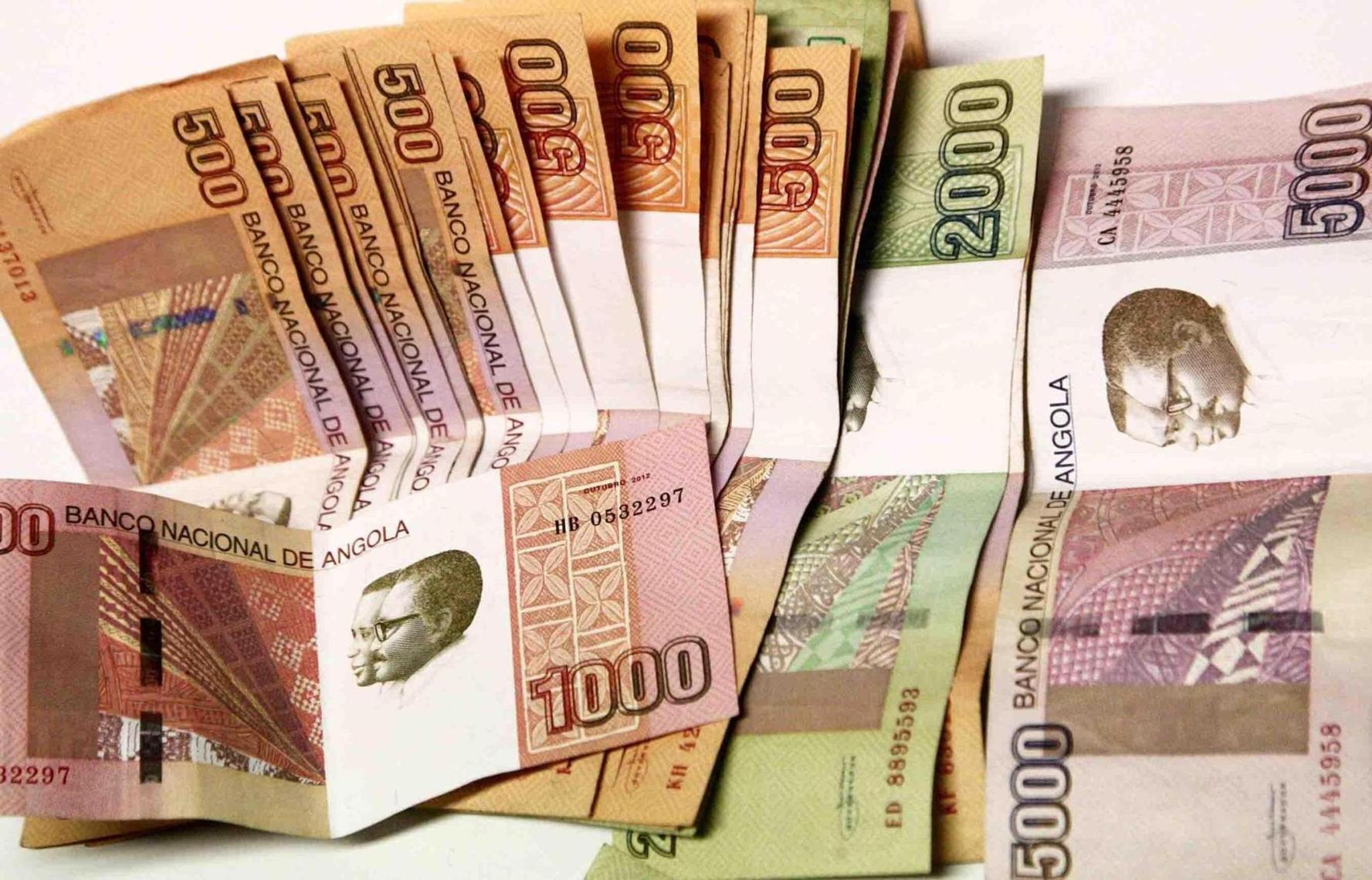
Currently, the 2020 series is in force in metallic notes and coins, with the highest face value being the Kz 5 thousand note and the lowest being five kwanzas (metallic).
This family of national currency officially circulates in the country, denominations of 200, 500, 1000, 2000 and 5000 kwanzas, illustrating the natural wonders of the country and the face of the first President of Angola, Dr. António Agostinho Neto.
The 200 kwanza note features the Pedras Negras from Pungo to Ndongo (Malanje), the 500 note features the Fenda da Tundavala (Huíla), the 1000 note the Morro Luvili do Planalto Central (Huambo), the 2,000 note the Serra da Leba (Namibe) and the 5,000 ruins of the Cathedral of Saint Savior of the Congo (Zaire).
Plastic banknotes, due to their non-fibrous nature and their coating with transparent varnish, are more resistant than paper banknotes, particularly in terms of handling, dirt, among others, resulting in an extension of their useful life.
Over the years, among the various nuances, the readjusted Kwanza reached five million, the highest face value since its historical trajectory.
The first banknotes were issued in 1977 by the National Bank of Angola, starting the exchange of currency throughout the national territory, where 1 kwanza was equivalent to 1 Angolan escudo. Notes were issued with a face value of Kz 1000, 500, 100, 50 and 20, in addition to metallic coins worth Kz 10, 5, 2 and 1 (100 lwei being equal to 1 kwanza).
In 1981, 1984 and 1986, small changes were adopted, through Decrees no 7/81 of 28 January and no 27/86 of 13 December, to guarantee greater security of the currency and combat counterfeits that were introduced into the market.
ANGOP
For More News And Analysis About Angola Follow Africa-Press