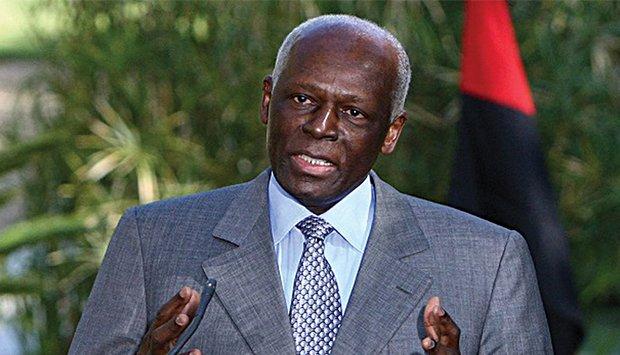
Africa-Press – Angola. When José Eduardo dos Santos announced to the country and the world, in a dismayed voice, the death of Agostinho Neto, due to illness, in Moscow, few people anticipated that he would be the one indicated in the line of succession.
Despite being Minister of Foreign Affairs, a position of high confidence for the leader, and for the then party-state, José Eduardo dos Santos was 37 years old. Young, politically discreet, he did not seem by far to be the candidate with the most requirements for the position, compared to the other historical leaders of the MPLA. At least that’s what several researches and testimonies of protagonists of the story in the first person attest, many of them are still among us.
The finding can generate controversy, like almost everything around José Eduardo dos Santos. The irrefutable fact is that, in 1979, almost no one would have imagined the scenario of subsequent years. In other words, by voluntarily relinquishing power, thirty-eight years later, the country’s highest representative and president emeritus of the MPLA would consolidate power as history will record. Some say that, as a party leader and President of the Republic, José Eduardo dos Santos was the very personification of power.
The death of the statesman triggers questions, analyzes in different tones and, of course, the evaluation of his performance. For all intents and purposes, he had one of the longest consulates in Africa. Unless something absolutely extraordinary happens, the context and the irreversible winds of changes in the structuring of power do not even allow us to foresee the possibility of the existence of such long-lasting future leaderships. A thirty-eight-year term leaves an inescapable fuse. For good and for bad!
The exercise of writing dispassionately about this unavoidable figure of our recent history will always result in a delicate maintenance of balance. If only because it was done following his death, this is the reason why we are talking about the illustrious citizen in the past. The death of José Eduardo dos Santos proves that hardly anyone prepares for the match. After the confirmation of the last breath, nothing remains but the tributes paid to the deceased. While it doesn’t always turn ordinary mortals into saints, death triggers emotions. It becomes the least appropriate time for demands or exaltations of unrewarding practices for those who end their journey on earth.
In any case, José Eduardo dos Santos was not a mere common citizen. Sympathies or hostilities aside, the facts are illuminating. He was President of Angola and of the MPLA, the party that has governed the country since its accession to independence in 1975. His legacy is a full plate for researchers and analysts on duty, certified or not. Current speeches praise the undeniable achievements of Agostinho Neto’s successor, the particularity of having been an apologist for openings and the achievements in the military and diplomatic arena. The actions that earned him in the ranks of the party force that firmly led the designation of “Architect of Peace” have been widely highlighted. A title that won support among sympathizers and the population in general.
Was A Man
José Eduardo dos Santos was, however, a man. The condition of being human led him to make mistakes and imprudence, many of them understood, according to political science and certain areas that study human behavior, in a broader perspective, by the long years of governance. For some reason power is said to be corrosive. It causes deep metamorphoses in people and allows the surprising side of each one’s nature to emerge, even if they are defense and survival mechanisms. Mistakes would not fit on the pages of a eulogy, but they are too visible to be omitted.
The illicit enrichment of figures in power circles, the context that allowed corruption and money laundering to flourish, acts of harmful management of the public good and poor distribution of national income during the consulate of José Eduardo dos Santos are facts recognized by his broken. The appointment, in the last years of the mandate, of two sons to head strategic institutions such as the largest national public company and the Sovereign Fund deeply tarnished the management of the late former Head of State, as it turned out after a short time. There were blunders.
From a political point of view, despite having kept the doors of dialogue with the opposition, JES, as it was also called in informal circuits, handled poorly with the dossier of demonstrations, contestations and demands of certain fringes of the youth. The mediatic case “15+2” is an example of this type of excesses. The arrest, subsequent trial and imprisonment of a group of young people accused of the attempted coup d’état, based on unsustainable evidence, gained international attention, generating waves of internal and external solidarity As a result of excessive zeal, political prisoners were made in absolute disagreement with the foundations of the Democratic State and the Rule of Law.
Several analysts and researchers estimate that José Eduardo dos Santos would have left a less controversial legacy if he had left the Presidency of the Republic in 2012, after contesting the presidential elections in 2008, in the semi-presidential format, something that did not happen again after 1992. In contrast to the errors of governance attributed to him, Eduardo dos Santos had remarkable achievements. The abolition of the death penalty, the release of political prisoners on the 27th of May, the fundamental role in the fight against the Apartheid regime and the liberation of Namibia and South Africa all play in favor of its positive insertion in the History of Angola.
Considered a skilled negotiator, although discreet, he signed the main peace accords after Alvor. Gbadolite and Bicesse, Lusaka, where he was present, but was represented by Venâncio de Moura, former Minister of Foreign Affairs, under the Protocol and the Peace Memorandum that definitively sealed the silence of the arms in Angola. Contrary to radical positions, in the guise of Commander-in-Chief, he had the courage to order that “not one more shot” be fired at UNITA’s armed opposition. held ambassadors and diplomats from other categories appointed by UNITA in office.
He reintegrated into the Armed Forces and services for the military, including those assigned to State Security, personnel from the armed opposition. JES was certainly not the source of oxygen for anyone, but he knew how to show serenity at crucial moments, having been, as a statesman, a factor of political stability in the country. No one will deny him the merit of having left of his own volition, at a time when a large part of his co-religionists claimed that no one else had the capacity to direct the country’s destinies.
With affection and disaffection, treated affectionately by Zé Dú, the statesman amassed a good reputation in Africa and in the world. Despite not being consensual, with the predictable disagreements, the narration of José Eduardo dos Santos’ legacy constitutes a challenge for politicians, academics and ordinary citizens, especially those of the future. Separated by time from the heat of emotions, the narrators will be in a better position to trace, with the required objectivity, the profile of the politician, statesman, family man and “manager of silences” who will keep in the eternity of the State’s tomb of secrets. yes, we will have reasons to confirm whether or not José Eduardo dos Santos will be remembered in the way he said, in an interview, that he would like to be thought of: “as a good patriot”!
For More News And Analysis About Angola Follow Africa-Press