Africa-Press – Angola. The Minister of State and head of the Civil House of the President of the Republic, Adão de Almeida, assured, this Wednesday, that the country’s new Political and Administrative Division (DPA) will provide a closer relationship between administrative power and the citizens.
Adão de Almeida was speaking at the Plenary of the National Assembly, as part of the discussion and vote, in general, on the Proposed Law on the Administrative Political Division, which covers 20 provinces, 325 municipalities and 375 communes.
He stated that with this structure the country creates conditions “so that we have administrative bodies with decision-making capacity closer to citizens, therefore capable of better managing people, better managing the territory and better projecting local development”.
The Minister of State added that, with this structure, the Executive wants administrative entities to be in better conditions to solve the people’s problems.
He recalled that the basic proposal, which was prepared in 2021 and submitted to public consultation, aimed to divide the provinces of Moxico, Cuando Cubango, Lunda-Norte, Malanje and Uíge.
In this regard, he recalled that continuous consultation and careful consideration of various aspects led to the decision to prioritize, at this stage, only the two largest provinces: Moxico and Cuando Cubango.
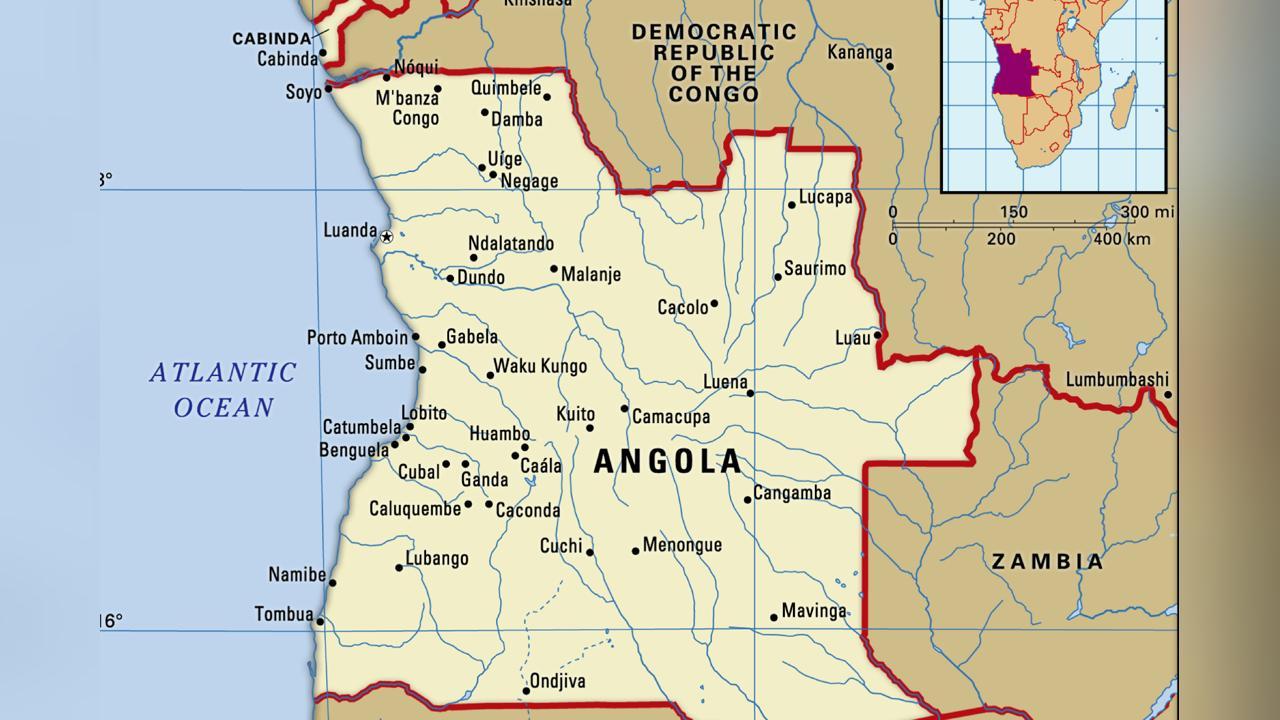
He informed that it is proposed to divide the province of Moxico, the largest in the country, into two, Moxico, based in Luena, and Cassai Zambeze, based in Cazombo.
In this regard, Adão de Almeida assured that the Executive expresses its total availability to, within the framework of the parliamentary debate, support the replacement of the name “Cassai Zambeze” with another that brings more consensus, extensive availability to other similar situations.
The proposal also intends to divide the province of Cuando Cubango, the second largest in the country, into two, Cubango, based in Menongue, and Cuando, based in Mavinga.
The province of Moxico has 223,000 km2 and Cuando Cubango has 199,000 km2.
According to the Minister of State, with such a territorial extension, the difficulties in carrying out government action are all too evident, given the distance between the main local center of political decision-making and the people.
It exemplified the fact that, at the level of the African continent, both Moxico and Cuando Cubango, individually, are larger than the 12 smallest countries on the continent combined.
He also made it known that of the 27 countries in the European Union, 19 are less extensive than Moxico and Cuando Cubango, alone.
“There seems to be no doubt about the need, the urgency and, above all, the benefits of changing the political and administrative division of these two provinces”, he expressed.
Regarding changes at the municipal level, he revealed that the proposals have the underlying objective of continuing to work to make the municipality the center of government action.
“On the one hand, because today we have municipalities with a strong population concentration, particularly in the main urban centers, and, on the other hand, because we have municipalities with a large territorial extension. Both influence the quality of government action”, he maintained.
In these cases, Adão de Almeida recognized that the qualities of commune and urban district have not proven to be adequate for correct intervention in solving community problems.
It is therefore proposed to elevate some urban districts and communes, as well as some localities to the category of municipality, in a total of 161, making the country now have 325 municipalities.
Entry into force in 2025
Adão de Almeida made it known that the realization of this plan will not be automatic, requiring time and hard work. Also for this reason, the Proposed Law foresees its entry into force only in 2025.
He defended the continued commitment to strengthening and qualifying local administration staff, permanent investment in infrastructure and the consolidation of the process of strengthening administrative deconcentration.
“With more municipalities, we gain proximity in resolving citizens’ problems and strengthen the skills of administrative entities, allowing more direct contact with people and a better approach to local development”, he clarified.
He added that, with more municipalities, they will achieve a better occupation of the national territory, particularly in areas bordering neighboring countries, allowing a better approach to the immigration phenomenon and the massive settlements of foreign citizens in the national territory, also motivated by the weak presence of State.
Adão de Almeida highlighted that around 30 new municipalities are proposed in border locations. At the infra-municipal level, it is proposed to maintain some communes, totaling 375.
According to the government official, the project’s vision foresees that the so-called “headquarters communes” will no longer have administrative units, as a means of avoiding overlaps and conflicts of competences, and will be managed directly by municipal entities.
“What we have on our hands is the question of whether our compatriots who reside in Rivungo or Dirico will continue to have the provincial political decision-making center in Menongue, 690 km and 580 km away, respectively, or if we place a new provincial political center, in Mavinga, closer to solving its problems”, he maintained.
On November 11, 1975, Angola became an Independent State having, however, chosen to maintain the political-administrative division of 1971 in force. At that time, in 1975, the Angolan population was estimated at around 6.5 million people. population.
Several specific changes followed, with emphasis on those made in 1978, which divided the province of Lunda into the province of Lunda-Norte and the province of Lunda-Sul, and in 1980, which divided the province of Luanda into the province of Luanda and Bengo. In other words, for 44 years the country has had 18 provinces and approximately 160 municipalities.
angop
For More News And Analysis About Angola Follow Africa-Press