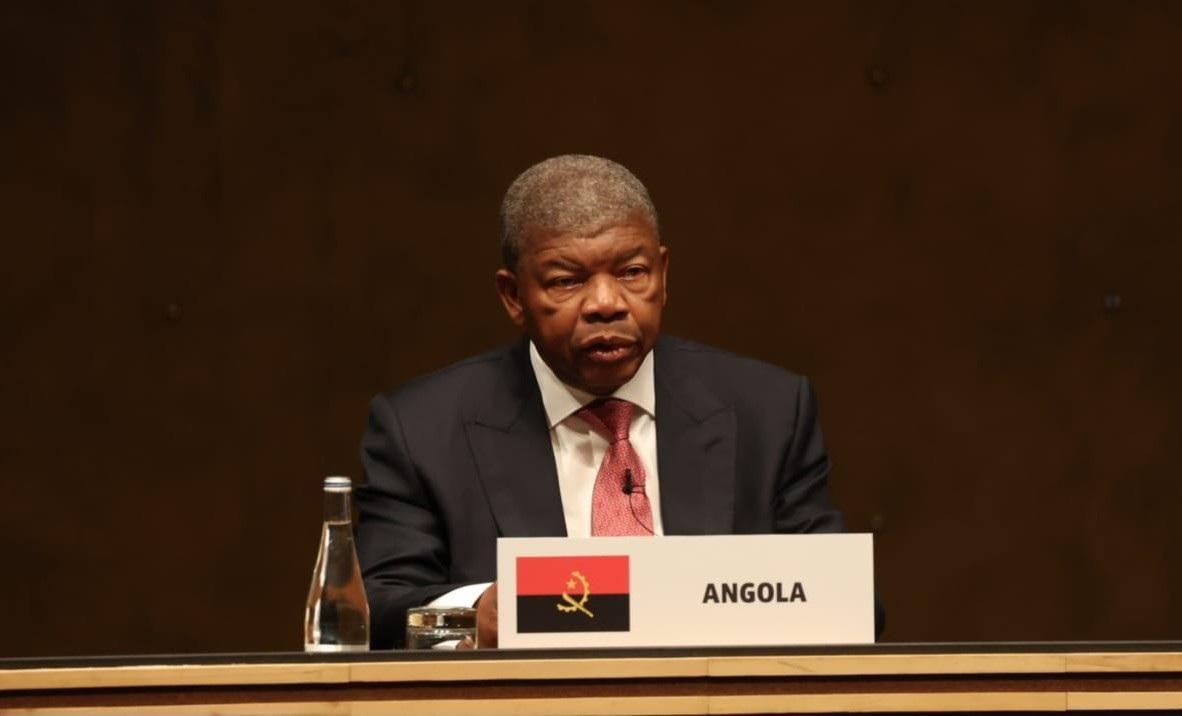
Africa-Press – Angola. The President of the Republic, João Lourenço, recognized, this Thursday, at the Belém Palace, in Lisbon, the courage and heroism of the April captains who fought against Salazar’s dictatorship, for the establishment of Portuguese democracy and independence of African colonies.
Speaking at the ceremony celebrating the 50th anniversary of the April 25th revolution, the Head of State, the first to speak at the event, said that these captains faced the regime’s oppressive machine, the PIDE/DGS and its appendages, which did not shy away from torture and kill the best sons of this land.
As a result, João Lourenço highlighted that the April Revolution rescued civic and political rights that had been prohibited and annulled by the dictatorship for almost half a century.
“It broke Portugal’s international isolation before the international community and enabled the implementation of a Democratic State of Law where the rights, freedoms and guarantees of Portuguese citizens are today constitutionally guaranteed”, he asserted.
He recalled that, while the Portuguese people had been fighting against fascism and the Salazar dictatorship since 1932, the African people colonized by Portugal had been fighting, since the 15th century, against Portuguese colonization and its consequences, such as slavery and the plundering of their wealth.
“We fought for an end to the abuses, crimes and violations of human rights committed by the colonialist regime against our people for centuries”, he stressed.
During his speech, the President of Angola valued the struggle of the colonies for dignity, as human beings, who must have the same right to freedom and the right to be the masters of their own destiny.
Alluding to history, the statesman said that the armed struggles for independence in Guinea Bissau, Angola and Mozambique had reached such an advanced stage, especially after the failure of the Mar Verde operation, the assassination of Amílcar Cabral and the proclamation of independence by PAIGC in the hills of Madina de Boé in 1973, in Guinea Bissau.
He also referred to the fiasco of the Nó Górdio operation and the heavy losses inflicted by FRELIMO and the MPLA on Portuguese colonial troops in Mozambique and in the North and East of Angola, which precipitated the events that led to the uprising and military coup of the 25th of April 1974 in Portugal.
“Our cause was the same as that of the Portuguese people and, therefore, together we fought and together we defeated the same enemy, colonialism and the fascist dictatorship of Salazar and Caetano”, he highlighted.
He highlighted the fraternal bonds of friendship between the respective peoples, at the same time that they established fruitful and mutually advantageous economic cooperation.
According to the statesman, the liberation struggle in the then Portuguese colonies in Africa increased the Portuguese’s feeling and awareness of the need to overthrow the regime that was dictator and fascist, but at the same time colonialist.
From this perspective, he said that today’s challenge is to consolidate democracy, diversify and strengthen economies, increase the supply of goods and services, increase exports and increase the supply of jobs to reduce unemployment.
For More News And Analysis About Angola Follow Africa-Press