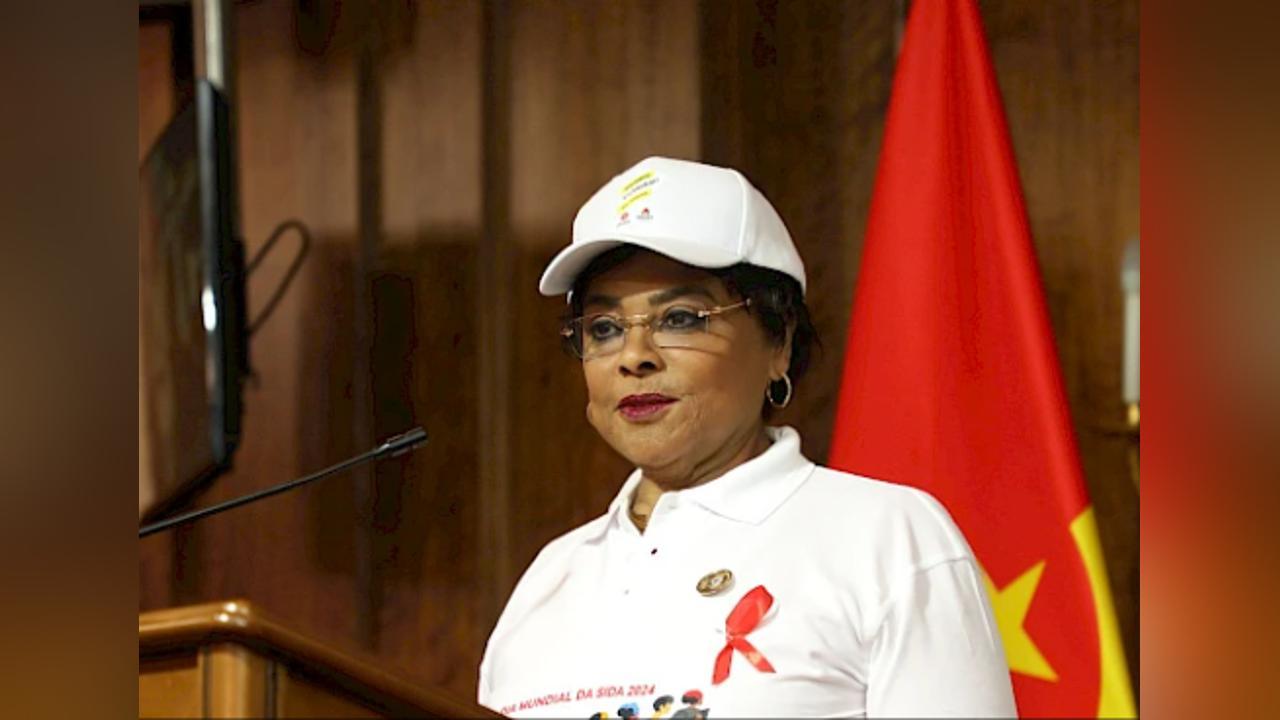
Africa-Press – Angola. Luanda – The Speaker of the Angolan National Assembly, Carolina Cerqueira, on Monday called on the African States to prioritize free access to HIV/AIDS treatment and provide free or moderate assistance to patients with this disease.
The parliamentary leader was speaking at the central event of World AIDS Day (1st December), celebrated last Sunday, defending the need for governments to provide essential medicines such as antiretrovirals, which must be available and accessible to everyone.
Carolina Cerqueira said that, currently, the Southern and Eastern regions of the African continent are characterized by the progression of unbridled HIV transmission.
“The majority of people in the world infected with HIV live in this area of our continent and the SADC countries are the ones that record the most cases of concentration of patients”, she highlighted.
She highlighted that, currently, at least eight SADC countries are each home to more than one million people living with HIV and many of them do not have access to adequate treatment against the epidemic at affordable costs.
In this sense, she emphasized that at the level of the SADC parliamentary forum members continue to advocate an approach that is in accordance with international law and applicable conventions and treaties already ratified by member countries in the region.
“The transposition of SADC model law treaties on HIV into national legal systems remains an inevitable priority for the region, thanks to the strengthening of a rights-based approach,” she said.
For her, the lack of immediate intervention in providing HIV treatment without discrimination will lead to the deaths of millions of people in the next two decades.
In this regard, she appealed to parliamentarians and political decision-makers to continue taking providential measures, before the disease becomes history as a pandemic that decimated a region, in particular the citizens of Southern Africa.
In the opinion of the president of the National Assembly, the stigma of discrimination and unequal treatment both within the family and at the level of society is one of the bearer’s biggest problems, as it profoundly affects their state of mind and soul, negatively influencing their quality of life and their capacity for resilience and social inclusion.
In this context, she highlighted the need for everyone to understand with complacency the complexity of the disease to ensure and maintain solidarity for all sufferers, as a way of transmitting to them fraternal support and full engagement to reverse the stigma of discrimination.
“The stigma of discrimination also creates a taboo on debate and early treatment, as it prohibits society and those affected from assuming themselves as carriers and seeking health services,” she concluded.
The Central Event of World AIDS Day, as part of the celebrations of Red December, a month dedicated to HIV/AIDS awareness and prevention, took place at the National Assembly.
The event, chaired by Carolina Cerqueira, was attended by government authorities, representatives of civil society organizations and health professionals, and international organizations.
World AIDS Day is celebrated annually on December 1st. Its goal is to raise awareness and support those who suffer from this disease and to honor those who have died infected.
The creation of this day was an initiative of James Bunn and Thomas Netter, two officials from the World Health Organization’s (WHO) World AIDS Program.
The idea gained supporters inside and outside the WHO, and its implementation was recognized through Resolution 43/15 of the UN General Assembly in 1988.
For More News And Analysis About Angola Follow Africa-Press