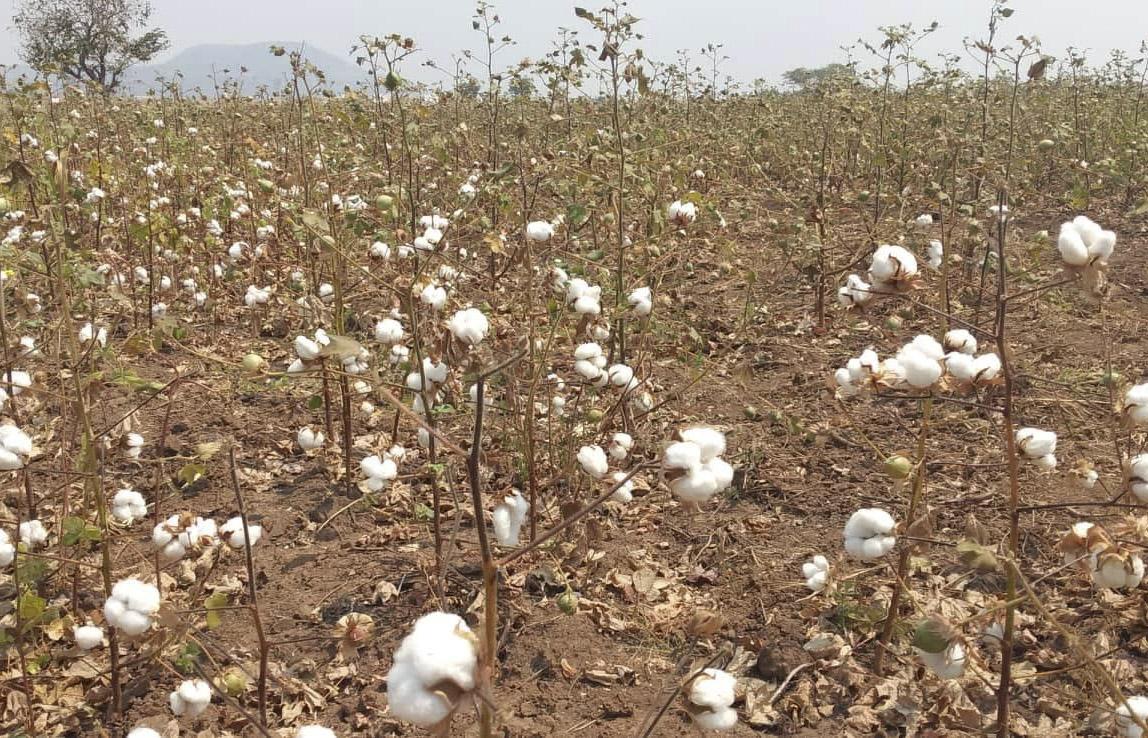
Africa-Press – Angola. Thirty-seven years later, 50 peasant families from the Baixa de Cassange region, in the municipality of Cunda-dia-base, 175 kilometers northeast of the city of Malanje, have resumed cotton production this year, in a 30-hectare field.
Cotton cultivation in that region was interrupted during the colonial era, due to the massacre of thousands of peasants who complained about forced labor and the low price of the product, practiced by the then Portuguese regime.
The start of cotton production is part of the Angolan Government’s strategy, which aims to relaunch the country’s three high-capacity textile industries, located in the provinces of Cuanza Norte, Benguela and Luanda, and reduce imports of the raw material.
Delivery of land concession titles to peasants
For the first phase of production, the provincial government handed over land concession titles to the first 50 of the 300 families, who benefited from two hectares each, as a way of leveraging the family farming sector.
The titles will allow access to agricultural inputs from the sponsoring company and to financing from the Agricultural Development Support Fund (FADA).
Peasants excited about the harvest and sale of cotton production
Eighty-three family farmers from the municipality of Cunda-dia-base are excited about the harvest and sale of 15 tons of cotton, which earned them two million 999 thousand kwanzas.
The private company Investimentos e Participações (IEP), owner of the Textang II industry and responsible for cotton production in that region, took over the purchase of the entire crop.
By the way, some producers interviewed by press were unanimous in stating that they will with all their “forces” accept this bet again, and with this government initiative, honor the heroes of Baixa de Cassanje who fought for the improvement of living conditions of the population.
The mayor of Cunda-dia-base, José Vunge, stressed that with the land concession titles received, the peasants are eager to produce cotton on a large scale to guarantee the self-sustenance of their families and contribute to the development of the municipality.
José Vunge stressed that with the relaunch of cotton production, it is necessary to rehabilitate the road that connects the municipality in order to allow for an increase in commercial exchanges and contribute to the well-being of the population.
To reach the town of Cunda-dia-base, two roads are used, one being via Malanje/Quela, via national road 160 – A, with a distance of 172 kilometres, and the road that gives access to the municipality of Marimba, with 180 kilometers.
On both routes, circulation conditions are precarious due to their advanced state of degradation, which delays travel time.
Peasant Maria Fuxi, visibly satisfied, said that she is going to dedicate herself more deeply to the cultivation of cotton, because that is where her family’s sustainability will come from.
Elder Manuel Nhanga, another producer, stressed that he will honor the heroes of Baixa de Cassanje, demonstrating his work in cotton cultivation.
Mateus Alberto, a resident of the village of Cunda-dia-base, stressed that he will influence local young people to switch from diamond mining to cotton cultivation, as it is one of the sources of livelihood.
The production of “white gold” in the Baixa de Cassanje region lasted six months, from soil preparation to harvest, in an area of 30 hectares.
For the current agricultural season (2022/2023), the cultivation of 400 hectares of cotton is foreseen, with the involvement of an equal number of households.
Angola annually spends more than 12 million US dollars on cotton imports.
High energy in Malanje
As for the energy sector, the province reached, in 2022, a power of 108 megawatts, 52 of which were made available to the municipality of Malanje, 32 to Cacuso and 4 to Calandula, at a time when the electrification work in the municipality is in its final phase. from Cangandala.
In terms of water, the supply to the city of Malanje was reinforced with another 720 cubic meters/hour, with the entry into operation of the Quissol collection station, although still in the experimental phase.
In the interior of the province, the water systems in the municipalities of Quela and Marimba are under construction this year, while the one in Cangandala has already been completed and is in the testing phase.
PIIM secures new classrooms
As for education, the province gained, so far, 166 new classrooms built under the Integrated Plan of Intervention in Municipalities (PIIM), which allowed the insertion of 14 thousand and 940 new students in the normal education system.
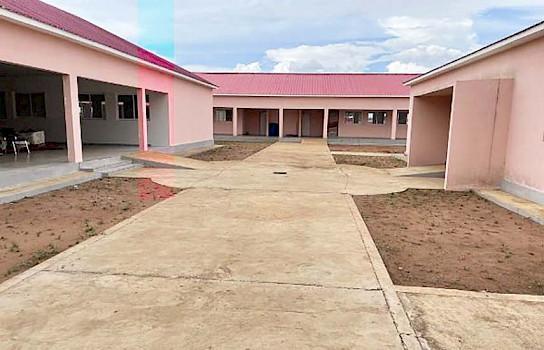
The classrooms are the result of 19 new schools built, out of a total of 45 enrolled in the aforementioned plan.
During the academic year, a total of 307 thousand 692 were enrolled in general education.
Meanwhile, in higher education the highlight of 2022 fell to the opening of the 2022/2023 academic year, presided over by the Minister of State for the Social Area, Dalva Ringote Allen, stressing, at the time, that the improvement of Higher Education in Angola involves curricular harmonization, with the carrying out of the reform of the course programs, based on a profile of necessary competences.
Also this year, the Queen Nginga Mbande University launched more than 500 new graduates in Medicine, Pedagogy, Mathematics, Psychology, Sociology, Agro-Food Technology, Nursing, Pharmacy, Tourism and Hotel Management.
Malanje will have a new general hospital
The year about to end was also marked by the laying of the first stone for the construction of the new Malanje General Hospital, in the Carreira de Tiro neighbourhood, with capacity for 241 beds.
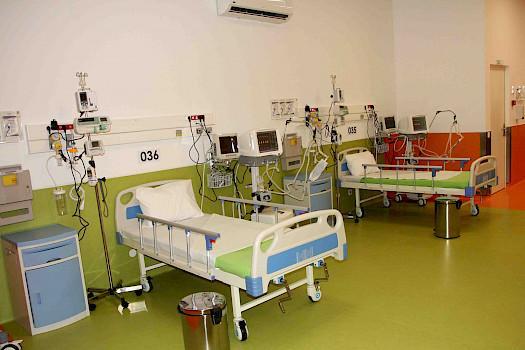
The unit, whose works are budgeted at 50 million 575 thousand 970 euros, will be built over two years and six months, in an area of 15 thousand square meters and will have surgery services, computerized axial tomography (CAT), digitalized X-ray, ultrasound, mammography, orthopantomography, physiotherapy, imaging, endoscopy, among others.
It will also have five wards, intensive care areas for children and adults, an emergency room, outpatient clinics, laundries, canteens, mortuary, hemodialysis, as well as rooms for the treatment of hospital waste and centralized diagnostics.
Still in the field of health, Malanje won, under the PIIM, 14 health units and 3 ambulances.
As far as culture is concerned, the Provincial Government of Malanje acquired the residence where the first President of Angola, António Agostinho Neto, lived, with a view to transforming it into a museum, in reference to his centenary of birth. .
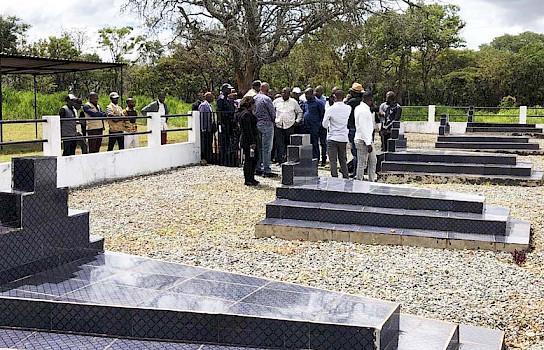
The government’s intention to elevate the tombs of Teka Dya Kinda and the integral reserve of Milando to historical-cultural heritage, as well as the survey, registration and cataloging of historic sites and military theater, for their elevation and classification to heritage and historic sites national events, were also highlighted this year in the province of Malanje.
For More News And Analysis About Angola Follow Africa-Press