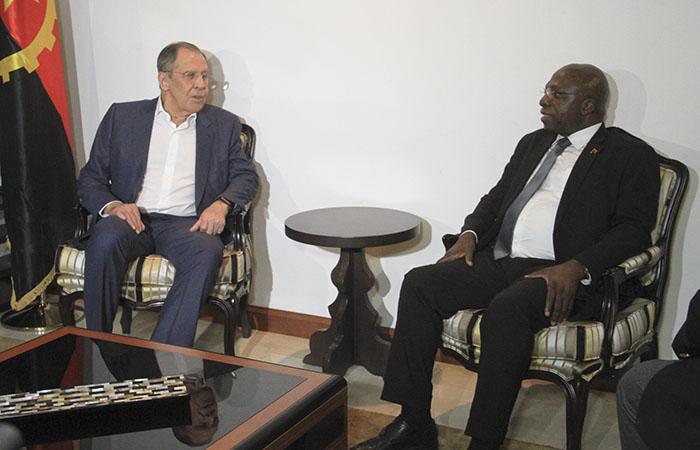
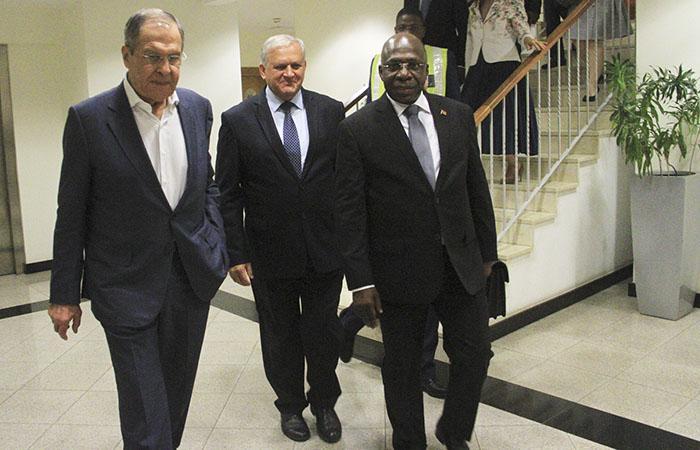
Africa-Press – Angola. The Minister of Foreign Affairs of Russia, Serguey Lavrov, landed at the beginning of this Tuesday night in Angola, for an official visit, with a view to closer dialogue with the Angolan authorities and the strengthening of bilateral cooperation.
Upon arrival at the 4 de Fevereiro International Airport, the Russian diplomat was welcomed by his counterpart Teté António, his country’s ambassador to Angola, Viladmir Tararov, and the Angolan ambassador to Russia, Augusto da Silva Cunha.
Speaking to the press, the Russian representative in Angola said that the visit of the head of Russian diplomacy to Angola will serve to strengthen relations between the two countries, address the good moments of past cooperation and strengthen ties of friendship for the continued development of both nations.
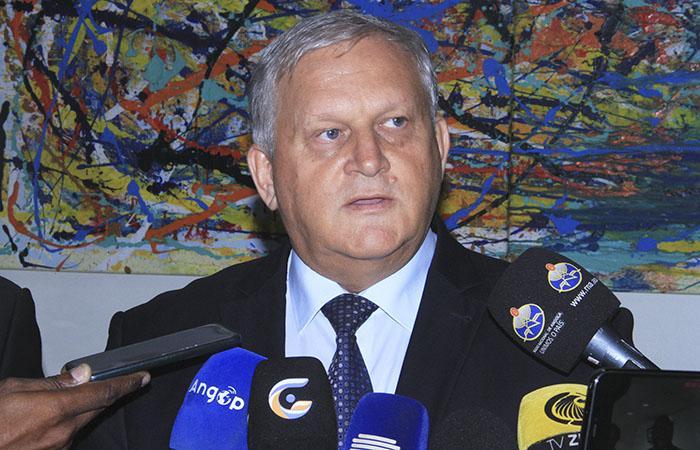
Asked about Angola’s position in relation to the Russia/Ukraine conflict, Vladimir Tararov said that “several steps were taken towards the end of the conflict, but the Ukrainian side refused the agreements”, a situation that has been dragging on since 2014 and that has remained several times very clear in the statements of President Zelensky (…..).
The number one of Russian diplomacy underlined that the Russia/Ukraine conflict will in no way influence his country’s relations with Angola, and that each country has the freedom of its free expression, of sovereignty to choose its position or its path, but I would like it to be in favor of your country.
For his part, the Angolan ambassador to the Russian Federation, Augusto da Silva Cunha, considered the arrival of the Russian diplomat opportune because he will help to strengthen bilateral relations between the two peoples, half asleep since 2019, because of the Covid-19 pandemic.
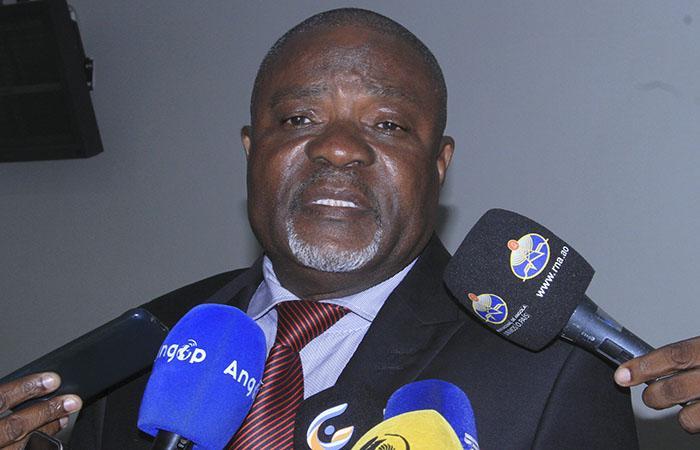
According to the diplomat, “there was no animosity in relations”, since in the last three months he granted interviews to Russian radio and television, where he passed messages based on friendship and solidarity, due to the existing historical relations with the Russians and which must be preserved.
Angola and Russia have had privileged relations since October 8, 1976, the date on which the Treaty of Friendship and Cooperation was signed in Moscow, at the time capital of the former Union of Soviet Socialist Republics (USSR).
On 16 November 2004, the two countries signed, in Luanda, an agreement for the relaunch of cooperation in the economic and technical-scientific domains and, the following day, created the intergovernmental commission for economic, technical-scientific and commercial cooperation.
Currently, cooperation is most significant in the sectors of energy, geology and mining, higher education, staff training, defense and security, telecommunications and information technologies, fisheries, transport, finance and banking.
By this time, it is estimated that at least 1,000 Russians are living in Angola, while 1,500 Angolans reside in Russia.
Russia is part of a group of 61 countries covered by the procedures for simplifying administrative acts for the granting of tourist visas.
It should be recalled that in 2019, the President of the Republic, João Lourenço, made his first state visit to Russia, where he held a meeting with his Russian counterpart, Vladimir Putin.
In the same period, there were talks at the highest level between delegations from both countries, for the reinforcement and expansion of bilateral cooperation.
However, until the second half of 2019, trade between Angola and Russia amounted to US$26 million, which represented a 40 percent drop compared to the previous period.
A constant factor in these relations is that the Russians sell much more than they buy to Angola. Angola’s export basket to Russia is essentially made up of wood and its by-products, scrap metals and precious stones.
On the other hand, among the top ten Russian export products are goods, military services, electrical equipment, its components, books, printing industry products, fuels, minerals, petroleum derivatives and fertilizers.
For More News And Analysis About Angola Follow Africa-Press