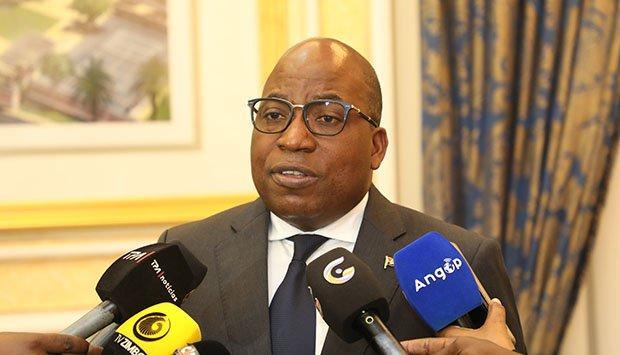
Africa-Press – Angola. Solar energy projects have helped the country reduce its consumption of fossil fuels by tons, as well as slowing down carbon dioxide (CO2) emissions into the atmosphere, said the Secretary of State for Energy, Arlindo Bota Manuel Carlos.
The official made this statement during the sharing of experiences with member states, on the sidelines of the 55th Session of the Parliamentary Forum of the Southern African Development Community (PF-SADC), which took place in the country’s capital.
Arlindo Bota Manuel Carlos mentioned, as an example, the Biópio solar energy project, which has a capacity of 188 megawatts, which has contributed to around 190 thousand inhabitants having access to electricity from clean sources, at a lower cost, saving 142 million litres of fuel per year and, even better, reducing carbon dioxide (CO2) emissions by 478 thousand tonnes.
The Secretary of State for Energy also addressed the Baía Farta project, which has a capacity of 96.7 megawatts and a universe of 610 thousand beneficiary inhabitants.
For Arlindo Bota Manuel Carlos, the entry of the solar structure allowed the country to reduce fuel consumption by 72.8 thousand tons of carbon dioxide, 82 million liters, as well as, from the point of view of CO2 gas emissions, it was possible to reduce 245 thousand tons.
Regarding the Luena solar plant, in the province of Moxico, which has a capacity of 26.9 megawatts and is in operation, the country has 60 thousand inhabitants as beneficiaries and a diesel consumption of 20 million liters.
In this context, he stressed that it is still possible to avoid the emission of 68 thousand tons of CO2 into the atmosphere, improving people’s quality of life from the point of view of greenhouse gas emissions. Luena, he continued, also includes the Saurimo solar plant, which has the same characteristics, of 26.9 megawatts, and, likewise, the same indicator in terms of benefits.
In addition to providing clean electrical energy, he stressed, it has operational benefits that reduce its costs, by reducing dependence on fossil fuels for electricity production, as well as polluting the environment less by reducing the mass of CO2 transmitted to the atmosphere.
The situation, he rejoiced, helped to achieve an energy matrix predominantly built on renewable sources, with 61% of the electricity consumed in Angola coming from hydroelectric sources.
Arlindo Bota Manuel Carlos also said that the construction of these programs entailed the creation of skills at the level of technicians at the public electricity production company, associated with the latest technology in the field of hydroelectricity production.
“Our goal is to bring affordable energy, especially to the most remote areas, where there are still no interconnection networks or transport networks that should contribute to the distribution of electricity to the population and its availability to economic operators. Therefore, we have a contribution from the solar component of 4%, and in the hybrid component we are at 1% and from here we can improve this matrix, although the indicators are no less encouraging”, he highlighted.
The official said that the plants located in the province of Lunda-Norte, namely in the city of Lucapa, and other plants in the city of Cuito, in Bié, and Bailundo, in the province of Huambo, are in the final stages.
For More News And Analysis About Angola Follow Africa-Press