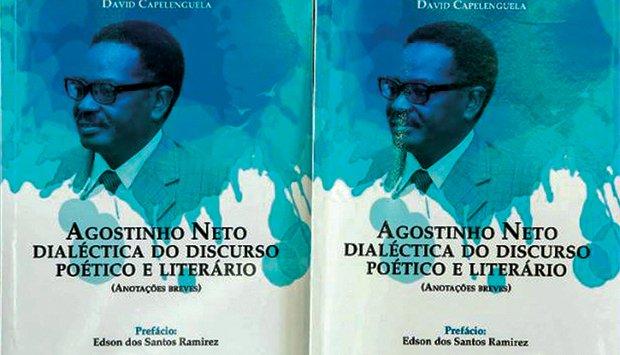
Africa-Press – Angola. A collection of seven books on the studies, poetics and life of Agostinho Neto was presented, on Tuesday, in Luanda, as part of the commemorations of the centenary of the first President of Angola.
The academic, social and historical works were edited by Mayamba Editora, with a circulation of one thousand copies. In them, the academics addressed the enigmas of poetics and in Neto’s speeches.
Among the books in the collection, we highlight “Short Stories from the Life of Agostinho Neto”, “Lessons in Simplicity for the Generations of Angolan Rulers” and “Still My Dream”, by Manuel Muanza.
“A Liberdade nos Olhos”, by João Papelo, “Places in Neto”, by Bernardo Miguel, and “Apology for the State and the Nation” by Mário Ferraz.
Also part of this set of books are “António Agostinho Neto: O Caminho das Estrelas”, by António Quino, “Liberdade, Angolanidade e Direitos de Cidadania – in six poems by Neto”, by Paulo de Carvalho.
For the editor of the collection, the director of Mayamba Editora, Arlindo Isabel, it is about seven endogenous works, made by Angolan authors, who developed several researches on the poetry and life of Agostinho Neto.
“Works by Angolan authors about Neto exist, but they are very few”, he underlined.
According to Arlindo Isabel, this action was intended to contribute to the centenary celebrations, as well as to make known to the public the scientific interpretation of Neto’s life and work in various dimensions. In turn, Manuel Muanza said that his work aims to show the ideas and practices that Agostinho Neto assumed as a human being and President of the People’s Republic of Angola, experiences that should serve as a lesson for those who govern.
The author Paulo de Carvalho said that the work brings readers a sociological reading of six poems by Neto, since those that have been made are of a literary nature.
In this context, the author tries to explain in his work the version of the African being subjugated by the colonial metropolises and the call for the anti-colonial struggle, but above all a new question about the right of citizenship.
“Agostinho Neto mentioned, like other liberation poets, about social inclusion, where the children of the poorest had to go to school, in order to leave the state in which their parents were”, he said.
For More News And Analysis About Angola Follow Africa-Press