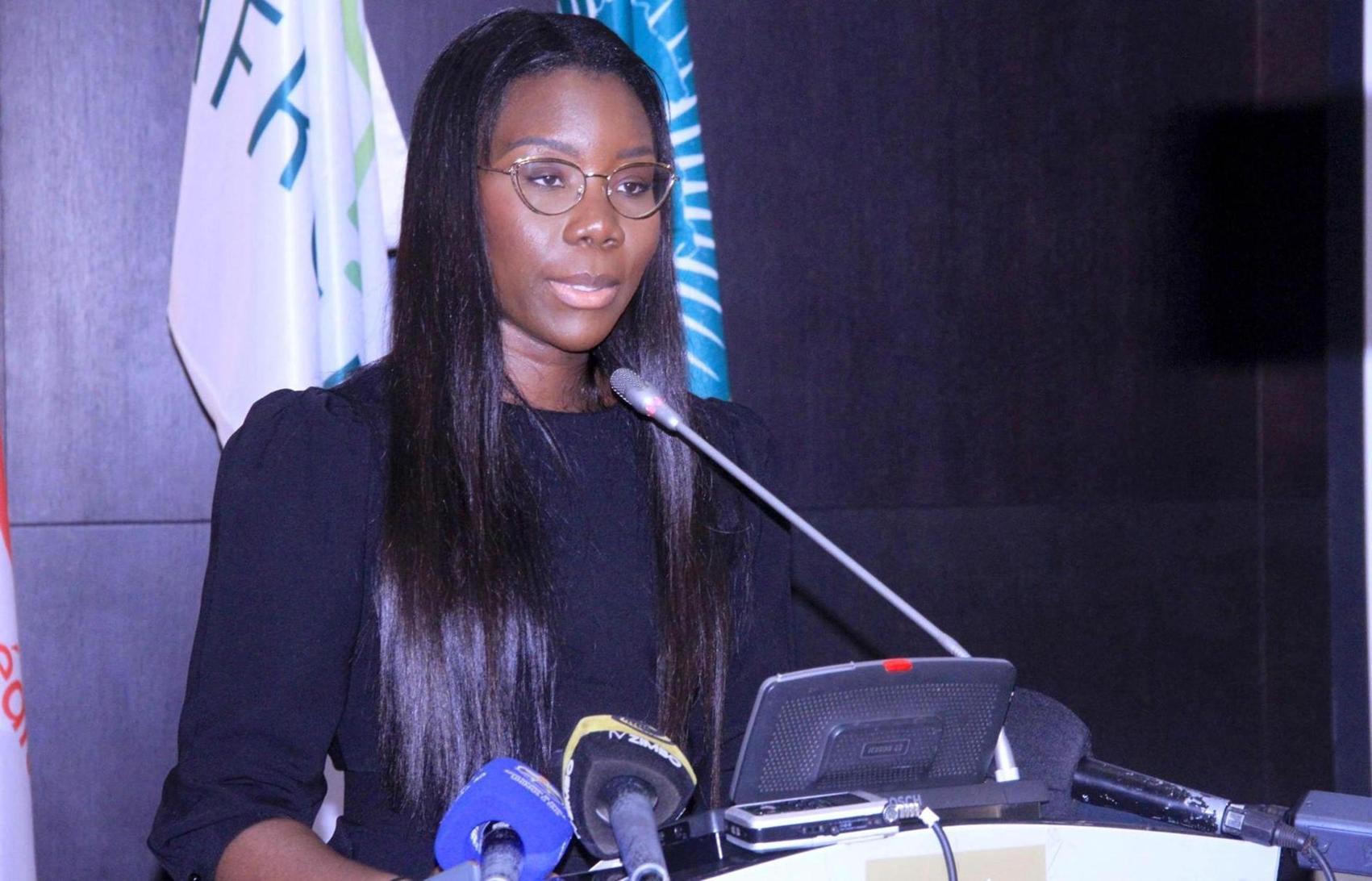
Africa-Press – Angola. The simplified version of the General State Budget (OGE) 2024, summarized in a review, will facilitate citizens’ understanding and increase civic and constructive participation in the implementation of this instrument of the country’s economic and financial policy, considered this Tuesday, in Luanda, the Secretary of State for the Budget, Juciene de Sousa.
The leader, who spoke during the launch of the magazine ‘Orçamento Cidadão 2024′, which summarizes the more than 450 pages of the OGE-2024 in 70, said that citizens’ awareness is built with consolidated knowledge and credible information.
He mentioned that this magazine aims to contribute, in an educational way, so that citizens increasingly understand how the Government obtains and applies resources throughout each annual cycle.
He considered that the more knowledge the citizen has, the more demanding he becomes and contributes to increasingly better governance in response to the population’s desires.
In turn, the head of department of the National State Budget Directorate, Jones Dembu, highlighted that one of the magazine’s objectives is to promote transparency and financial literacy, with a view to guaranteeing public participation in decisions on the allocation of public resources.
When presenting the document, the person responsible highlighted that the social sector absorbs 49% of the effective expenditure of the OGE-2024, which is estimated at 24.7 billion kwanzas, comprising a tax expense of kz 14.2 billion (57.78%) and a financial expense of 10.4 billion (42.22%) of the overall budget.
According to the head of department, at the center of the distribution of this amount is the education sub-sector, with 15% and health, with 13%, as a result of successive increases in recent years.
When asked about the funds allocated to combating poverty, he clarified that each municipal administration in the country receives 28 million kwanzas from the OGE, which must be spent based on the principles and rules of budget execution, where any expenditure is conditional on the presentation of the execution report..
And in cases where a given municipal administration does not present the required implementation report, it will automatically be left without the benefit of this resource the following month and the relevant investigation inquiry will follow.
In turn, the Unicef representative in Angola, Antero de Almeida, considered that the Orçamento Cidadão/2024 magazine contains concise and clear content, in line with good international practices.
According to the official, Unicef is committed to supporting Angola’s improvement in the international survey on open budgets.
On the occasion, the rector of the Catholic University of Angola, Sister Maria de Assunção, argued that the academy should play a leading role in the preparation of the local and participatory budget, as it dominates the real problems of the communities.
The vice-rector of the Jean Pieget University, Julien David Zanzala, understands that the Ministry of Finance and municipal administrations should take the message about the OGE to the communities, so that citizens can effectively participate in the preparation, execution and dissemination of actions in exercise.
Unicef’s partnership for the publication of the Citizen’s Budget makes it possible to transpose the best international practices and dissemination of the OGE into the Angolan reality in an accessible way.
This document, to be distributed in school institutions, ministerial departments, among other bodies of society, is an annual publication designed after approval by the National Assembly and promulgation by the President of the Republic of the OGE Law.
The simplified OGE has been published since 2014 in digital format, via the Ministry of Finance website.
For More News And Analysis About Angola Follow Africa-Press