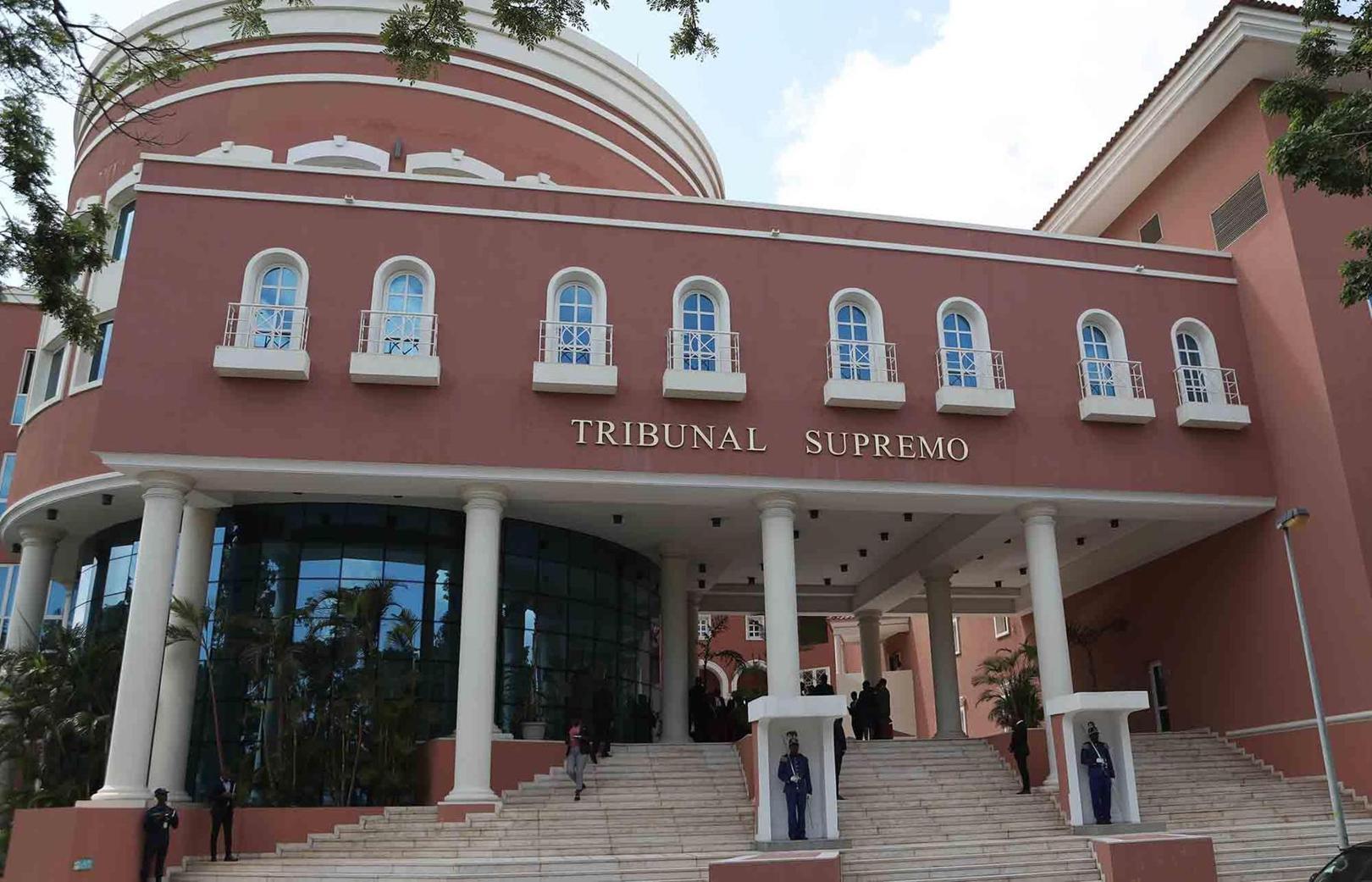
Africa-Press – Angola. The criminal jurisdiction of the Supreme Court (TS) judged, during this year, 448 cases, of which 215 were covered by amnesty, revealed, this Tuesday, in Luanda, the judge advisor president of this Supreme Court, Joel Leonardo.
Speaking at the end-of-year greeting ceremony, addressed to the institution’s employees, he highlighted the fact that first instance trials had been resumed at the level of the TS, remembering that, for justice, the important thing is: “ what he did and not who did it”.
According to the president of the TS, 292 cases were judged in the civil jurisdiction, while 89 others were judged in the labor jurisdiction.
The president of the TS considered the results achieved to be positive, but emphasized the need to increasingly improve not only the judicial provision but also the internal organization of services, especially in serving citizens who seek to know the progress of their processes and files.
“Citizens deserve our respect, they are our main priority. For example, he should not wait for more than 30 minutes at the office door without being attended to. Our good morning comforts the citizen and establishes a relationship of trust between us and him, which must be marked with politeness, respect, speed, ethics, helpfulness and effectiveness”, he expressed.
Currently, the Supreme Court has 300 judicial employees from various districts of the country.
The presiding judge of the TS urged employees to “listen, see, speak less and not reveal or share State secrets because this is part of our priesthood”.
He also appealed to employees not to tarnish their careers with attempts at recruitment of any kind.
The President of the TS also noted that bringing justice closer to the citizen is the realization of access to justice in the material sense of the Rule of Law and Democracy “which is taking its first steps in our country”.
Digitization of services
Joel Leonardo stressed, on the occasion, that the growth of human resources must be accompanied by technological evolution, considering the digitalization of all services at the Supreme Court as urgent, “not only to provide greater procedural speed, but also to ensure that justice is more effective.”
He made it known that 17 training courses for 286 employees were carried out at the Journalist Training Center (CEFOJOR) and the National School of Public Administration (ENAPP), revealing that, in 2024, judicial officers will leave for Brazil for continued training.
The Supreme Court is the highest instance of the common jurisdiction of the judiciary in Angola.
It is one of the four highest courts in the country, alongside the Constitutional, Accounting and the Supreme Military Court.
For More News And Analysis About Angola Follow Africa-Press