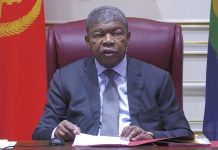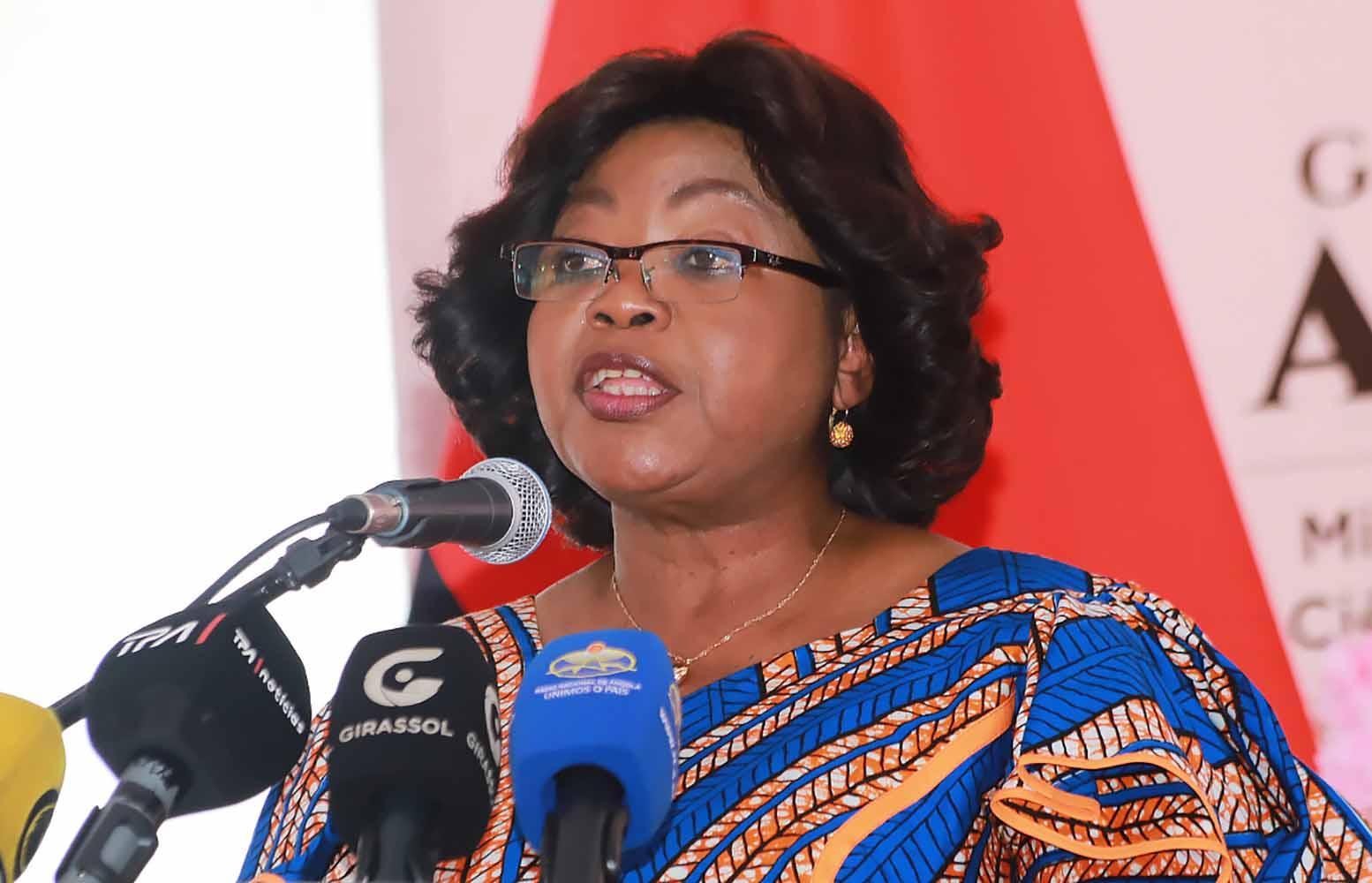
Africa-Press – Angola. To prevent the spread of cases of blindness registered in the town of Caxarandanda, the Vice-President of the Republic, Esperança da Costa, recommended, on Friday, to the National Water Council (CNA), the creation, soon, of conditions of access to drinking water, electricity and communication routes for the inhabitants of that commune in the municipality of Quiçama, province of Luanda.
The information was provided by the Minister of Energy and Water, João Baptista Borges, at the end of the 1st extraordinary session of the National Water Council (CNA), guided by the Vice-President of the Republic, and which approved the Action Plan for the five-year period 2023-2027.
Based on the guidance, João Baptista Borges announced, soon, the construction of water treatment systems, as well as of latrines and bathhouses in the locality, to improve hygiene and sanitation.
According to the government official, the measure comes after the report presented at the meeting by a technical committee that visited the locality, where cases of blindness presumably of water supply, through the population’s consumption of raw water from the Longa River.
“The CNA, concerned about the situation, approached this matter in the session in which the Vice-President of the Republic gave guidelines information to the various Ministerial Departments for the execution of the access and the creation of conditions so that inhabitants can have access to water drinking, hygiene and sanitation, as well as preventing the spread of cases of blindness that have already been reported or presented”, highlighted the minister.
Among the various needs identified for Caxarandanda are creating a health center and a school. About the access, since the town is almost 140 kilometers from the Estrada Nationally, the responsibility, said João Baptista Borges, lies with the Ministry of Public Works: “These are basically the actions that we will develop from from now on, immediately, to improve conditions in that location. Let’s go prepare the conditions to start them next year”.
South from the country
In relation to the South of the country, an issue that also deserved the Council’s attention, the minister mentioned that there is a program to combat the effects of the drought, as a One of the areas of the approved Action Plan is combating the effects of changes climate.
João Baptista Borges made it known that the Program to Combat the Effects of Drought, being implemented in the provinces of Cunene, Namibe and Huíla, and the works in progress include those monitored by the CNA and parts of the Action plan.
Elimination of the deficit water in Luanda
Regarding water distribution in the country, the Minister João Baptista Borges highlighted that the Ministry’s concern that guardianship is to guarantee the “precious liquid” 24 hours a day, 365 days a year. Regarding to Luanda, said that the main objective, by 2027, is to eliminate the deficit existing 50%.
“Or that is, 50% of the population still does not have access to public water”, he informed, pointing to the ongoing construction of two large systems, Bita, with 250 thousand meters cubic meters, and Quilonga, with 500, which, once completed, will guarantee water drinking water for 7.5 million people.
For the governor, the construction of these systems will be complemented with the construction of distribution networks, since that these are the two major infrastructure works capable of changing the reality in Luanda. Completion of the water systems is scheduled for 2027.
Today, according to data provided by the minister, the rate of access to drinking water in the country is 65 percent in urban areas and around of 50 percent in rural areas, percentages that, according to João Baptista Borges, still are far from what was intended.
“We also have to take into account that, in addition to the current population, we are growing at an average of 3.3 percent per year. Or That is, every year we are more than a million, which means more need of water”, he explained.
Therefore, he stressed that the infrastructures planned and built, at this moment, take into account the current population and that projected for the coming years. “It’s a big challenge”, he highlighted.
Effort of the Executive
Referring to the constraints in the sector, in addition to those that arise with the rain, the minister highlighted the acts of vandalism that occur throughout the country, whether in electrical energy and water supply systems.
Among these, he focused on the destruction of pumping, the theft of photovoltaic cells that, in essence, guarantee the water pumping in some regions, the theft of pipes, engines and others, actions that have been contradicting all the Executive’s efforts to invest in these infrastructures to improve living conditions of the populations.
About the constraints of rain, the minister cited the example of what happened in Sumbe, province of Cuanza-Sul, where there was a flood at the Treatment and Pumping System, considering it a great challenge, which must everything that was damaged must be repaired.
Commission will visit locality
O Yesterday, the National Water Council approved its Action Plan for the five-year period 2023-2027 and presented a report from the commission constituted to visit the town of Caxarandanda, whose commune is in the municipality of Quiçama, province of Luanda, where cases of river blindness have been recorded, due to the use of raw water from the Longa River.
According to the minister, this is a Action that, in essence, contains the domains of activity, that is, coordinates or conducted by the various Ministerial Departments, on all topics related to water, from governance, political, social, economic and technical.
It also has to do, for example, with themes linked to the constitution of basin commissions, shared management of resources water relations with neighboring countries, the economic and financial regime, the wastewater supply and sanitation in different regions of the country, the latter being one of the Executive’s priorities.
Others shares
Second the meeting communiqué, the Action Plan takes into account the Long Term – Angola 2050, plans for the Energy and Water sector 2023 – 2027, namely the National Water Plan and the General Water Plans Development and Use of Water Resources in River Basins.
It also provides for the Sanitation Project Inclusive of Coastal Cities, the rehabilitation and expansion of access to water in Menongue, Benguela, Sumbe, Porto Amboim, Gabela, Waku Kungo, Mbanza Kongo and Soyo, as well as the increase in rural supply in southern Angola. These actions propose to promote the national production of equipment and consumables necessary for water services and sanitary facilities to all schools, health units and prisons in the country.
It also aims to develop the National Strategy for Combating and Preventing Waterborne Diseases, the construction of integrated infrastructures for supply, wastewater sanitation and rainwater, as well as implementing integrated water distribution projects in Industrial Development Poles (PDI) and Rural Industrial Parks (PIR).
The construction and rehabilitation of dams, with high storage capacity, the preparation of the National Dam Safety and Planning of Albufeiras, the recovery and desilting of 43 stone masonry dams and water retention in municipalities of Bibala, Camucuio, Moçâmedes and Virei, in the province of Namibe, as well such as the reconstruction of hydro-agricultural dams and irrigated perimeters are also included in the plan.
Proposes to prepare and/or update the Plans General Development and Use of Basin Water Resources Hydrographic reports, monitoring and evaluation reports of general plans in force, the National Program for the efficient use of water and a National Plan for extractive activities and guidelines for compensatory measures on the environmental, socio-cultural and economic impacts of the implementation of water projects, in addition to implementing the safety of Rio’s navigability Kongo.
In the legal and institutional framework, the Plan provides the creation of Regional Hydrographic Basin Administration Offices and the study of current and future needs for human resources in the Water sector, without forgetting the updating and resolution of legislative gaps.
It also includes the preparation of proposals legal regime for water resource user associations, the implementation of a platform for free public access to legislation environment, as well as the definition of priorities for the establishment of Public-Private Partnerships.
jornaldeangola
For More News And Analysis About Angola Follow Africa-Press