Africa-Press – Angola. Angola has registered 140 cases of trafficking in human beings, 22 percent of which have already been tried, at a time when transnational partnerships are essential for strengthening the fight against trafficking networks, the pursuit of criminals and the protection of victims.
The National Director of Human Rights, Yannick Bernardo, who advanced the information yesterday in Luanda, said that those who intervene directly or indirectly in the process must be involved.
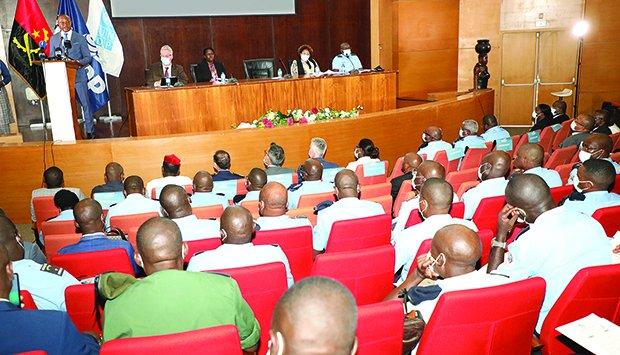
He referred that this worldwide phenomenon moves more than 40 billion dollars a year. Speaking at the Conference on Human Rights and Public Security, under the motto “Ministry of Justice and Human Rights and National Police of Angola committed to the Promotion and Protection of Human Rights”, he said that the cases were registered from 2014 to 2022.
The director underlined that in Angola the provinces of most concern are the border ones, as many trafficked people are directed to the country as it is a transit territory, with Cunene having more than four percent of cases of human trafficking.
“We have advanced from the point of view of legislation, because the Penal Code already deals with and criminalizes these issues. Now we have a partnership with the US Government to implement a program, through our Action Plan to Combat Human Trafficking We have a commission that monitors this type of case”, he clarified.
Angola, he continued, currently occupies the second position in the ranking of the United States of America on the fight against Trafficking in Human Beings and protection of victims, while neighboring Namibia is the leader of the list. “Our goal for the coming years is to reach level one and respond to the fight against human trafficking”.
Advances in Human Rights
Yannick Bernardo stressed that Angola has made considerable progress in the field of Human Rights, despite the challenges it has to improve so that there is a favorable and harmonious environment in the realization of Human Rights.
He said that in terms of Human Rights, in the regional framework, Angola is very advanced and at world level it still has challenges, but that it manages to respond: “Currently, we have no reports on delays in the main Human Rights bodies of the United Nations and the African System. Naturally, there are some internal aspects that are transversal to everyone, such as the issue of improving people’s lives, which also has to do with Human Rights, but it is a path that we are taking. We are not so bad, nor so good, but we are treading a good path”.
He considered that, from a legal point of view, Angola is well served, due to the laws that were approved and norms that promote, defend and protect Human Rights, but, from an institutional point of view, it has some deficiency.
“We need to look at the institutions that must guarantee the defense, protection and promotion of Human Rights. We have an encouraging institutional framework. We have the courts, the Ministry of Justice and Human Rights and a set of bodies that guarantee the effective promotion of Human Rights” , he stressed.
He recognized that there are deficits in terms of specialized staff to deal with human rights matters: “We have another challenge within the scope of institutional capacity itself, related to providing a response at the height of the international standard and at the height of the expectations of the population”.
The national director explained that there is another context within the assessment of the state of Human Rights, admitting that there are many advances in terms of context, despite the challenges in the realization of economic, social and cultural rights. “We are talking about the Right to Health, Education, Basic Sanitation”, he reiterated.
He cited some challenges in the sector within the scope of the right to freedom of expression, which also involves freedom of the press, although it is notorious, from his point of view, “a pluralism in the press, mainly the private one”.
The other challenge is related to the right to assemble and demonstrate, which is one of the pillars that made the Conference take place, underlined Yannick Bernardo.
National Strategy
The Secretary of State for Technical Assurance of the Ministry of the Interior, Carlos Albino, said that the meeting aims to promote the implementation of the National Human Rights Strategy, identify the appropriate methods for its promotion, without discoloring the firm action of the National Police staff. , in guaranteeing stability and coordination between the two institutions.
Under the motto “Ministry of Justice and Human Rights and the National Police of Angola committed to the promotion and protection of Human Rights”, the domain of security and public order is included in the priorities of the political agenda of the Angolan State.
He reiterated that the Executive approved the National Strategy for Human Rights, normative that defines the lines of action, both based on the Constitution and other national and international legal instruments.
He added that the training program for police forces in content on Human Rights is in harmony with the Universal Declaration, the International Covenant on Human and Political Rights, as well as the International Covenant on Social and Economic Rights, both of the United Nations (UN) ).
“Several actions have been implemented in partnership with the United Nations Development Program (UNDP) and other institutions dedicated to this purpose, with emphasis on training actions aimed at staff, regardless of their social condition or gender”, explained the State Secretary.
Law, Peace and Development
For the representative of the United Nations Development Program (UNDP), Edo Stork, the Human Rights issue may sound abstract, theoretical, but the value is in putting it into practice. According to UNDP, the United Nations was founded on the Human Rights program and has three pillars (Human Rights, Peace and Development).
Edo Stork considers that Angola has a very interesting national human rights strategy due to the way in which it seriously describes its implementation.
“Angola, at the moment, is working on the National Development Plan, which is very important because it has three priorities: human capital, diversification of the economy and infrastructure issues. But it could cover the Health, Education, Democratic Rights and other social services, which are essential for being part of people’s development”, advocated the UNDP representative.
He added that the implementation of Human Rights will make Angola a country of many opportunities and a strong future in Africa, and in the fight against discrimination and against any and all types of abuse.
On the other hand, he highlighted the launch of the program of the 16 Days of Activism against Gender Violence in this century, which aims to “remember, redouble forces and put an end to violence against women, bisexuals and transsexuals in Angola, groups often discriminated against”.
For More News And Analysis About Angola Follow Africa-Press