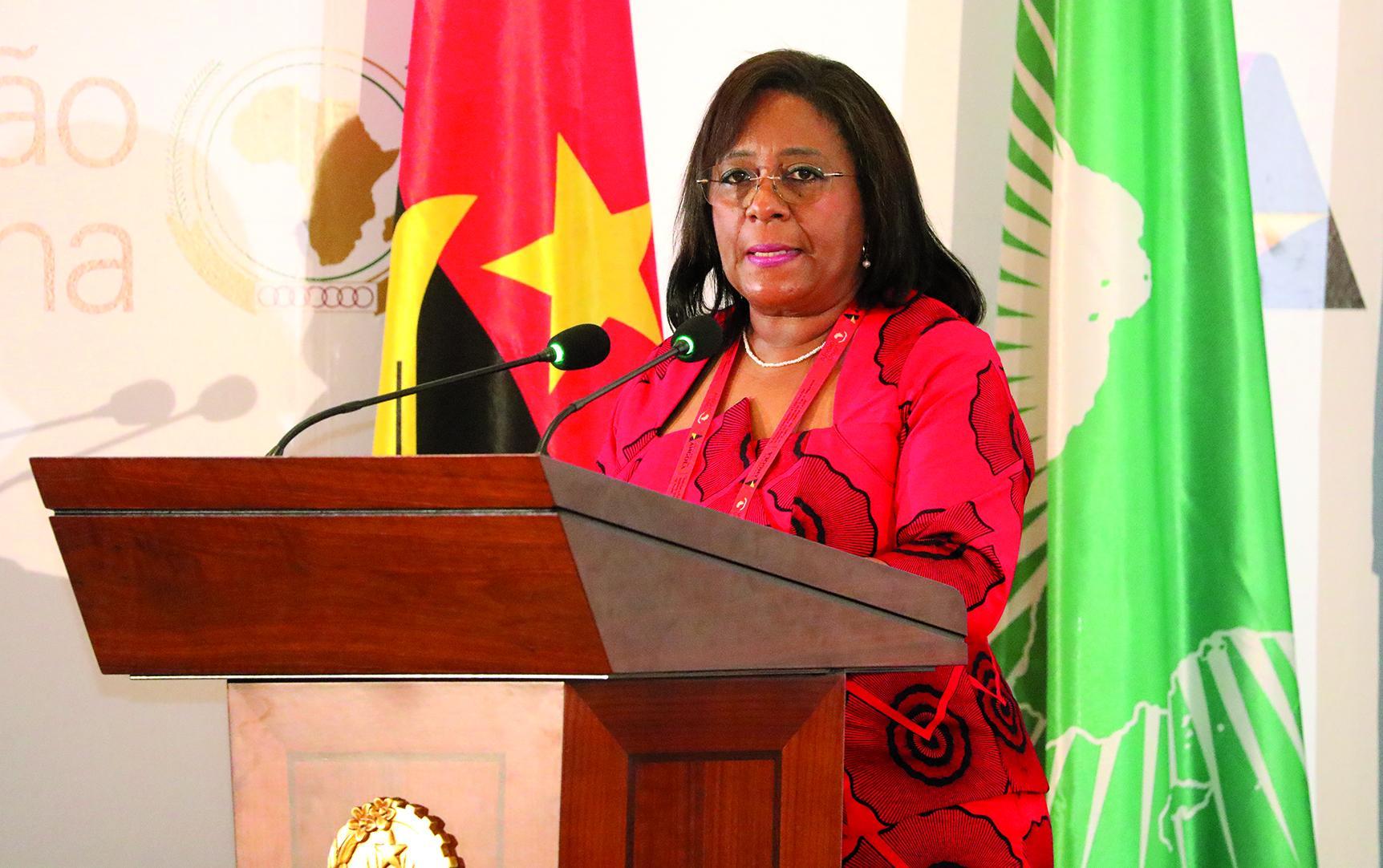
Africa-Press – Angola. The participation of women in peace processes and decision-making has become one of the imperatives of regional, continental and global progress, said yesterday in Luanda the Minister of State for Social Affairs, Maria do Rosário Bragança.Speaking at the opening of the High-Level Forum of Women of the Great Lakes Region, which is taking place from yesterday until today in the country’s capital, the Minister of State highlighted that deepening and disseminating knowledge about women, peace and security currently constitutes a clear sign of commitment to improving the level of protection and respect for human rights, fundamental freedoms and the increase of democracy in modern States.
Maria do Rosário Bragança, who was responsible for welcoming those present, defended the need for greater openness towards women in peace processes on the continent, stressing that working together is essential, with a view to building bridges of cooperation and overcoming obstacles towards a future with women at the center of efforts to build peace and security.
Referring to the importance of the High-Level Forum of Women of the Great Lakes Region, the Minister of State for Social Affairs said that holding the event clearly highlights the role of African citizenship in all phases of the peace-building process, contributing with recommendations for the real integration of the women’s dimension in regional policies on defence, internal security, reconciliation and cooperation, both to achieve the aspirations of the African Union’s Agenda 2063 and to materialise the Strategic Objectives of UN Resolution 1325, with regard to the protection of people, gender integration, stability and collective well-being.
“Your presence in this space for dialogue and exchange of experiences is a living testimony to the relevant commitment of all the living forces of our continent, especially women dedicated to the cause of peace, peaceful resolution of conflicts and protection of communities, in search of a socially fairer, economically more inclusive and territorially more stable future in the Great Lakes Region”, he highlighted.
The High-Level Forum of Women of the Great Lakes Region, taking place under the theme “Enhancing Women’s Participation and Leadership in Peace and Security Processes in the Great Lakes Region”, is analysing, among other topics, the humanitarian and security situation in the Eastern Democratic Republic of the Congo and the Region, the economic impact of conflicts on women in the region, the mechanisms for the eradication of gender-based violence in the context of conflict, the challenges and opportunities for the meaningful participation of women in ongoing peace processes.
AU highlights João Lourenço’s role in the pacification of the Great Lakes. The Special Envoy of the Chairperson of the African Union Commission for Women, Peace and Security, Bineta Diop, highlighted, on the occasion, the efforts of President João Lourenço for the pacification of the Great Lakes region, in particular in the Democratic Republic of Congo (DRC).
Bineta Diop assured the Angolan statesman that he is not alone in this fight for the pacification of the Great Lakes, adding that women in the region are also engaged in this initiative.
That is why we are mobilizing for your mediation, Mr. President, he stressed.
Bineta Diop, stressing that they have brought their leadership and experience to support this mission of President João Lourenço. The women of the region do not want to wait any longer, which is why they are all here at this forum, Mr. President, highlighted the Special Envoy of the Chairperson of the African Union Commission for Women, Peace and Security, for whom peace that does not take into account women’s perspectives becomes an incomplete peace.
In turn, the deputy coordinator of the National Control Commission of the PSC Framework for the Democratic Republic of Congo, Julienne Lusengue, indicated that the solution for peace in the Great Lakes region, with emphasis on the DRC, requires collective effort. Julienne Lusengue stressed that if there is no peace in the DRC, there will be no peace in the region and on the continent.
The Africa we want must be an Africa of peace, solidarity, equality and prosperity, where Pan Africanism must reign, he stressed.
Lusengue highlighted the importance of the Luanda Process in the pacification process in the DRC, having highlighted the ceasefire produced by this initiative in the eastern region of the DRC since August 4th of this year. He stated that these efforts have allowed a reduction in violence in the area.
“As for the participation of women in this peace and security process, it is, in our view, time to implement a synergy of women in peace and security at the level of the Great Lakes region,” he argued. Lusengue suggested that this effort also involve the inclusion of women in peace and security issues, but with the help of leadership and conflict resolution training.
Humanitarian situation in Eastern DRC and the region
Following the opening remarks of the Forum, the first high-level panel discussion examined the impact of peace, security and the humanitarian situation on the lives of women in conflict zones in the region. Moderated by the Angolan Ambassador to Switzerland, Maria Filomena Delgado, the panel was divided into three themes: the current humanitarian and security situation in the eastern DRC and the region, the economic impact of the conflict on women in the region, and mechanisms for the eradication of gender-based violence in conflict contexts.
Participant in the first topic, the special envoy of the President of the African Union Commission and head of the African Union Mission for Central and Eastern Africa (MISAC), the former Chief of General Staff of the Angolan Armed Forces António Egídio de Sousa Santos, pointed out as one of the solutions to the peace and security crisis in the East of the DRC the reinforcement of the Congolese Armed Forces, to face the attacks of the rebel movement operating there.
The DRC’s Minister of Gender, Kandolo Leonnie, insisted on the idea of including women in peace processes in Africa, given their natural sensitivity to conflict resolution.
The panel on the impact of peace, security and the humanitarian situation on the lives of women in conflict zones in the region also included the participation of the Special Representative of the Secretary-General in the DRC and head of the United Nations Stabilization Mission in the DRC (MONUSCO), Bintou Keita, and the President of the Chamber of Mines of North Kivo, Yvette Mwanza.
Also taking part in this panel were the representative of the United Nations High Commissioner for Refugees (UNHCR) in Angola, Emmanuelle Mitte, the Director for Political Affairs of the Office of the UN Special Envoy for the Great Lakes Region, Fatou Thiam, the representative of the Panzi Bukavu Foundation, Neema Néné, and the permanent representative of the OIF to the AU and the ECA, Nefertiti Tshibanda.
JORNALDEANGOLA
For More News And Analysis About Angola Follow Africa-Press