Africa-Press – Botswana. The diamond cutting and polishing industry has experienced significant growth over the past few years.
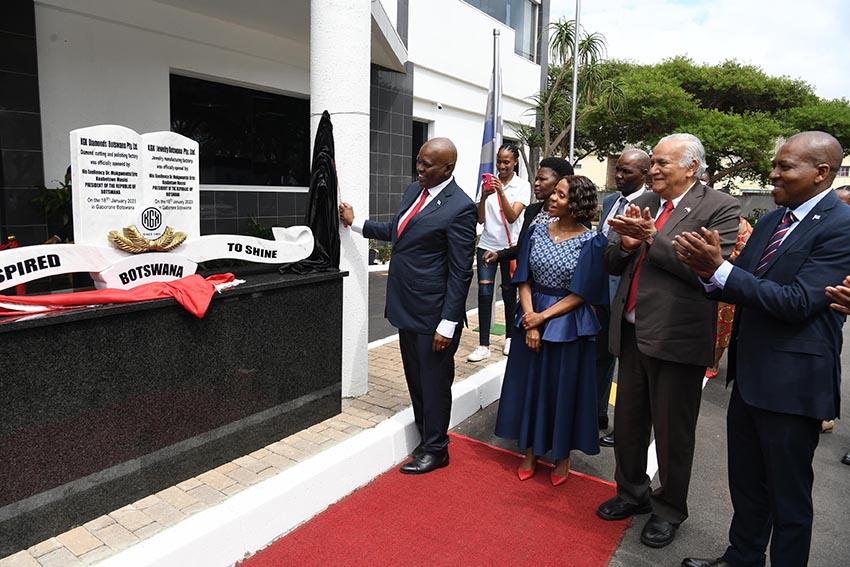
Speaking during the inauguration ceremony of KGK Diamonds Botswana in Gaborone yesterday, President Dr Mokgweetsi Masisi said 33 factories were operational compared to 16 that were licensed when the country embarked on the diamond beneficiation drive in 2008.
“Thus, employment in this sector has grown in the last three years from 2 200 people to 3 200,” President Masisi added.
He applauded KGK Diamond Botswana for its beneficiation initiatives, which would help strengthen Botswana’s diamond trade environment, adding that skills transfer and beneficiation had been the focus of their operations in Botswana.
“KGK Diamonds Botswana has proven itself to be a responsible stakeholder in nurturing the diamond industry and its state-of-the-art jewellery manufacturing facility will continue to bolster Botswana’s profile as a leader in the global diamond industry,” he said.
The company, he said, had to date created 450 jobs and was committed to creating an additional 50 with its jewellery manufacturing facility.
“It is inspiring to witness the company’s commitment towards creating opportunities for aspiring talent through KGK academy, which has trained close to 400 polishers over the past three years,” President Masisi said.
He further said the KGK inauguration ceremony occurred at the right moment when the country had won the bid to host the Kimberley Process Permanent Secretariat.
“This is a development that will position us at the very heart of the governance and ecologically friendly development of the global diamond industry and I need to assure the private sector that government will continue to support business in this country by putting in place robust policies, systems and laws that create an environment to enable businesses to thrive,” he stated.
In doing so, he said government also expected business entities to balance the interests of profiting from their investments while observing fair labour practices that provided decent jobs not only in terms of wages, but also catering for the welfare of their workers.
With regard to developing linkages with the rest of the economy, as is the case with many raw materials, Dr Masisi said the greatest opportunities including developing new industries were dependent on going up the value chain.
“It is through developing raw materials’ value chains that one is able to innovate and build sustainability, thus value chains are key to the deepening of economic diversification in this country,” he said.
In this this regard, he said government had taken a decision to add value to all its natural resources including diamonds saying that would in no small measure increase the contribution of the mineral sector to Botswana’s Gross Domestic Product.
For More News And Analysis About Botswana Follow Africa-Press