Africa-Press – Botswana. Botswana owes its considerable economic success to the independence of its judicial system, President Dr Mokgweetsi Masisi has said.
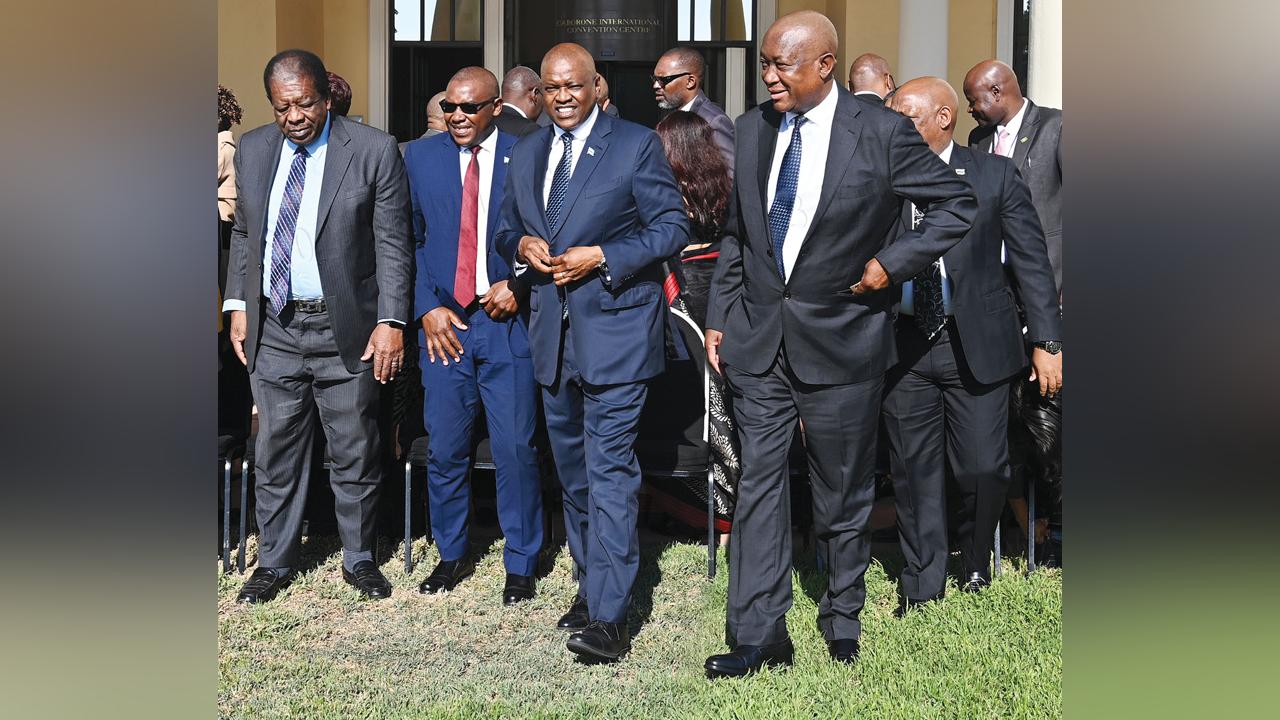
Officially opening the Commonwealth Judicial Education Institute’s 10th biennial conference in Gaborone Friday, he urged judicial officers to jealously guard against corruption and abuse of power and focus on promoting the rule of law by all means necessary.
He pointed out that Botswana’s judicial independence and prudence were premised on the Bangalore Principles of Judicial Conduct, which incorporated the core values of independence, impartiality, integrity, propriety, equality, competence and diligence.
Dr Masisi said the conference’s theme: Contemporary Issues, Innovative Responses and Judicial Education, hinged on the importance of promoting a robust, independent judiciary capable of sustaining a strong and vibrant democracy.
“It is for this reason that we recognise and appreciate the critical role played by the CJEI in empowering judicial officers across nations of the Commonwealth. Consequently, the country has made significant progress in addressing some of the emerging contemporary challenges head-on,” he said.
President Masisi said the theme was also in line with efforts aimed at improving Botswana’s judicial education processes through the provision of sustainable infrastructure, inclusive judicial education programmes and digitising case management among others.
Government, he said was indebted to the institute for its role in strengthening the rule of law and promoting access to justice in Botswana.
Dr Masisi said the Commonwealth had been instrumental in the growth of Botswana’s judiciary and as a result, great strides had been made towards achieving the complex adjudication of legal matters.
“As a country, we value the relationships and common values shared amongst the Commonwealth countries, including our bilateral and multilateral cooperation extending beyond our judicial systems,” he said.
However, Dr Masisi acknowledged that more could be done to unlock persisting legal bottlenecks including challenges such as human trafficking, climate change and cyber-crime.
The country therefore held in high regard the principle of judges training judges and magistrates training magistrates for a strong and independent judiciary, he said.
President Masisi revealed that the establishment of judicial colleges was planned for under the two-year Second Transitional National Development Plan that commenced last month.
Giving a vote of thanks, Minister of Justice Mr Machana Shamukuni said a strong justice sector would build a strong nation.
Another speaker, Chief Justice Terrence Rannowane said the conference offered new and exciting ways of exploring the changing dynamics of law in an evolving environment.
In dealing with issues of justice, it was imperative to interrogate international best practices, he advised.
The institute’s chairperson, Sir Dennis Baron, expressed the hope that the conference would be of benefit to all participants and add value to the Commonwealth‘s judiciary.
The conference, the first to be hosted by Botswana, brought together judges, magistrates, legal scholars and experts to exchange ideas, share experiences and find solutions to the current challenges facing the Administration of Justice and the legal profession.
It was attended by 89 participants from 13 commonwealth countries.
For More News And Analysis About Botswana Follow Africa-Press