Africa-Press – Botswana. The driver of a cargo truck that was intercepted at Ngwasha Veterinary Gate last year carrying 42 Ethiopians could not be charged with the offence of human trafficking because at that time Botswana did not have an anti-human trafficking law.
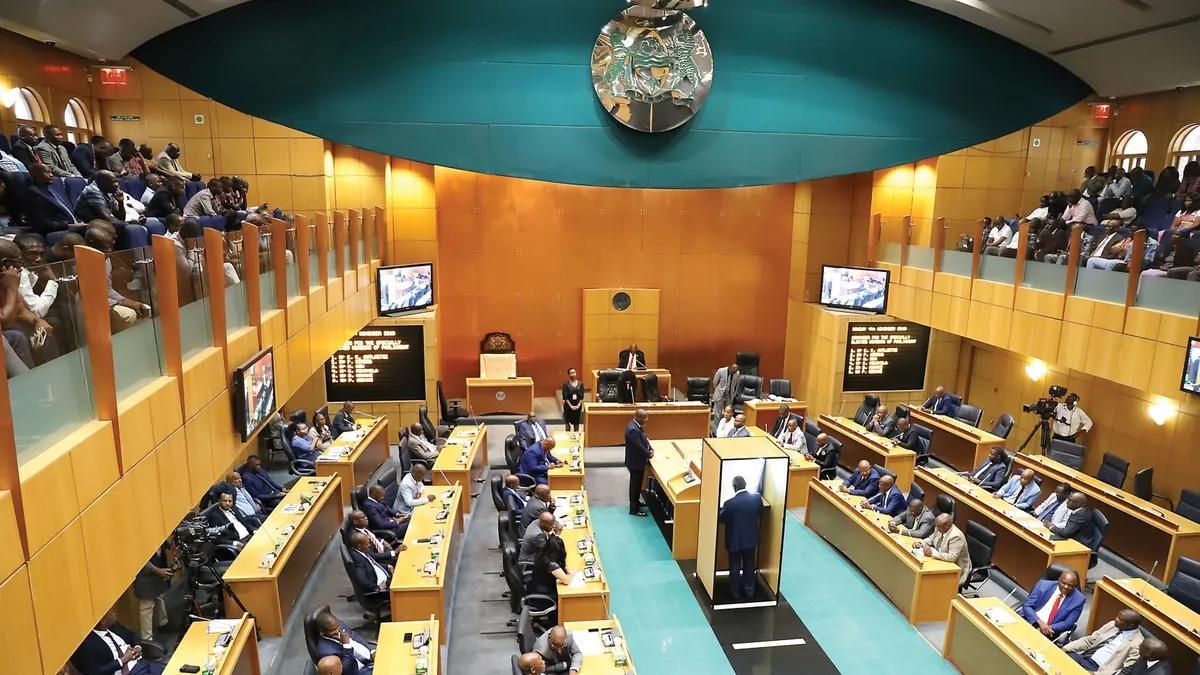
Addressing a kgotla meeting in Mokubilo on January 18, MP for Boteti East, Mr Sethomo Lelatisitswe, said it was against this backdrop that the last Parliamentary meeting enacted an anti-human trafficking law.
He told the residents that the bill was awaiting President Mokgweetsi Masisi to sign it into law.
Mr Lelatisitswe said the incident highlighted the need for stronger legislation to protect victims of human trafficking and to prosecute those who engage in this crime.
He said the anti-human trafficking law would hold perpetrators accountable and provide protection for victims.
He said with violent crime on the rise in Botswana, Parliament has also passed a bill that gives presiding officers the power to refuse bail to repeat offenders of serious crimes such as murder, rape, and defilement.
The new law, he said, is intended to send a strong message that these crimes would not be tolerated, and to protect the public from dangerous offenders.
Mr Lelatisitswe said in an effort to improve coordination and efficiency, Parliament also passed a bill establishing a National Planning Commission.
The commission, he said, would be responsible for overseeing all national projects and at district level it would be led by a district commissioner, who was at permanent secretary level.
He said this was intended to streamline the process of project implementation, and ensure that resources were used effectively and efficiently.
In his welcome remarks, Kgosi Badigeng Resetse of Mokubilo said Temo Letlotlo was designed to support farmers by providing them with the necessary tools and resources to succeed.
However, Kgosi Resetse said he was worried that this support had come too late for his people in the middle of the ploughing season.
He feared that residents might not be able to reap the full benefits of the programme, and that the late start would put them at a disadvantage.
Kgosi Resetse said such raised questions about the timing and implementation of the new programme.
In addition, he said the use of cellphones to register for the Temo Letlotlo programme for people who may not have access to cellphones or the necessary technological skills had been a source of frustration for many farmers in Mokubilo.
He said such had made it difficult for some farmers to take advantage of the programme, and that lack of face-to-face registration had left them feeling left oiut and without support.
Kgosi Resetse said the shortage of mophane worm, a key source of income for the residents of Mokubilo, was another pressing concern.
The shortage has caused widespread sadness among the residents, who rely on the income from the worm to support their families, including purchasing school uniforms for their children.
“The inability to provide these basic necessities for their children is a source of great distress for the community,” he added. Mokubilo’s agricultural demonstrator, Mr Batshu Mathala, informed the meeting that out of the 113 people who registered for Temo Letlotlo, 28 were non-micro scale farmers whilst 85 were micro-scale farmers.
Thirty-five farmers have since been assisted with seeds under the new programme.
Mr Mathala appealed to the residents to continue registering for the programme because it could prove to have quick returns.
Mr Kemoiponetse Kelatlhegile, councillor for Mokubilo, complained about the continued electricity blackouts in the village on top of the acute shortage of potable water.
He said since 2013, residents of Mokubilo had been waiting in vain for more residential plots to become available.
The waiting list for residential plots, he said, grew to 2 000, with young people making up the majority of those who are still in need of a home.
Cllr Kelatlhegile said shortage of residential plots wa causing frustration and uncertainty for the community, and called for action to address the issue.
He also made a passionate plea for improved Wi-Fi connectivity at the kgotla and the local primary school.
He explained that in today’s technologically advanced world, access to the internet was essential for the youth, who need to be equipped with the digital skills to succeed.
He said the local primary school was in need of maintenance and repairs, and was no longer fit for the purpose.
“Without proper facilities, the children of Mokubilo are at a disadvantage when it comes to their education,” he added.
The chairperson of the village development committee (VDC), Mr Mosalagae Motlogelwa, thanked government for increasing the number of Ipelegeng workers by 20 in addition to the 145 they already had.
He requested for the improved maintenance of Mokubilo-Mmeya gravel road, which he said was in a bad condition, especially during rainy seasons.
He also requested for the construction of a trench from Mokubilo to Mokubilo Pan as well as the paving of the gravel road from the main road to Mokubilo Primary School.
For their part, residents complained about the increasing damage cause by wild animals, especially elephants, which they said destroyed their crops.
They also complained that compensation for destroyed crops by the Department of Wildlife and National Parks took long and requested the department to come up with better means to speed up payments.
DAILYNEWS
For More News And Analysis About Botswana Follow Africa-Press